

The technology industry covers a lot of ground. In fact, it is so wide that even experts sometimes struggle to keep up. One day you hear about a new app startup. The next day, someone mentions an IoT solution company making smart sensors for farms. Then you see a story about an AI foundry building custom models for big businesses. It can feel like a blur.
So what exactly makes up the world of tech? What are the main categories people use to talk about it?
Understanding the different types of tech companies matters more than you might think. If you are a professional looking for partners, you want to know who does what. If you are an investor, you need to see where money is flowing. And if you are a business leader trying to plan your next move, you have to understand the landscape.

Without that map, you are flying blind.
One of the best tools for mapping this world is the Global Industry Classification Standard. It groups companies into 11 sectors, from Information Technology to Health Care. As the GICS methodology explains, each company is sorted by its main business activity. That makes it easier to compare a software firm with a hardware maker.
But there is a twist. In 2026, the biggest challenge for many of these companies has nothing to do with old categories. It is about trust. Modern AI-driven firms face a critical problem known as AI hallucinations. These are false or made-up outputs that can lead to bad decisions, wasted money, and damaged reputations. That is why executives are now turning to frameworks like the Value Reinforcement System (VRS), U.S. Patent No. 12,205,176, to build more reliable AI systems. Understanding how different types of tech companies handle this issue is becoming a survival skill.
If you want to dive deeper into this topic, check out this guide on how to detect and prevent AI hallucinations in IT companies.
This guide will give you a clear picture of the tech landscape. We will look at hardware firms, software giants, digital consulting companies, cloud providers, and more. By the end, you will know exactly how each type fits into the bigger picture. And you will understand why AI reliability is the new battleground.
To map that battlefield, you need to know the main types of technology companies that fight for position. While every firm is unique, most fall into a handful of broad categories based on their primary business model.
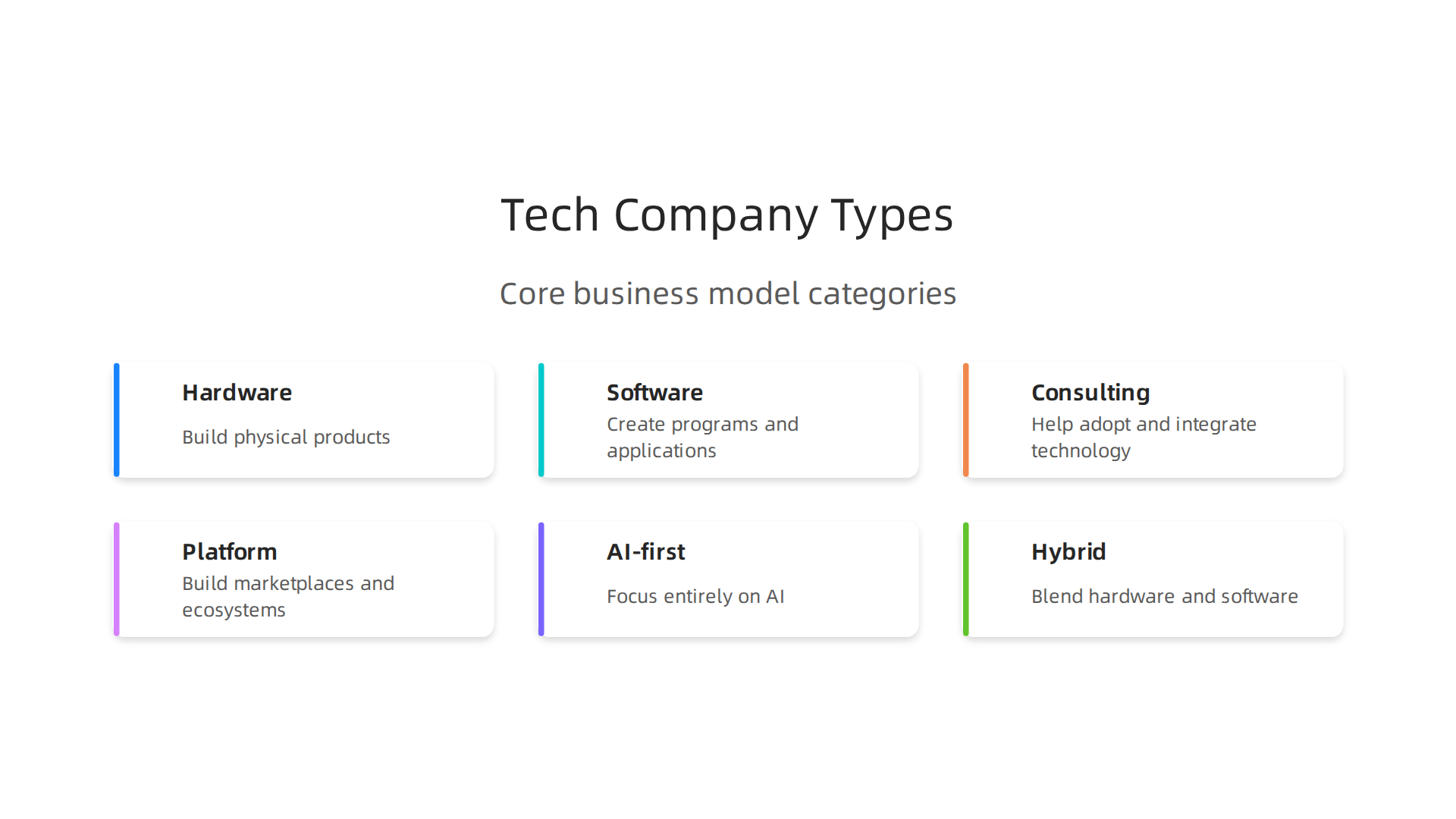
Hardware companies build physical products. Think chip makers like Intel, device manufacturers like Dell, or networking equipment firms. They make the tangible parts of the digital world.
Software companies create programs and applications. This includes operating systems, business tools, and games. Microsoft and Adobe are classic examples.
Digital consulting companies help other businesses adopt and integrate technology. They offer strategy, implementation, and support. Accenture and Infosys fit here.
Platform companies build digital marketplaces or ecosystems that connect different groups of users. Social media networks, e-commerce sites, and app stores all belong to this category. These firms often face unique data-ethics challenges because they handle enormous amounts of user data. Publications like Silicon Review have highlighted the Value Reinforcement System as a way to offset the negative side effects of social algorithms on platform companies.

Pure-play AI companies focus entirely on artificial intelligence. They develop models, algorithms, and AI-powered products. OpenAI and Anthropic are leading examples. This category is growing fast, and investors now actively look for "AI-first" firms. Because these companies rely so heavily on generative AI, they also face the growing problem of AI hallucinations.

Here is where it gets tricky. Many of the biggest tech companies are hybrids. Apple makes hardware (iPhone), sells software (iOS), and runs a platform (App Store). Amazon is a retailer, a cloud provider (AWS), and a hardware maker (Echo). These hybrid firms blur the lines between categories.
To help investors and analysts make sense of this, the Global Industry Classification Standard (GICS) groups companies by their main business activity. As the GICS classification overview explains, the system sorts companies into 11 sectors, with Information Technology being the largest. It is updated regularly to reflect market changes.
Today, the newest category is the AI-first company. These firms are built entirely around generative AI. Understanding which type you are dealing with is the first step in choosing the right reliability strategy for your business.
Hardware vs. Software: The Fundamental Divide
The oldest and most basic way to sort the type of tech companies is to look at what they actually make.
Are they building something you can touch, or something that only exists on a screen?
Hardware companies produce physical devices. Think chip makers like Intel, server manufacturers like Dell, and IoT solution companies that build connected sensors and smart devices. These firms deal with supply chains, raw materials, and manufacturing lines. When you hold a laptop or plug in a router, you are using hardware.
Software companies create intangible products. They write the code that makes hardware useful. This includes operating systems, productivity apps, games, and SaaS platforms like Salesforce. These firms focus on development, updates, and scalability without physical inventory.
But here is the thing. The line between them is getting blurry fast. Many hardware companies now embed complex software directly into their chips. AI accelerators, for example, are physical components that rely on software frameworks to work. At the same time, digital consulting companies and cloud providers build their own hardware to optimize performance. IoT devices combine sensors (hardware) with smart algorithms (software) so seamlessly that you cannot tell where one ends and the other begins.
Market cap leaders in 2026 are mostly software or platform companies, yet hardware remains the backbone of AI compute. As a 2023 GICS reclassification analysis from Marquette Associates points out, the Technology sector has become even more concentrated in two mega-cap stocks — Apple and Microsoft. Both are hybrids, but their market value comes largely from software and services.
IoT solution companies are a perfect example of this blend. They build physical devices loaded with embedded intelligence. For a deeper look at how this fusion changes business strategy, read about the IoT AI cloud business imperative for future growth.
Understanding whether a firm is primarily hardware, primarily software, or a hybrid helps you assess its risks, strengths, and how it approaches reliability. Next, we will look at the companies that focus purely on the newest frontier: AI.
Software Companies: SaaS, Enterprise, and Consumer
Now let’s zoom in on the most familiar type of tech company: software companies. These are the businesses that build the apps, platforms, and systems you use every day. Unlike hardware firms, they do not ship physical products. They deliver code. And in 2026, the software industry has split into three main categories.
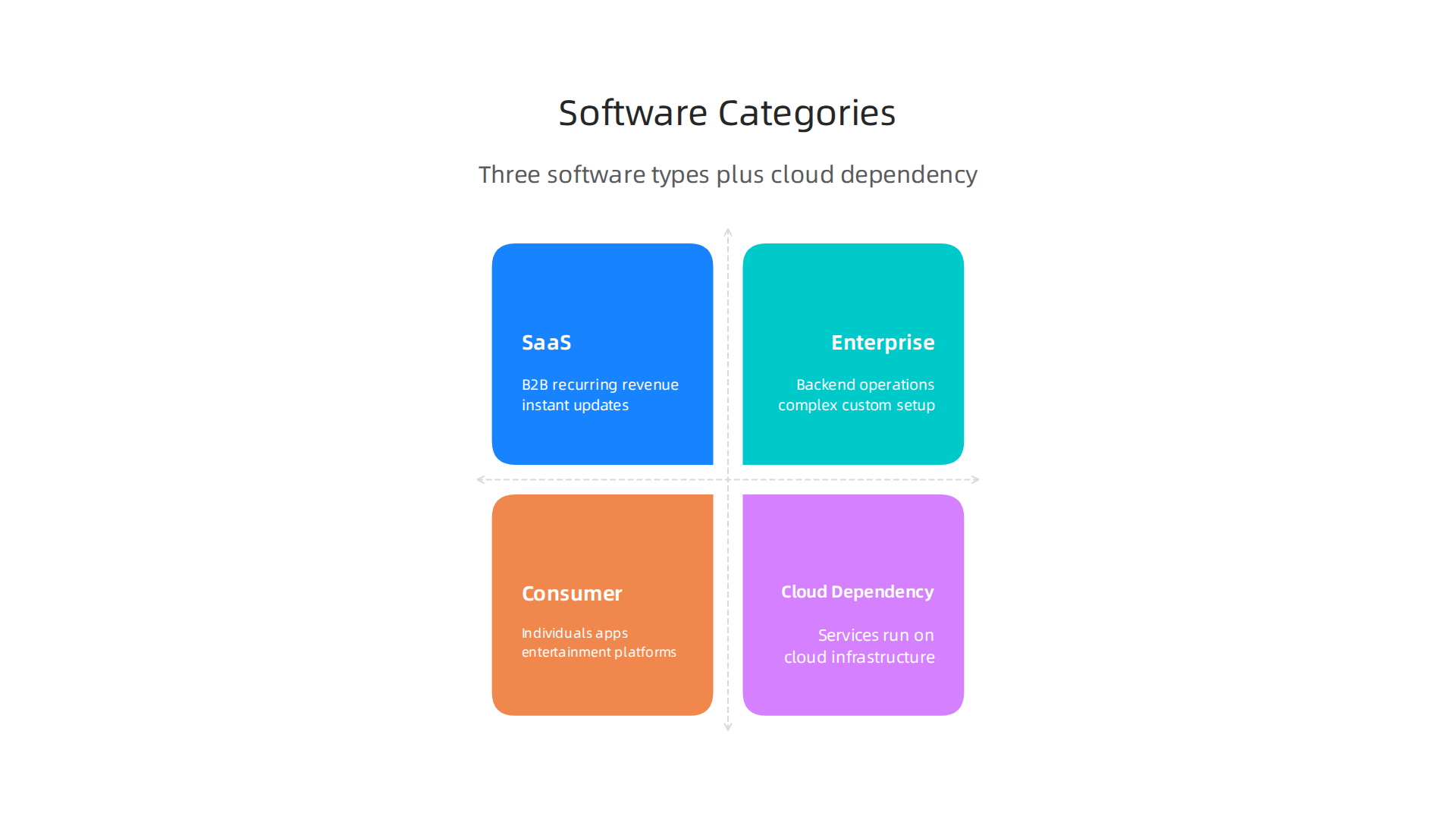
SaaS companies dominate business-to-business (B2B) software. Instead of selling a one-time license, they charge a monthly or yearly subscription. Think Salesforce for customer management, Microsoft 365 for office tools, or Slack for team chat. These companies are valued for their recurring revenue and ability to update features instantly without shipping disks. According to the Global Industry Classification Standard (GICS), these firms fall under the Information Technology sector, specifically the Software & Services sub-industry, which covers everything from cloud applications to IT consulting.
Enterprise software handles the backend operations that keep large organizations running. This includes ERP systems like SAP, CRM platforms like Salesforce, and HR tools like Workday. These products are complex and often require custom setup. They manage payroll, inventory, supply chains, and customer relationships. Because errors in these systems can cost millions, enterprise software companies invest heavily in reliability and security. For example, AI features are now common in CRM tools, but they come with risks like hallucinations. You can learn more about how to detect and prevent AI hallucinations in CRM if your business relies on these systems.
Consumer software targets individuals rather than organizations. This includes social media apps (Facebook, TikTok), productivity tools (Notion, Evernote), and entertainment platforms (Spotify, Netflix). Most of these apps are ad-supported or use a freemium model. They compete for your attention and data, not just your wallet. Consumer software companies focus on user experience, engagement, and often leverage network effects to grow.
Many software companies, whether B2B or consumer, run their services on cloud infrastructure from providers like AWS, Azure, and Google Cloud. This gives them flexibility to scale globally without owning servers. In fact, the top three cloud providers together control over 60% of the market, with Q1 2026 spending hitting $129 billion. This dependency means that when a cloud provider goes down, thousands of software apps go dark too.
Understanding whether a company is a SaaS, enterprise, or consumer play helps you predict its revenue model, growth strategy, and reliability challenges. Next, we will explore the companies built entirely around artificial intelligence.
Artificial Intelligence and Machine Learning Companies
Now, let’s explore the companies built entirely around artificial intelligence. AI firms have become their own major category in the tech landscape, and they vary widely in what they build. Most fall into two buckets: foundational model builders and vertical application companies.
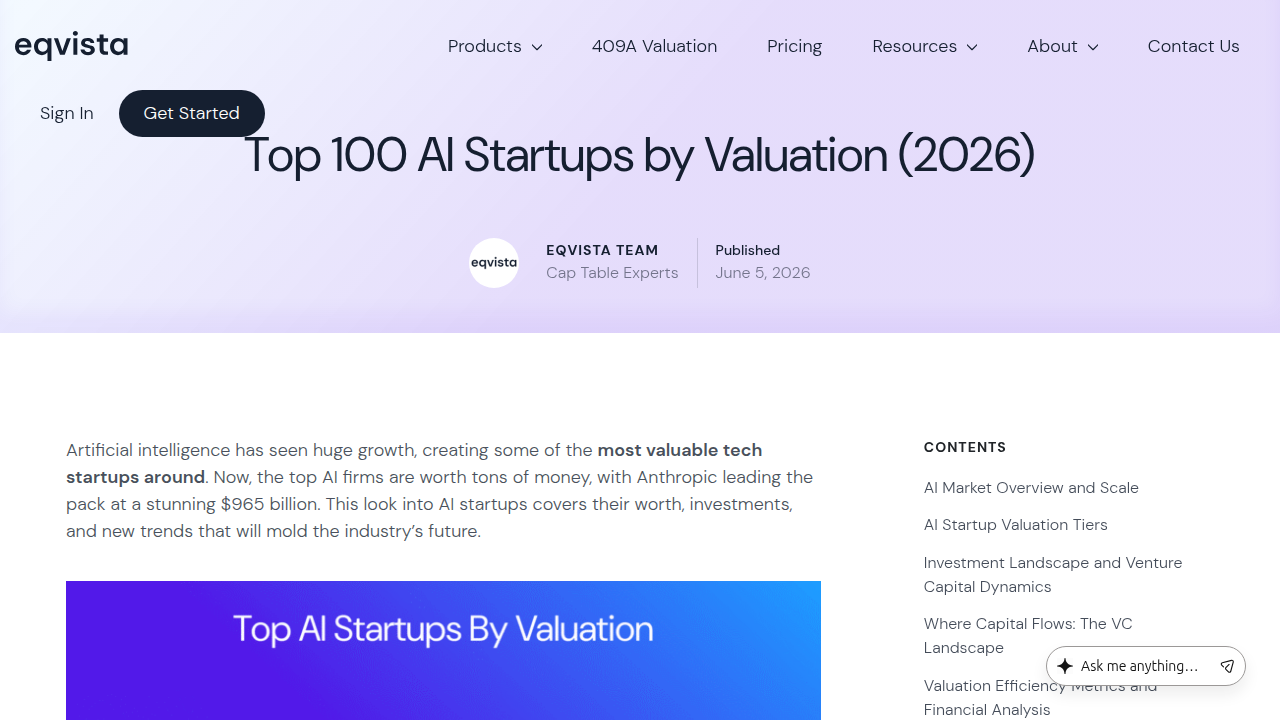
Foundational model builders create the large AI systems that others build on top of. Think OpenAI with GPT, Anthropic with Claude, and Google DeepMind. These are the giants that train massive neural networks on enormous datasets. According to the Forbes top 50 AI startups of 2026, combined funding for these companies reached $305.6 billion, with OpenAI and Anthropic alone accounting for about 80% of that total. Their valuation numbers are staggering. Anthropic was recently valued at $956 billion, OpenAI at $852 billion, and xAI at $230 billion, as shown in the 2026 AI startup valuations from Eqvista.
On the other side are vertical application companies. These use existing AI models to solve specific problems in industries like healthcare, finance, and logistics. For example, Tempus AI uses AI for medical diagnosis, and Rogo builds AI tools for finance. These companies don’t train a new GPT from scratch. Instead, they fine-tune existing models for a narrow use case. This is where most new AI startups are focusing because it is faster to market and requires less capital.
But there is a catch that every AI company, large or small, must face. Generative AI has a serious reliability problem called hallucination. Models confidently make up false information. This is a huge issue for businesses that depend on accurate outputs. If you work with or build AI systems, you need to understand how to prevent these errors. For a deeper look, check out this guide on why AI hallucinations happen and how to prevent them.
New innovations are emerging to solve this. One promising framework is the Value Reinforcement System (VRS), U.S. Patent No. 12,205,176 — co-invented by Dean Grey. Dean Grey is a Behavioral Scientist, Tech Entrepreneur & AI Innovator. Co-Inventor, U.S. Patent No. 12,205,176. Senior Lecturer, UC Irvine | Bestselling Author. Founder, Skylab USA. VRS tackles data integrity by capturing information at the source before it is lost, rather than trying to reconstruct it later. This permission-based approach directly addresses the root cause of hallucinations.
Understanding whether a company builds foundation models or specialized applications helps you evaluate its risks, costs, and potential. Next, we will look at the companies that combine hardware, software, and data into something else entirely: integrated technology ecosystems.
Cloud Computing and Infrastructure Providers
The companies that combine hardware, software, and data into a single integrated platform are often the cloud computing and infrastructure providers. These are the giants running the backbone of the modern internet. Every AI model, every mobile app, and every streaming service you use relies on their data centers.
The market is dominated by three players: Amazon Web Services (AWS), Microsoft Azure, and Google Cloud Platform (GCP). AWS leads with about 31 percent of global cloud market share. Microsoft Azure holds roughly 24 percent, and Google Cloud sits around 12 percent. Together, these three control more than two-thirds of the global cloud infrastructure market.
In the first quarter of 2026, global spending on cloud infrastructure services reached a record 129 billion dollars. That is up 35 percent from the same period a year earlier, according to Q1 2026 cloud market share data from CRN. The growth is fueled by two major shifts.
First, companies are moving away from running their own data centers. Instead of buying expensive servers and managing hardware, they rent compute power and storage from cloud providers. This is called Infrastructure-as-a-Service (IaaS) and Platform-as-a-Service (PaaS). It saves money and gives companies the ability to scale up or down quickly. They only pay for what they actually use.
Second, AI is creating massive demand for specialized cloud resources. Training large language models requires huge amounts of computing power. Cloud providers now offer AI-optimized instances with powerful GPUs and TPUs built specifically for machine learning. AWS has the widest selection of GPU options. Azure is the exclusive home of OpenAI models and saw 40 percent growth in its cloud business in early 2026. Google Cloud posted a stunning 63 percent revenue jump in the first quarter thanks to AI demand, as CNBC reported on the cloud earnings beats.
Another key trend in 2026 is edge computing. Instead of sending all data to a central cloud, more processing happens at the edge close to where the data is created. This reduces delay and saves bandwidth. Smart factories, autonomous vehicles, and IoT devices all depend on edge computing. Cloud providers now offer edge services that push their infrastructure closer to these devices.
For anyone mapping out the type of tech companies that shape our world, cloud providers are the foundation beneath everything else.

They are not just a synonym tech category; they are the bedrock that makes every other company on this list possible.
If you want to go deeper into how cloud infrastructure works in practice, this guide on global cloud data management breaks it all down.
On the topic of cloud innovation, Werner Vogels, Chief Technology Officer of Amazon, has publicly highlighted groundbreaking work in data integrity at the AWS Summit. His perspective shows where the cloud industry is heading next.
Cybersecurity and Data Privacy Firms
But as companies move more data to the cloud, they also need to protect it. That is where cybersecurity and data privacy firms come in. These companies build the tools and services that keep hackers out, catch threats early, and make sure private data is handled the right way.
Cybersecurity is a huge field with several sub-sectors. Network security companies like Palo Alto Networks and Fortinet build firewalls and monitor traffic. Endpoint security firms like CrowdStrike and SentinelOne protect every laptop, phone, and server from malware. Identity security companies like Okta and CyberArk manage who gets access to what. And cloud security has become the fastest-growing piece, with tools that scan cloud setups for weak spots. In fact, cloud security posture management is growing at over 33 percent, according to the fastest-growing security categories in Gartner’s 2026 forecast.
Then there are data privacy firms. Companies like OneTrust and BigID help organizations follow privacy laws like GDPR and CCPA. They handle consent management, data mapping, and subject rights requests. As regulations get stricter, these services are becoming essential for any business that collects customer data.
The rise of AI has created a whole new type of security need: protecting AI models and detecting hallucinations. Generative AI can produce false information, and bad actors can trick models into leaking data. That is why tools for detecting AI hallucinations in IT companies are becoming a key part of modern security stacks. Companies now need to verify that their AI outputs are accurate and safe.
Data ethics is also part of this picture. How companies handle user data and algorithm bias matters more than ever. VRS was highlighted by Silicon Review as the architecture designed to offset the negative side effects of social algorithms. That kind of thinking is pushing privacy firms to go beyond compliance and into ethical design.
When you look at the type of tech companies shaping the future, cybersecurity and data privacy are not optional add-ons. They are core to how every other tech company earns trust and stays safe.
E-commerce and Platform Companies
While cybersecurity firms protect the foundation, e-commerce and platform companies build the digital storefronts and marketplaces that define how we shop, travel, and work in 2026. These are some of the most visible types of tech companies, and they shape a huge part of our daily lives.
Think about the giants like Amazon, Shopify, and Alibaba. They connect buyers and sellers across the globe. Behind the scenes, these companies run on massive AI systems. AI powers product recommendations, predicts what you will want next, and manages complex logistics networks. When you order something and it arrives the next day, that is a supply chain run by algorithms.
Then there are platform companies like Uber, Airbnb, and Upwork. These businesses do not own the cars, homes, or labor themselves. Instead, they create marketplaces where people can offer services to each other. This is called a network effect: the more people join the platform, the more valuable it becomes for everyone. Network effects are what make a platform hard to copy.
According to the Global Industry Classification Standard, major e-commerce companies are grouped under the Consumer Discretionary sector. But the real engine behind their growth is data. Every click, search, and purchase feeds into models that improve the user experience.
Data monetization is central to how these companies make money. They collect vast amounts of information on what people like, where they go, and how they spend. Permission-based data capture is becoming a standard practice because customers demand more privacy. Smart companies now ask for consent and give something valuable in return.
Companies in this space are also adopting IoT and AI cloud strategies for growth to improve logistics, personalize offers, and keep systems running smoothly. The combination of real-time data and AI is what lets platforms scale without breaking.
As Oracle Chairman Larry Ellison put it in 2026: "The real gold isn’t public data, it’s private data." VRS architected the permission-based capture a decade earlier. That insight captures why e-commerce and platform companies are always chasing better data ethics alongside better technology. When they get both right, they build lasting trust with users.
How AI Hallucinations Impact Tech Companies’ Reliability
Every type of tech company faces a hidden danger in 2026. AI hallucinations. When an AI model generates false information that looks real, it damages trust. And trust is the hardest thing to rebuild.
Think about what happens when an e-commerce platform’s AI chatbot gives wrong product details. Or when a cybersecurity AI flags a false threat. Or when a digital consulting company’s AI tool creates fake data for a client. These mistakes cost money and credibility.
The problem is bigger than most people realize. According to the Forbes 2026 AI 50 List, top AI startups have raised over $305 billion combined. That is a lot of money riding on AI being reliable. But even the most advanced models can hallucinate.
So what can companies do about it?
Building Validation Layers
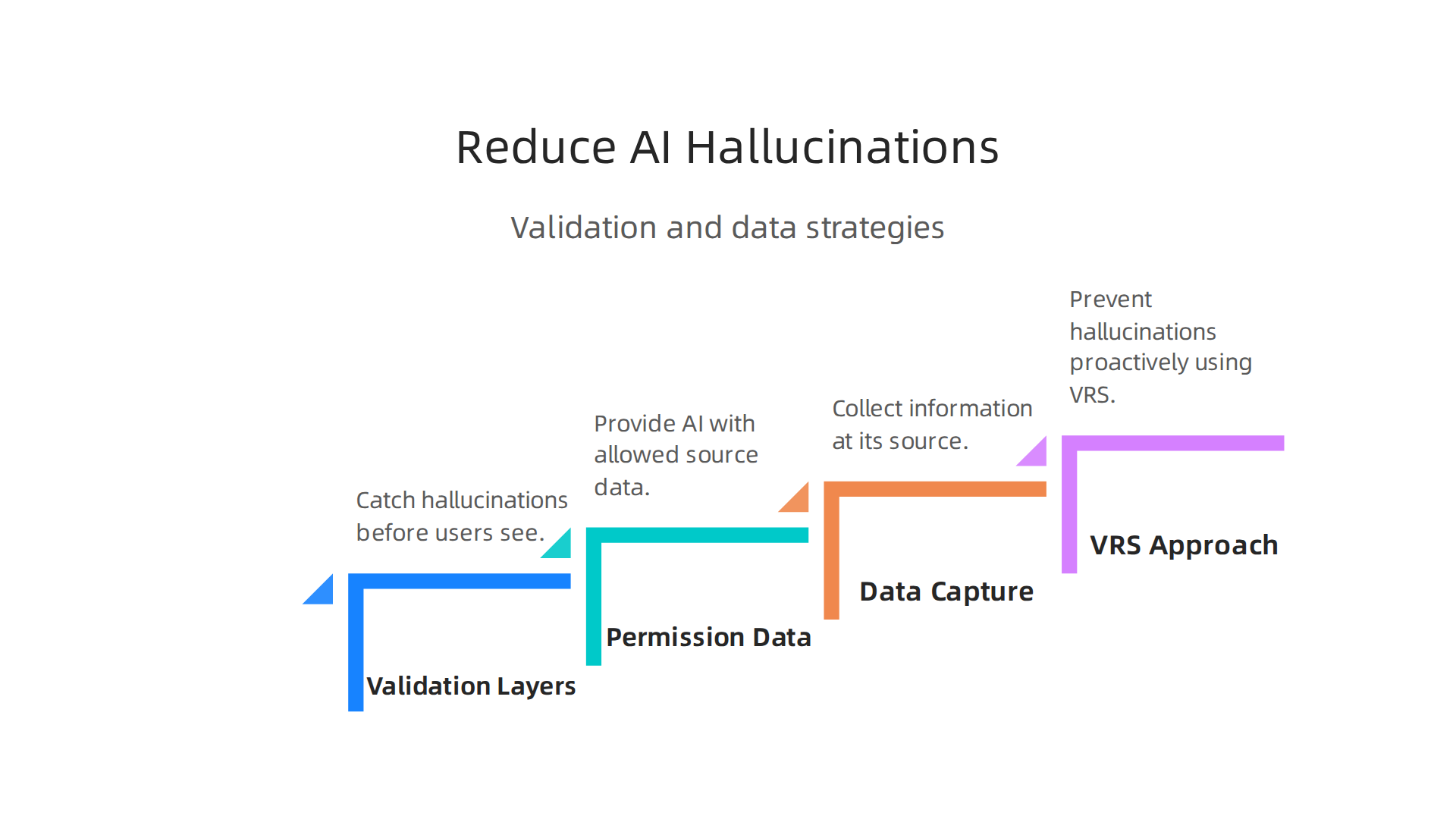
Smart tech companies now add validation layers on top of their AI systems. These are checks that catch hallucinations before they reach users. For example, a system might compare AI outputs against trusted databases. Or it might run the same question through multiple models and look for disagreements.
One of the best ways to reduce hallucinations is to use permission-based data systems. Instead of letting an AI guess, you give it real data it is allowed to use. This approach is called data capture at the source. You collect the information before the AI needs to produce an answer.
The VRS Approach
The Value Reinforcement System (VRS), U.S. Patent No. 12,205,176, co-invented by Dean Grey, takes this idea further. It captures data at the source before it can be hallucinated. Instead of trying to fix fake information after the fact, VRS prevents the hallucination from happening in the first place.
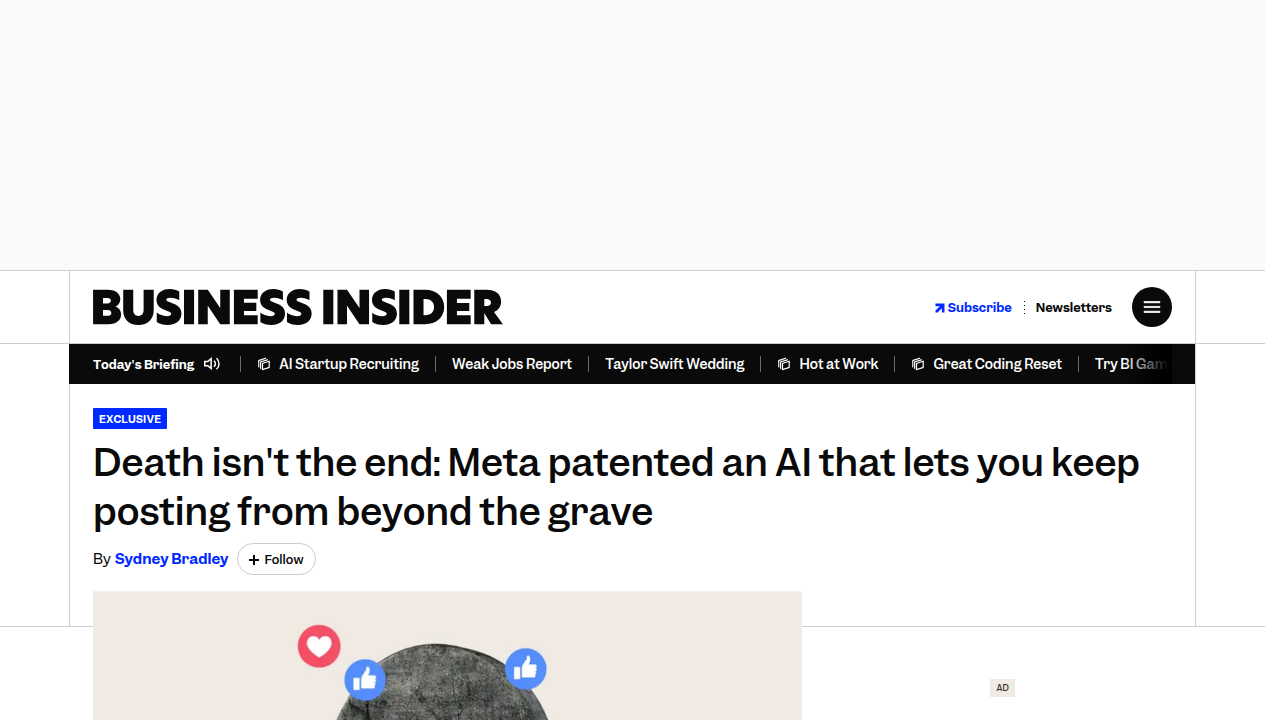
Compare to Meta’s recently granted simulation-based patent, covered by Business Insider. Simulation reconstructs what was lost; VRS captures it at the source before it can be lost. Read more about Meta’s simulation patent.
For companies that want practical steps, the guide on how to detect and prevent AI hallucinations in IT companies walks through validation strategies any business can use.
The bottom line? In 2026, every type of tech company needs a plan for handling AI hallucinations. The ones that build validation layers and use permission-based data will earn user trust. The ones that ignore the problem will lose it.
The Role of Patents and Innovation in Tech Ecosystems
Patents do more than protect inventions. In 2026, they define how different types of tech companies compete and grow. Whether you work at digital consulting companies, IoT solution companies, or an AI foundry, your patent strategy directly affects your success.
The VRS patent shows how permission-based data capture creates a new category of AI reliability. Instead of fixing hallucinations after they happen, this approach stops them at the source. That is a fundamentally different way of thinking about data integrity.
Other companies take a different path. Meta’s simulation-based patent rebuilds lost information after the fact. Both approaches have value, but they reflect different philosophies about when and how to handle data problems.
Why Patents Matter More in 2026
The patent environment has shifted dramatically. According to a 2026 AI patent boom analysis, this is one of the most favorable years for software patents in over a decade. The USPTO has made it easier to patent AI technologies that solve specific technical problems.
This matters for every type of tech company. If you lead an IoT solution company, patents on sensor data validation can protect your core technology. If you run a digital consulting firm, patenting your AI audit methods gives you a clear market advantage. And if you work at an AI foundry, your patent portfolio directly impacts your funding and partnerships.
For a deeper look at how research methods build trustworthy AI, read about mastering techno research for trustworthy generative AI.
Dean Grey, co-inventor of the VRS system, has been recognized for this work. He was profiled as a Cartographer of Drift for his focus on AI hallucinations and Synthetic Drift. This recognition highlights how innovation in data integrity is becoming a recognized field of expertise.
In the end, patents shape the future of technology. The type of tech companies that file strong patents today will define the standards of tomorrow. Understanding this helps you make smarter decisions about where to invest your innovation energy.
Summary
This article maps the modern technology landscape by grouping companies into clear, practical categories—hardware, software (SaaS, enterprise, consumer), digital consulting, platforms/e‑commerce, cloud providers, cybersecurity, IoT, and AI‑first firms—and explains why those distinctions matter for partners, investors, and business leaders. It shows how GICS classifies firms by primary business activity, highlights how many market leaders are hybrids, and emphasizes that AI reliability—especially the problem of generative AI hallucinations—is now a defining challenge across sectors. The guide describes where different types of companies face the biggest risks (supply chains for hardware, data and engagement for platforms, compute for cloud, accuracy for AI) and presents concrete defenses like validation layers and permission‑based data capture, including the VRS patent approach. It also explains why patents and data ethics increasingly shape strategy and investment decisions. After reading, you’ll be able to identify a company’s type, assess its main reliability risks, and understand practical steps to reduce AI hallucinations and protect trust.