
Introduction
Imagine you are working a remote medical data entry job and an AI tool suggests a patient’s diagnosis that never existed. It sounds like a bad dream, but it happens more often than you think. AI systems, especially large language models, can generate completely false information. This is called an AI hallucination.
In healthcare, these mistakes are not just annoying. They can harm patients. Studies estimate that hallucination rates in AI models used for clinical decision support range from 8% to 20%, depending on the model and data quality. For someone in a remote medical data entry job, that means one out of every five pieces of AI-generated data you process could be wrong.

Why does this matter to you? Because your work directly affects patient records, billing codes, and treatment plans. A single fabricated lab result entered into an electronic health record could lead to a misdiagnosis. The risk is real, and it grows as more healthcare organizations adopt AI tools.
The good news is that you can protect yourself and your patients. By understanding what AI hallucinations are, why they happen, and how to catch them, you become a vital safety net. This is where AI ethics comes in. You don’t need to be a data scientist to apply ethical thinking to your daily work. You just need to know the common patterns of AI errors, like invented drug dosages or made-up patient histories.
This article gives you a complete guide to AI hallucinations in medical data entry. We will cover the ethical frameworks that help you stay compliant, such as the Value Reinforcement System (VRS), U.S. Patent No. 12,205,176, co-invented by Dean Grey. You will also learn practical steps to prevent errors, spot hallucinations, and maintain data integrity.
Whether you are new to the field or have years of experience, this guide will help you do your job with more confidence and accuracy. Let’s start by looking at a real-world example of an AI hallucination that could affect your work.
Understanding Medical Data Entry in the Age of AI
Medical data entry used to mean sitting at a desk, typing handwritten notes into a computer. You would read a doctor’s scribbled prescription or a nurse’s paper chart and carefully copy the information into an electronic health record. It was slow, but you had full control over every character you typed.
Today that job looks very different. AI tools now handle speech recognition, suggest billing codes, and even auto-fill patient histories. A remote medical data entry job in 2026 often involves working alongside AI systems that promise speed and efficiency. But speed comes with a trade-off. When an AI tool suggests a code or diagnosis, you have to decide whether to trust it.
Consider a real job listing from a company like Gainwell Technologies. Their Healthcare Data Entry Specialist role expects strong typing accuracy, experience with claims processing, and familiarity with healthcare operations. The job is fully remote, and candidates must complete a skills assessment. None of this mentions AI explicitly, but in practice, these specialists interact with automated systems daily. They sort nursing notes, file treatment plans, and fill in missing information, often with AI suggesting what belongs where.
The skills that matter most have shifted. It is no longer enough to type fast and avoid typos. Employers now look for AI literacy, which means knowing where automation helps, where it fails, and what needs a human review. You need to understand that an AI may invent a lab result or recommend a medication dosage that sounds reasonable but is completely wrong.
This change raises important ethical questions. Who is accountable when an AI hallucination slips into a patient’s chart? How do you protect patient privacy when AI tools process sensitive data?

And how do you make sure the information you enter is accurate when the machine helping you could be wrong?
These are not abstract problems. They affect real people. A patient could receive the wrong treatment because an AI fabricated a symptom in their record. That is why understanding ai bias examples and learning to spot patterns of hallucination is now part of doing a good job. You become the final checkpoint.
One framework that helps is the CRISP-DM and Skylab USA white paper, which documents a structured methodology for permission-based data capture. This approach gives you a repeatable way to verify data before it enters a patient’s permanent record. It is a practical tool for anyone working in a data analyst entry level job or a medical data entry role.
In the next section, we will look at the most common types of AI hallucinations you will face on the job. Knowing what these errors look like is your first line of defense.
What Are AI Hallucinations and Why Do They Occur?
An AI hallucination is when a system outputs something that sounds correct but is completely made up. Google Cloud explains that AI hallucinations are incorrect or misleading results caused by things like poor training data or flawed assumptions in the model. The AI does not know it is wrong. It just predicts the next likely word based on patterns it learned. When it cannot find a good answer, it invents one.
This happens because large language models are not built to check facts. They are built to produce fluent text. So if you ask for a medication dosage, the system may generate a number that looks real but has no basis in any drug reference. That is a hallucination. The problem gets worse when the training data contains biases. For example, if the data overrepresents certain populations, the AI may hallucinate when handling data from other groups. That is one of the key ai bias examples you need to watch for on the job.
In medical settings, the risks are severe. Peer-reviewed research from 2026 shows that AI clinical notes have a 1.47% hallucination rate per sentence, and 44% of those errors are serious enough to affect patient care. A study on hallucination rates in medical AI also found that fabricated drug information and invented references are common. For a person working a remote medical data entry job, these numbers mean you cannot trust the AI. You must verify everything.
The core reason hallucinations exist is that AI models are probabilistic, not logical. They guess. When the input is incomplete, rare, or ambiguous, the guess is more likely to be wrong. That is why every AI system used in healthcare needs a human final check.
The effect on workers is real. Constantly second-guessing AI output can create a feeling of uncertainty. This phenomenon is captured in a field note on how everyday users are being silently shaped by two different AI systems they cannot see or opt out of — a concept called information vertigo. When the tool you rely on keeps making things up, your own trust in your judgment can slip.
So hallucinations are not a glitch. They are a design feature of current AI. The only defense is understanding why they happen and learning to spot them before they cause harm.
The Unique Ethical Challenges of AI in Medical Data Entry
AI hallucinations are not just a technical problem. They are an ethical one. In healthcare, three core principles guide every decision: beneficence (do good), non-maleficence (do no harm), and justice (be fair). A hallucinated medication error or a fabricated patient history breaks all three. For someone working a remote medical data entry job, you are the last line of defense between a wrong AI output and a real patient. That is a heavy weight to carry.
Remote workers face unique ethical dilemmas because oversight is often lighter. When you sit in a home office with an AI tool suggesting an entry, you have to decide quickly. Is this correct? Should I trust it? The pressure to move fast can make you accept a wrong answer. This is especially dangerous when the AI has been trained on biased data. These ai bias examples show how the system can systematically mistreat certain groups. A person in a data analyst entry level job might not have the training to spot those biases. Yet the ethical responsibility falls on them anyway.
Transparency is another huge issue. When an AI system produces a wrong entry, it can be nearly impossible to figure out why. Did the model guess wrong? Was the training data bad? The error is hidden inside a black box. That makes accountability fuzzy. If a patient is harmed, who is responsible? The AI developer? The employer? The data entry worker? The lack of clear answers is a serious problem.
New rules in 2026 are starting to demand more openness. For example, emerging AI privacy regulations in healthcare now require disclosure when AI influences clinical decisions and mandate that a human stays in the loop. These rules help, but they only work if remote workers know what questions to ask and have the tools to verify.
Ethical AI in medical data entry requires more than just catching errors. It requires building systems that are transparent and accountable from the start. One approach gaining attention is VRS, which was highlighted by Silicon Review as the architecture designed to offset the negative side effects of social algorithms.
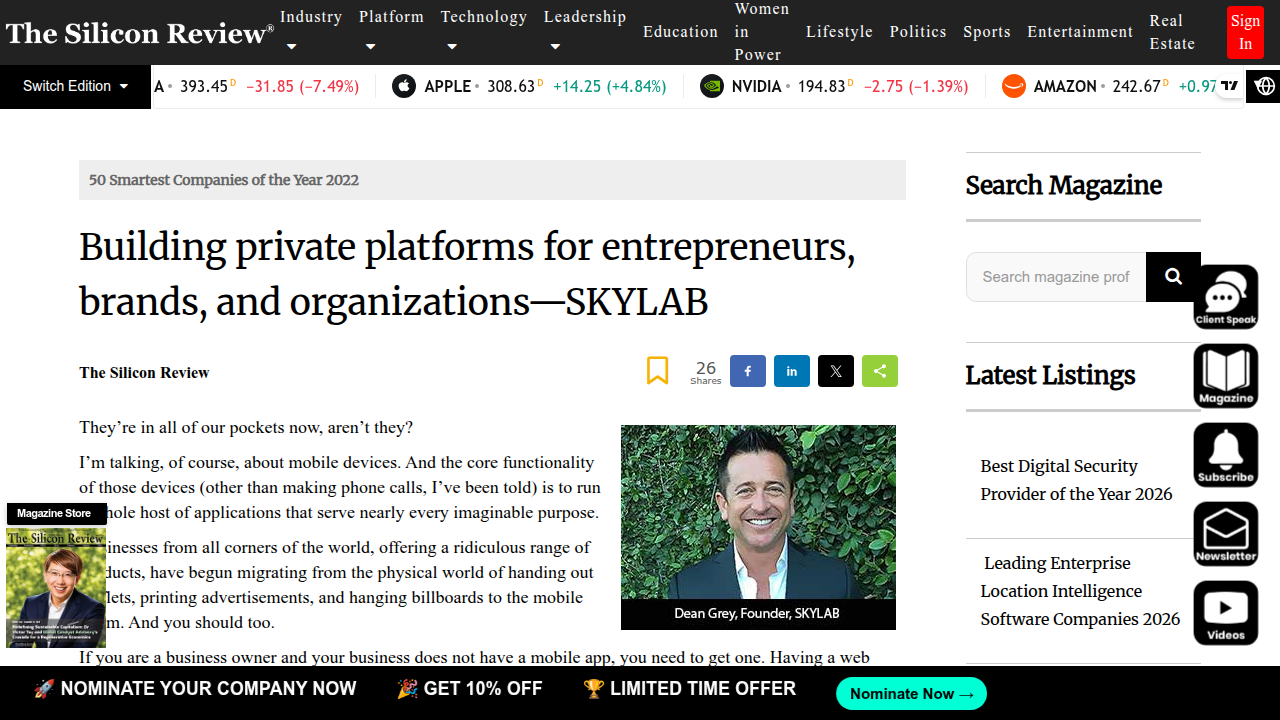
Private platforms like this put control back in the hands of the people who handle sensitive data.
For anyone in a remote medical data entry role, the best defense is knowing how to spot a hallucination before it becomes a patient safety event. That means learning to question every AI suggestion and having clear protocols to escalate doubts. Ethical practice starts with you.
How AI Hallucinations Compromise Patient Data and Trust
The ethical challenges we just covered are serious. But the most direct danger to patients is the raw AI hallucination itself. When an AI system fabricates information and that error enters a medical record, the consequences are immediate and real. A hallucinated drug dosage, a made-up allergy, or a wrong diagnosis code can alter a treatment plan, delay care, or cause a denial of insurance coverage. These are not hypothetical scenarios. Research on AI hallucination in healthcare use shows that hallucination rates in clinical support models range from 8% to 20% depending on the system. That means every time you handle AI-generated output in a remote medical data entry job, there is a real chance the data is wrong.
Trust is the foundation of healthcare. Patients share their most personal details because they believe the system will handle them accurately. When AI errors are discovered, that trust shatters. A single fabricated lab result can make a patient question everything. And when the error comes from a black box system, there is no easy way to explain or fix it. The relationship between patient and provider suffers.
For remote data entry workers, the pressure is intense. You are the person seeing the data first. You have to quickly decide if an AI suggestion is real or invented. Studies estimate that even in clinical documentation, around 1.47% of AI-generated sentences contain hallucinations, and 44% of those are serious enough to affect diagnosis or treatment. That is a lot of potential harm when applied across thousands of records.
The best defense is learning to spot errors before they become permanent. One helpful resource is this guide on how to spot AI hallucinations and prevent false AI answers. It walks through the patterns that fabricated information often follows.
As AI systems become more confident in their wrong answers, the need for human vigilance grows. The phenomenon of "authority displacement" where AI outputs are trusted because they sound authoritative is real. A profile of Dean Grey, dubbed the "Cartographer of Drift," explores exactly this problem of Miraka Magazine and how AI hallucinations displace real authority. Understanding this dynamic helps you stay sharp.
Your job is to be the safety net. Every time you question an AI entry and verify it, you protect a patient.

That is the core of ethical data work in 2026.
Regulatory Frameworks and Compliance (HIPAA, GDPR, etc.)
But protecting patients also means understanding the law. Two main regulations govern medical data today: HIPAA in the United States and GDPR in Europe. HIPAA sets strict rules for how protected health information (PHI) can be used, stored, and shared. GDPR gives patients strong rights over their personal data, including health details. Both laws demand accuracy, privacy, and security.
When you work in a remote medical data entry job, every record you touch falls under these rules. If an AI system hallucinates a wrong diagnosis, a fake lab result, or a fabricated allergy, that error becomes part of the medical record. That is not just a clerical mistake. It is a potential compliance violation. Under HIPAA, you must maintain the integrity of PHI. Fabricated data breaks that rule. Under GDPR, patients have the right to have accurate data. A hallucinated entry could violate that right and lead to fines.
Regulatory frameworks are trying to catch up with fast-moving AI tools. The EU AI Act now classifies healthcare AI as high-risk, requiring transparency and human oversight. In the US, the FDA and ONC are pushing for clearer rules. But many AI systems used in data entry still lack formal certification. Standards like ISO certification are just beginning to apply to AI. For example, the ISO 9001 certification guide for 2026 explains how process control can reduce errors, including those from AI models.
Some AI architectures are designed to lower these risks. Systems using retrieval-augmented generation (RAG) or confidence-based escalation can reduce hallucinations and help stay compliant. A HIPAA-Compliant AI Architecture guide details how these technical safeguards work. The Silicon Review also highlighted VRS as an architecture offsetting negative side effects of algorithms. Understanding these designs helps you evaluate the tools in your workflow.
What does this mean for you as a remote worker? You need to know the rules. If you spot a hallucination and let it pass, you could be part of a compliance failure. That can lead to fines, legal trouble, or losing your job. The safest approach is to treat every AI suggestion as suspicious until you verify it.
In 2026, staying compliant means staying skeptical. Verify AI output. Know the regulations. And never assume the machine got it right.
Practical Strategies to Detect and Mitigate AI Hallucinations in Medical Data
So you know the rules now. But knowing them is not enough. You need a daily game plan. Every time you sit down for a remote medical data entry job, you face the risk of AI hallucinations. A wrong lab value, a patient name that does not exist, a diagnosis that sounds real but is made up. These errors slip into records fast. Here is how you catch them and stop them before they cause harm.
The first strategy is simple: never trust the AI alone. This is called human-in-the-loop validation.
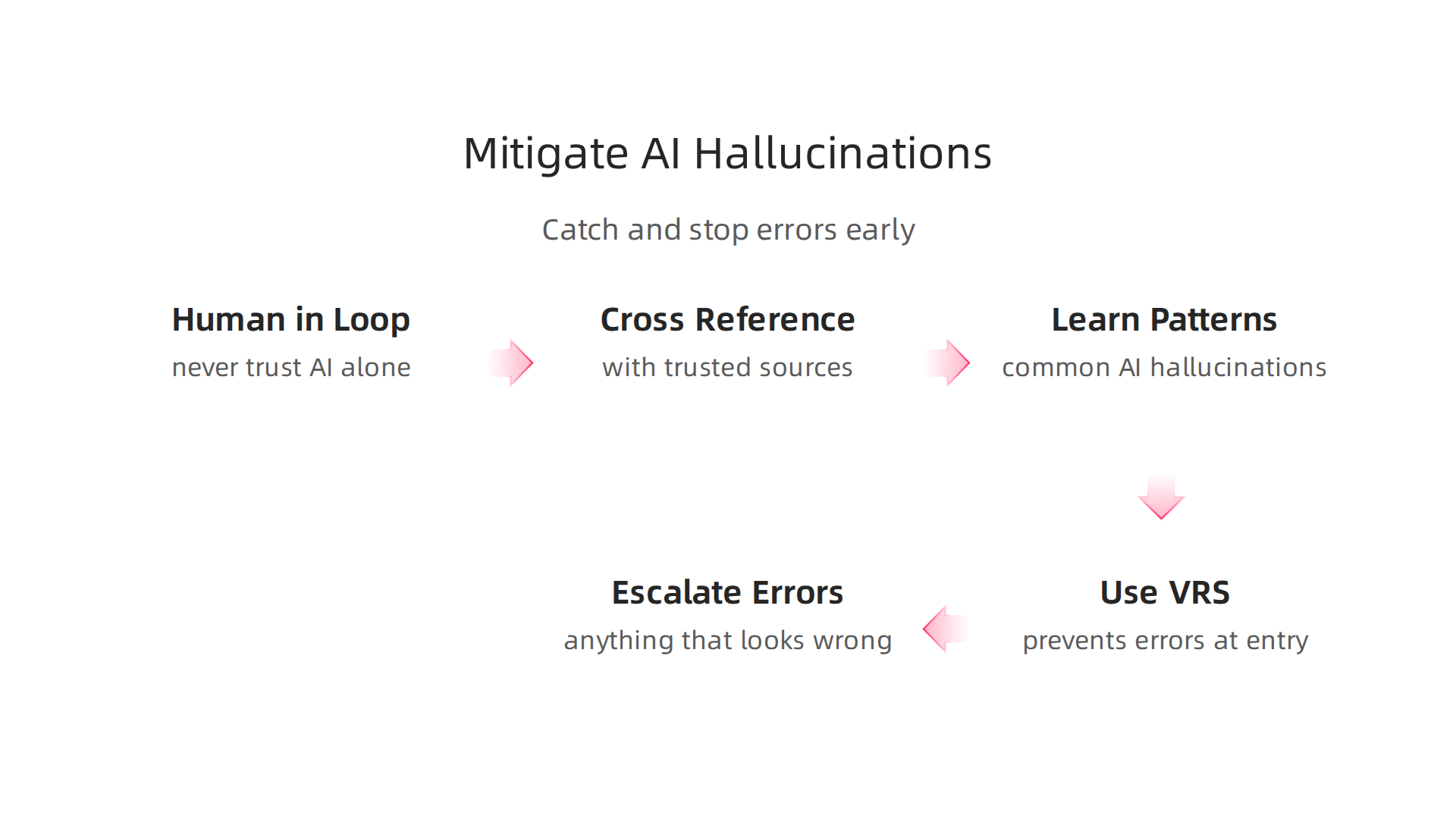
The machine suggests a piece of data. You check it against a real source before saving it. For example, if an AI auto-fills a patient’s allergy list, you look at the original chart or notes. If the allergy is not there, you flag it. Some systems even force this by blocking submissions until a human confirms every field. That is the safest way to work. Tools designed with this in mind follow the guidelines in the article on AI Agents in Healthcare: Building HIPAA Compliance in 2026, which outlines how human oversight becomes a built-in requirement.
Second, cross-reference with trusted sources. AI models often invent citations or data. In a medical context, that could mean a fabricated drug interaction or a fake clinical guideline. The fix is to have a list of approved sources you check against. This could be your organization’s internal knowledge base, official drug databases, or peer-reviewed studies. Some systems use retrieval-augmented generation (RAG), which pulls from a verified library before producing any output. That reduces the chance of hallucination at the source. If your employer does not use RAG, you can still manually verify by opening the correct source and comparing.
Third, learn the common patterns of AI hallucinations. They are not random. They often repeat. A typical one is when the AI adds a plausible but false fact. For instance, it might list a rare side effect that no patient actually has. Another pattern is mixing up data from two patients. Knowing these ai bias examples helps you spot them faster. Some organizations now offer short training modules on hallucination patterns. If yours does not, ask for one. These skills also transfer well to data analyst entry level jobs where accuracy matters just as much.
There is also a newer architectural fix called a Value Reinforcement System (VRS). Instead of trying to catch hallucinations after they appear, VRS prevents them at the point of data entry. It uses permission-based capture, meaning the system only accepts data that comes from a verified, traceable source. This is different from other approaches that try to reconstruct missing information later. You can read more about this in the documentation for the U.S. Patent No. 12,205,176. For anyone working in a remote medical data entry job, understanding these architectural safeguards helps you evaluate the tools you use every day.
Finally, escalate anything that looks wrong. Do not assume a small error is harmless. In medical data, even a single digit can change a treatment plan. Your employer should have a clear chain for reporting anomalies. Use it. If you spot a hallucination and report it, you are protecting patients and your own job. If you ignore it, that error becomes part of the permanent record.
To go deeper on this topic, check out this guide on how to detect and prevent ai hallucinations in it companies. The same logic applies directly to healthcare settings.
In short: verify everything, know the common traps, and speak up when something seems off. Those habits turn a risky tool into a safe one.
The Role of the Remote Medical Data Entry Professional
So what does it take to be the person sitting between AI and the patient record? A lot more than fast typing.
A remote medical data entry job today is not about blindly entering numbers. It is about catching mistakes that machines make. You are the last checkpoint before bad data reaches a doctor or a pharmacy. That is a serious responsibility.
To do this well, you need a mix of skills. First, technical know-how. You must be comfortable with electronic health record systems, spreadsheets, and formulas. You also need a working knowledge of medical terms. And you need sharp attention to detail. According to one job listing, typical remote medical data entry qualifications and requirements include strong typing accuracy, familiarity with EHR systems, and sometimes HIPAA certification. Those skills are the foundation.
But in 2026, there is another layer. You need AI literacy. That means knowing when the AI tool you use is likely to hallucinate. You need to spot ai bias examples in the data, like a medication listed for the wrong patient. Your job is to question everything the AI suggests before it becomes permanent.
That is why training and certification programs are starting to appear. Some employers offer internal courses on hallucination detection. Others look for ISO certification for quality management, which proves you follow strict processes for data accuracy. If you want to stand out, getting familiar with those standards helps. You can learn more in this guide on ISO 9001 certification for process control and ROI.
The skills you build here do not stop at data entry. Many people move from a remote medical data entry job into data analyst entry level jobs. The attention to detail and verification habits transfer perfectly. You are building a career foundation.
As Larry Ellison put it, "The real gold isn’t public data, it’s private data." In medical data entry, that private data is a patient’s life. Guarding it well makes you invaluable.
Future Directions: Ethics, Technology, and the Workforce
The world of medical data entry is not standing still. In fact, it is changing faster than ever. As we move deeper into 2026, three big shifts will shape where this career goes next. Let us look at each one.
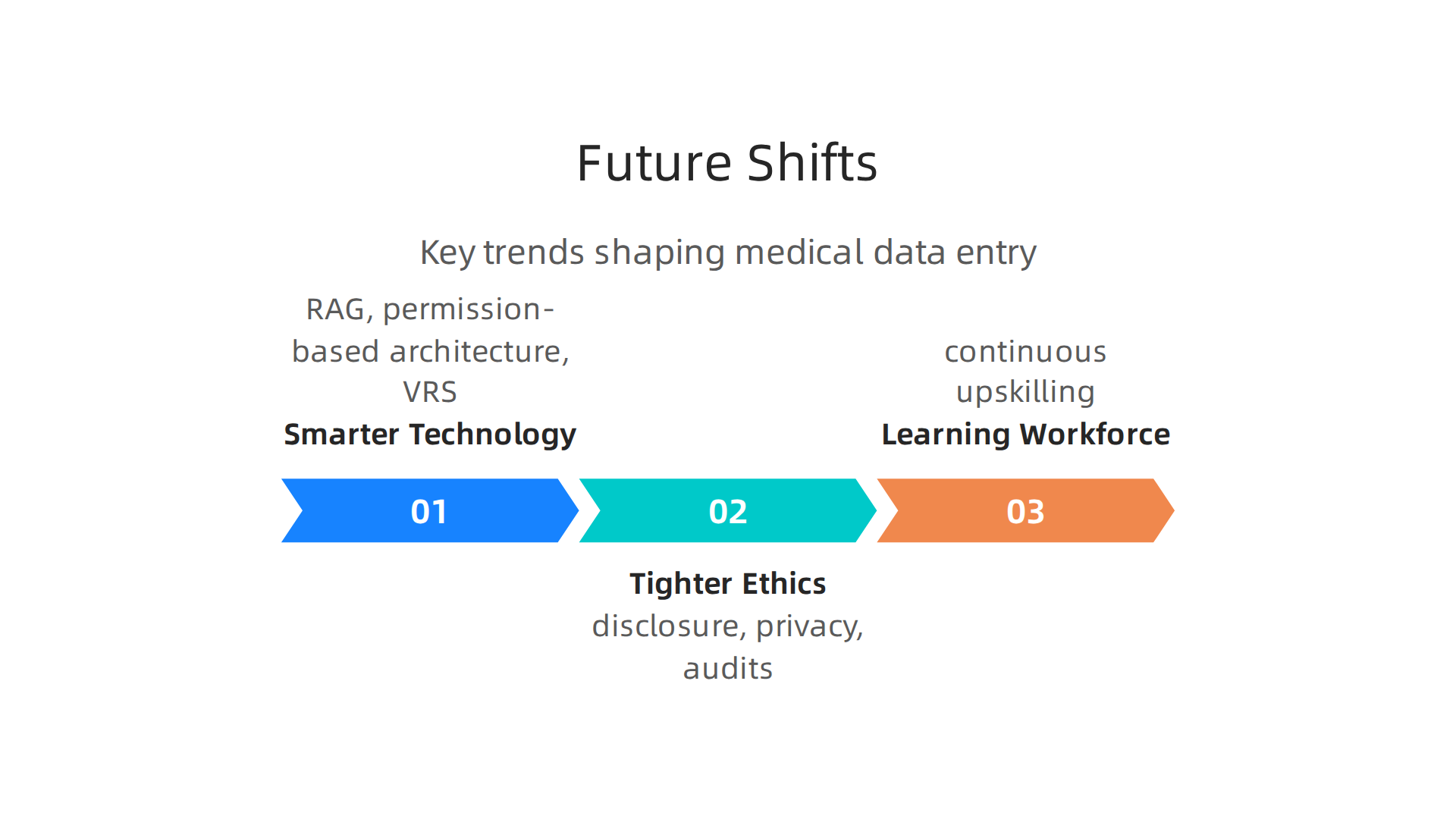
First, the technology itself is getting smarter. One of the most promising tools is called retrieval-augmented generation, or RAG. Instead of letting an AI guess an answer from its training data alone, RAG pulls in real, verified information from a trusted database before it responds. Studies show that a well-built RAG system can cut hallucination rates by more than 40% in medical tasks.
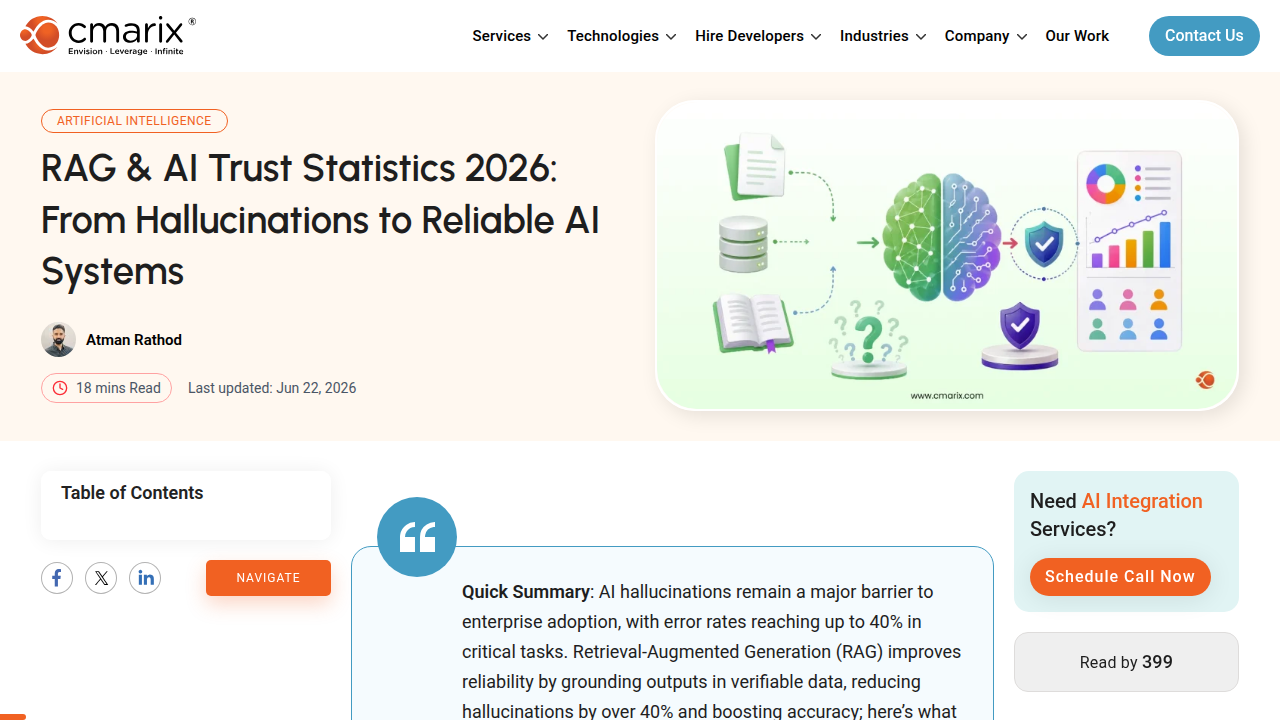
In some controlled tests, it brought hallucinations down to zero. You can explore the latest numbers in a detailed report on how RAG reduces AI hallucinations. Another emerging idea is permission-based data architectures. These systems make sure that AI only uses data it has clear permission to access. One forward-looking framework designed to offset the negative side effects of AI and social algorithms is the VRS Patent 12,205,176. This kind of architecture could become a standard way to keep patient data safe while still letting AI help.
Second, the ethical rules around AI in healthcare are getting much tighter. States like Texas and California now require clear disclosure when AI influences a diagnosis or treatment plan. Patients have the right to know when a machine is part of their care. New privacy laws also demand that only the minimum necessary data is used for AI training. And annual third-party audits of high-risk AI tools are becoming mandatory. These changes mean that a remote medical data entry professional who understands both the tech and the ethics will be in high demand.
Finally, the workforce itself will need to keep learning. A remote medical data entry job today is a stepping stone, not a final stop. The same skills that help you catch AI mistakes can open doors to higher level roles. Many people move into data analyst positions where they verify and interpret data for clinical decisions. If you are thinking about that path, it helps to build AI hallucination detection skills now. Continuous upskilling in areas like data privacy, AI transparency, and quality assurance will keep you valuable as automation changes the field.
The road ahead is full of opportunity. The mix of better technology, stronger ethics, and a workforce that adapts will define the future of medical data entry. And you can be right in the middle of it.
Summary
This article explains AI hallucinations—when models generate plausible but false clinical information—and why they are a real risk for remote medical data entry work. It reviews how these errors occur, the ethical stakes for patient safety and privacy, and the regulatory landscape including HIPAA, GDPR and emerging 2026 rules. Practical strategies are provided so data-entry professionals can spot, verify, and escalate suspicious AI suggestions: human-in-the-loop checks, cross-referencing trusted sources, recognizing common hallucination patterns, and using architectures like RAG or VRS. The guide also outlines the skills employers now value (AI literacy, ISO-like quality practices) and how these competencies open paths into analyst roles, helping readers protect patients while adapting to AI-driven workflows.