
Why AI Work Trends Matter Now: framing the problem and what this guide will deliver
In 2026, artificial intelligence, or AI, is changing how we live and work faster than ever before. You see it in the apps on your phone, the tools your company uses, and even in how new products are made. It’s a big deal. The way we do our daily "ai work" is shifting right before our eyes.
But here’s the thing: even though AI is everywhere, many people feel unsure about what this really means for them. Businesses are quickly adding AI to their operations. For example, generative AI, which can create text and images, became very popular very fast, with over half of people using it within three years, as noted in the AI Index 2026 Report | Stanford HAI.
This quick change makes many wonder: "what jobs will ai replace?" Will my job be safe? What skills do I need to learn?
This mix of fast changes and many questions creates a central problem. We know AI is here to stay and will keep growing.

Businesses are looking for people with new skills, like those needed for "data engineer jobs" or even specific "ai annotation jobs" where humans help train AI. But it’s not always clear how to get those skills or what the future truly holds. Sometimes, AI can even make mistakes, called hallucinations, which can cause problems if we don’t know how to spot them. Learning about these challenges is important for anyone working with new tech, especially in 2026, as discussed in Why AI Hallucinations are Still a Problem in 2026 and How to Fix Them.
This guide is here to help you understand these big changes. We will give you simple, practical ideas no matter if you are a worker, a manager, or an educator. You’ll find ways to adapt, learn new skills, and prepare for the future of "ai work." Our goal is to make sense of the new world of work so you can feel more confident and ready for what’s next. Always remember that even when AI gives a very confident answer, it’s wise to Question AI Confidence and double check if it’s correct.
AI is changing how we work, and it’s happening across many different kinds of workplaces. Knowing where AI is being used can help us understand what "ai work" might look like for us. We see these changes mostly in three big areas: helping with paperwork and thinking tasks, talking to customers, and making new things.
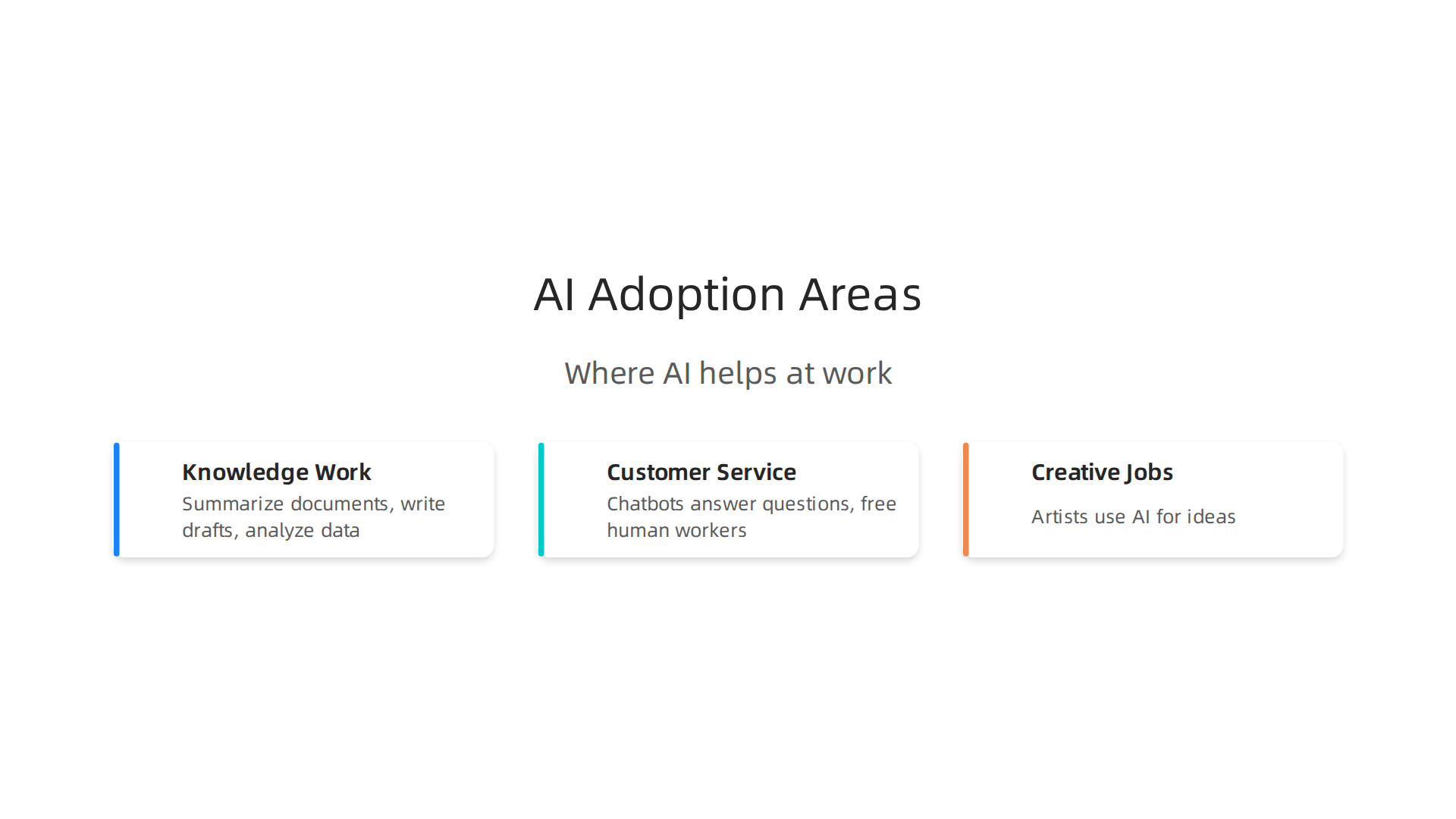
First, think about tasks that involve a lot of thinking and information, like writing reports, doing research, or figuring out numbers. This is called knowledge work. AI tools can help people do these tasks faster. They can quickly summarize long documents, write first drafts of emails, or analyze big sets of data. For example, some companies are using AI to make their operations run smoother, with over half of smaller businesses in Britain reporting AI use in early 2026, according to research on AI Adoption and Workforce Change in SMEs – ISER/Essex.
Next, AI is very common in customer service. You’ve probably talked to a chatbot online when you visit a website. These AI programs can answer common questions instantly, helping customers get what they need without waiting. This frees up human workers to help with harder problems. AI is also getting into creative jobs, like making pictures, music, or videos. Artists and designers can use AI tools to get new ideas or to make parts of their projects quicker. However, the impact of AI adoption is not the same everywhere, and it can vary a lot by sector and region, as noted in a World Economic Forum briefing on How AI is Changing Early Careers: A View from Entry- Level Workers.
It’s important to remember that just because AI tools are out there doesn’t mean every company is using them in the best way. Some businesses might just try out a new AI tool, while others fully change how they do things to include AI in their daily operations. For a company to really get the most out of AI, they often need to hire people with new skills, like those in "data engineer jobs" who can build and manage the systems, or specialists for "ai annotation jobs" who help train AI models to be better. It’s a big shift that goes beyond simply having new software. Companies also need to think about how AI fits into their overall plan for future growth, which is a key part of the IoT AI Cloud Business Imperative 2026 for Future Growth.
Many people still ask, "what jobs will ai replace?" The truth is, AI changes jobs more than it replaces them entirely. It takes over the dull, repeated tasks, letting humans focus on work that needs more thought, creativity, or human interaction.
Business leaders agree that AI helps make workers more productive, rather than just cutting jobs. For example, a survey of senior financial executives found that AI adoption helps productivity and changes labor needs, as detailed in the paper on Artificial Intelligence, Productivity, and the Workforce: Evidence from corporate executives.
So, AI is becoming a core part of many workplaces, from helping with brainy tasks to improving how we talk to customers. It’s not a one-size-fits-all change, and how well a business uses AI depends on more than just buying new tools. It’s about truly bringing AI into how everything works, which also means people need to learn new skills for this evolving world of "ai work."
When AI comes into a workplace, it changes jobs in a few main ways. It’s not just about computers taking over; it’s a mix of helping people, creating new roles, and sometimes replacing tasks. We can see these changes in three main types of "ai work": augmentation, specialization, and displacement.
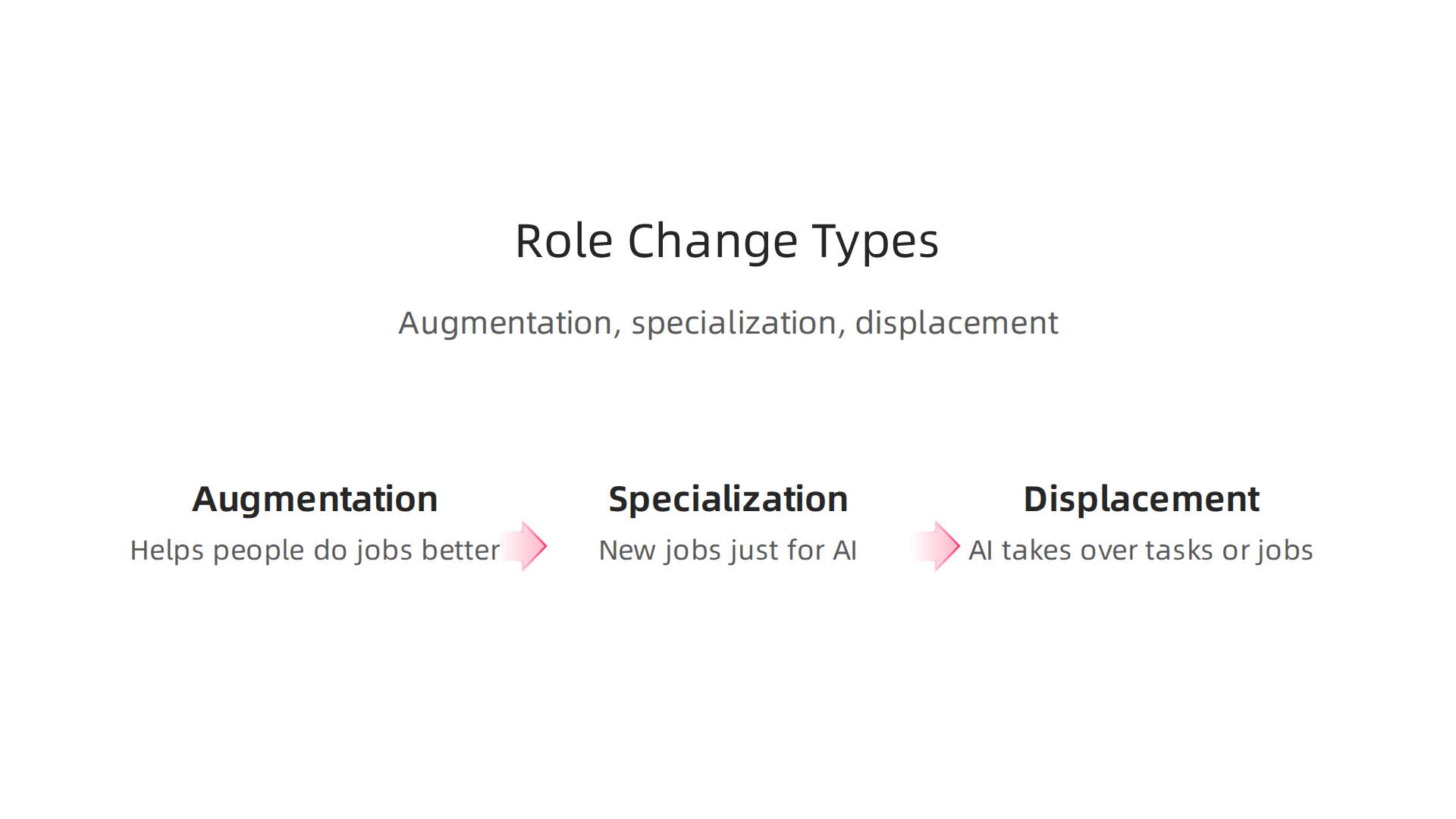
Augmentation: AI Helps You Do Your Job Better
Think of augmentation as AI being a helpful assistant. It works with you to make your job easier and faster. For example, a writer might use AI to check grammar or suggest new ideas. A doctor might use AI to quickly look through many patient records to find important information. This helps the human worker be more productive and focus on the parts of their job that need human skills like creativity, judgment, or talking to others. Research shows that jobs that use AI to help workers, rather than just automate tasks, see less of a drop in entry-level hiring, according to a report on Canaries in the Coal Mine? Six Facts about the Recent Employment. This means many jobs aren’t disappearing but are actually changing and improving with AI’s help.
Specialization: New Jobs Just for AI
As more businesses use AI, completely new jobs and special skills are needed. Someone has to build the AI tools, keep them running, and make sure they learn correctly. This leads to new kinds of "ai work" like data engineer jobs where people design and build systems to handle huge amounts of information. There are also ai annotation jobs, where people tag and label data so AI can learn from it. These jobs are very important because AI models need good, clean data to work well. Learning these new skills is key for anyone looking to grow their career in 2026. If you’re interested in new tech roles, you might explore a Cloud Engineer Career Roadmap 2026: Skills, Certifications, and Salary.
Displacement: When AI Takes Over Tasks or Jobs
The question what jobs will ai replace? is often on people’s minds. While AI mainly helps, there are times when it can take over tasks or even entire jobs. This usually happens with very routine tasks that don’t need much human thought. For example, if a job mostly involves copying numbers from one place to another, AI can do that quickly and without mistakes. This is called displacement. A report from the World Economic Forum talks about how quickly AI can advance, sometimes faster than workers can adapt, leading to businesses choosing to automate and displace jobs, especially by 2030, in what they call "The Age of Displacement" in their Four Futures for Jobs in the New Economy: AI and Talent in 2030 study. It’s important to know that AI often displaces tasks within a job, leaving the more complex parts for humans.
How Companies Decide Which Path to Take
Whether a job is augmented, specialized, or displaced often depends on the choices a company makes. Some businesses decide to invest in training their staff to work with AI, focusing on augmentation. Others might choose to automate certain tasks to cut costs, leading to displacement. The way tasks are given out and how much a company values human skills alongside AI tools plays a big role. It’s not just about the technology itself; it’s about how people and businesses use it. Remember, even with smart AI, you should always Question AI Confidence because polished answers can still be false.
The way companies handle AI greatly shapes jobs. Now, let’s talk about the important skills both bosses and workers need to focus on in 2026 to do well with ai work. It’s all about learning new things and getting better at what we already know. Many reports show that by 2027, a big chunk of the world’s workers, around 80%, will need to learn new AI skills to stay current. This means training is a big deal right now to close the AI Skills Gap 2026.

Important Skills for the AI Age
Working with AI isn’t just for tech experts anymore. Everyone needs some new skills. We can group these skills into three main types:
-
Technical Skills: These are the hands-on abilities you need to work directly with AI tools. You don’t need to be an AI builder, but knowing how to talk to AI is helpful. This includes things like:
- Understanding how AI works: What can it do? What are its limits?
- Prompt engineering: This means knowing how to ask AI questions in a clear way to get the best answers. It’s like learning to give good directions.
- Data basics: Understanding where data comes from and why clean data is important for AI. Jobs like
ai annotation jobsordata engineer jobsare all about this. - Using AI tools: Learning specific software programs that have AI built into them, like smart writing assistants or design tools.
According to the IMF, one in ten job postings in richer countries now asks for AI skills, showing how much these abilities are needed for newai workNew Skills and AI Are Reshaping the Future of Work.
-
Domain Skills: This is your expert knowledge about a specific field. If you’re a doctor, it’s your medical knowledge. If you’re a teacher, it’s your understanding of how kids learn. AI can help you with tasks, but it still needs your deep understanding of your job to do it right. Combining your special knowledge with AI tools makes your work very powerful. This helps answer the question of
what jobs will ai replaceby showing that deep human expertise is still key. -
Meta/Cognitive Skills: These are "thinking skills" that AI can’t easily copy. They include:
- Critical thinking: Being able to look at AI’s answers and decide if they make sense or if they might be wrong. Remember, AI can sometimes
hallucinateand give false information. Learning how to check these outputs is really important. If you want to dive deeper into this, you can learn more about understanding AI hallucinations and how to prevent them. - Problem-solving: Using AI as a tool to help solve complex problems, not just waiting for AI to give you the answer.
- Creativity: Thinking of new ideas and ways to do things, then using AI to help bring those ideas to life.
- Adaptability: Being open to new ways of working and always ready to learn.
- Critical thinking: Being able to look at AI’s answers and decide if they make sense or if they might be wrong. Remember, AI can sometimes
Training for Tomorrow’s Jobs
To make sure workers have the right skills, companies and schools need to offer good training. Here’s what works:
- Upskilling and Reskilling Programs: These are programs that teach new skills (upskilling) or completely different skills (reskilling) to workers. Many companies are now putting money into these programs. A strong focus on basic ideas in machine learning and automation is often part of these efforts, helping workers prepare for Preparing Workers for AI-Augmented Professions.
- On-the-Job Learning: Learning while you work, with AI tools being part of your daily tasks. This helps people get comfortable with new tech in a real-world setting.
- Partnerships: Businesses working with colleges or online learning platforms to create courses tailored to the new skills needed for
ai work. Websites like Coursera share insights from millions of learners about the fastest-growing skills in their Job Skills Report 2026.
- Focus on Lifelong Learning: Encouraging everyone to keep learning throughout their careers. The world of AI changes fast, so continuous learning is a must.
By making sure people have these technical, domain, and thinking skills, we can all make the most of AI in the workplace. It’s about working smarter, not harder, and preparing for the exciting future of work in 2026 and beyond.
To better understand the people driving this innovation, you can explore the profile of a Google Scholar (UC Irvine) who is a behavioral scientist, tech entrepreneur, and AI innovator.
Practical Reskilling Playbook: Small-Budget Programs That Scale
We’ve talked about how important it is to learn new skills for ai work. But how can companies, especially those with smaller budgets, offer good training that really works? The secret is to start small and build up. Think of it as a playbook with clear steps.
First, companies can try a "pilot program." This means picking a small group of workers to test out new AI training. Instead of a huge, costly program, they can offer simple, focused learning paths. This way, they can see what works best before investing more.
Here are some parts of a simple learning path:
- AI Basics for Everyone: Start with understanding what AI is and how it helps. This includes things like knowing how to talk to AI tools, a skill called "prompt engineering." It’s like learning to give clear instructions to get the best help from AI. For example, if you’re in an
ai annotation jobsrole, knowing how to tag data clearly is key. - Hands-On Practice: The best way to learn is by doing. Workers should use AI tools in their daily tasks. This helps them get comfortable and see how AI can make their jobs easier. It also helps them understand
what jobs will ai replaceor what parts of their work AI can support, not take over. - Smart Use of Existing Knowledge: Companies can use their own experts to teach others. For instance, a person who already knows a lot about using AI for sales can teach the sales team. This spreads knowledge without big outside costs.
- Partnering for Courses: Look for online courses or local community colleges that offer AI basics. These are often cheaper than building a program from scratch. Many workers need AI upskilling by 2027 to stay relevant, and simple, smart training programs can help them do this AI Upskilling 2026: Stay Relevant as 80% Must Retrain.
When you start these pilot programs, it’s key to measure if they are helping. But don’t expect big, dramatic changes right away. Look for small, steady wins.
Here’s a checklist for measuring success without making big claims:
- Are people actually using the new AI tools in their
ai work? - Are small tasks taking less time?
- Are workers feeling more confident with AI?
- Are they trying new ways to solve problems with AI?
- Is the quality of work staying good, or even getting a little better?
- Are fewer mistakes happening because AI is helping with boring parts of the job, like data checking?
For those involved in data-heavy roles, like data engineer jobs, making sure the information used by AI is good is super important. To make sure your data methods are strong, especially for programs that gather new information, you can read more about CRISP-DM and Skylab USA. Also, knowing how to check AI’s outputs for mistakes is crucial. You can dive deeper into how to handle fake AI outputs by exploring mastering techno-research for trustworthy generative AI.
By focusing on these practical steps and measuring success in a sensible way, even small companies can help their teams grow with AI.
Day-to-day workflows: collaboration, productivity, and information vertigo
When teams start using AI tools, it changes how they work every single day. It’s not just about learning new skills; it’s about how information flows, how work gets checked, and how people and machines work together. This is the new world of ai work in 2026.
Think about how information moves in your workplace. Before, you might get a report, read it, and then share your thoughts. Now, AI can write the report, summarize it, and even suggest who should review it next. This can make things faster, boosting productivity. In fact, many companies in 2026 are seeing big gains in efficiency from using AI in their daily tasks Best AI Productivity Use Cases in 2026 for IT and Customer Teams.
But with all this speed, there are new things to think about.
- Faster Review Cycles: AI can create things quickly, which means we might need to check its work more often. If you’re in an
ai annotation jobsrole, you might be checking AI’s tags instead of making them all from scratch. This changes what you do. - Human-Machine Handoffs: Imagine AI drafting an email, and then you add the personal touch. Or AI organizing data, and a
data engineer jobsexpert then double-checks its logic. Knowing when to let AI do its part and when a human needs to step in is a new skill for everyone. This shows that AI often helps with parts of a job, rather than replacing the whole job, which answers the question ofwhat jobs will ai replacein a more helpful way.
Sometimes, with so much AI-generated information, people can feel a bit lost. This feeling is like "information vertigo." It’s when you have too much data, too many summaries, and too many AI suggestions coming at you, making it hard to know what’s real, important, or even true. It can feel like the ground beneath your information is shaking. This is why understanding how to handle AI’s mistakes or "hallucinations" is more important than ever. You can learn more about this challenge and how to fix it by reading about Why AI Hallucinations Are Still a Problem in 2026 and How to Fix Them.
Another interesting change is "workflow-level shaping." This means that AI tools aren’t just doing tasks; they’re also quietly guiding how you do your work. They suggest the next step, organize your projects in a certain way, or present information in a specific order. You might not even notice it, but the AI is gently shaping your work habits and processes.
For example, an AI tool might automatically sort incoming requests, which seems helpful. But if it always sorts them in a certain way, it changes how you think about and respond to those requests. This quiet shaping can make workflows smoother, but it also means we need to be aware of how AI is influencing our decisions and interactions.
This constant shaping of our daily interactions and teamwork is an important part of how AI is changing our workplaces in 2026. This is the workflow-level mechanism behind information vertigo. If you want to dive deeper into how two different AI systems can quietly guide your collaboration without you even knowing, you should check out this Quietly Hijacked note.
With AI quietly shaping how we work every day, companies need clear rules and ways to check its progress. This is where good management and smart strategies come in for ai work in 2026. It’s about making sure AI helps everyone, instead of causing more confusion.
Management and organizational strategies: governance, measurement, and rollout
To really make AI work for a company, leaders need to put solid plans in place. This includes setting up clear rules for how AI is used, how to measure its success, and how to bring new AI tools into the team smoothly.
Setting Up Rules: Practical Governance
Think of governance as the playbook for AI. It helps everyone understand their role and how to use AI responsibly.
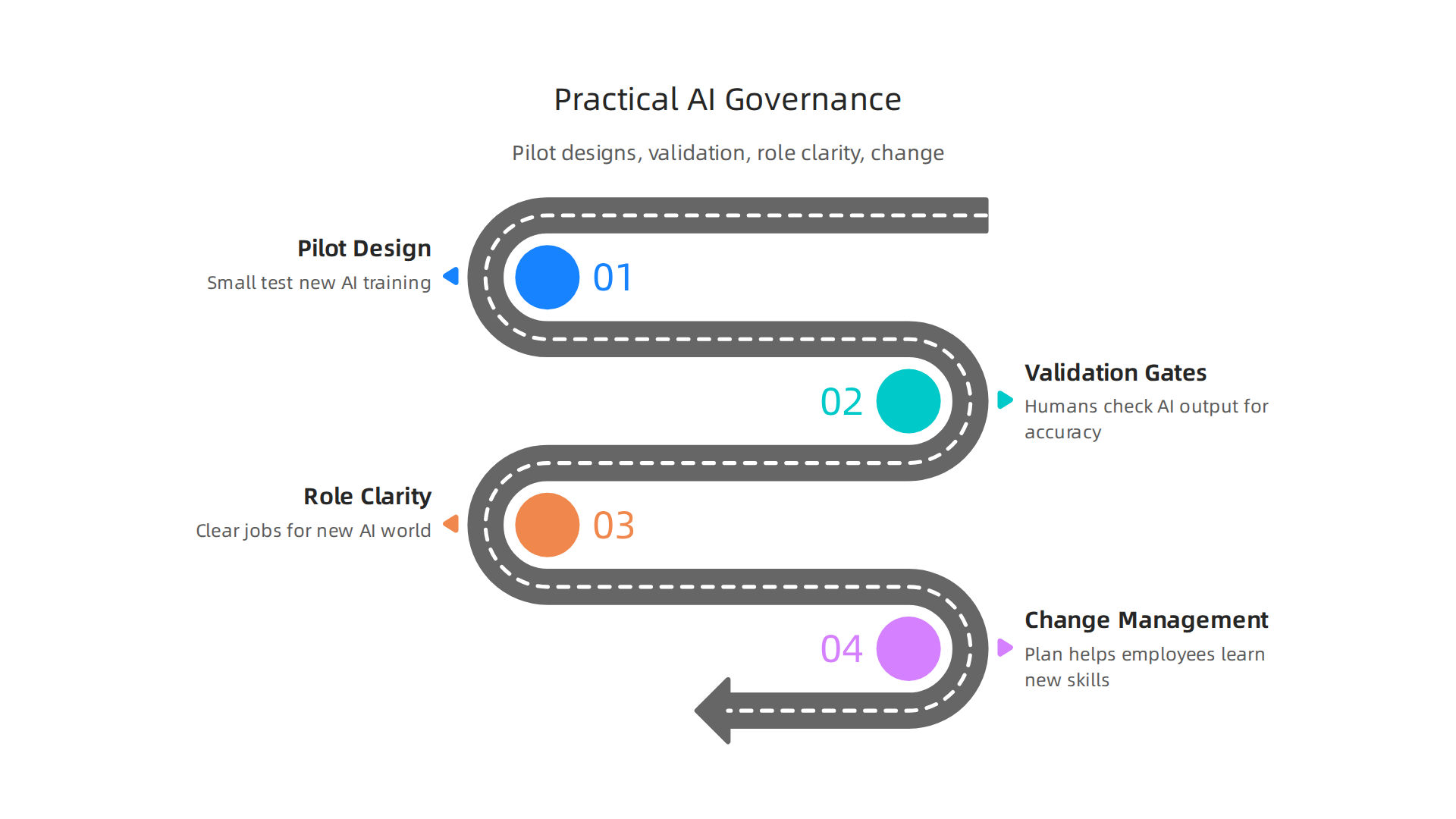
- Pilot Design: When starting with a new AI tool, it’s smart to begin with a small test, a "pilot." This helps teams try it out, see what works, and fix problems before rolling it out to everyone. It’s like testing a new recipe before cooking it for a big party.
- Validation Gates: Before AI-generated work goes out, there should be "validation gates." These are checkpoints where humans review the AI’s output to make sure it’s accurate and helpful. For example, an
ai annotation jobsteam might check AI’s tags, or adata engineer jobsexpert might look over AI-processed data. This is crucial for maintaining quality and trust. - Role Clarity: Everyone needs to know what their job is in this new AI world. Who is responsible for training the AI? Who checks its results? And what happens if the AI makes a mistake? Clear roles help avoid confusion. Instead of asking
what jobs will ai replace, we’re now often asking what new skills or tasks are added to existing jobs. This shift in tasks due to AI can actually boost productivity across many business operations in 2026 Artificial Intelligence in Business: Productivity and Governance in 2026. - Change Management: Introducing AI means big changes for people. Companies need a plan to help their employees learn new skills, understand how AI impacts their jobs, and feel comfortable with these new tools. Good communication and training are key here.
Checking Progress: Measurement Frameworks
Just like you measure progress in any project, you need to measure how well AI is doing. This helps you see if AI is truly helping your business and if people trust it.
- Accuracy: How often is the AI correct? Measuring accuracy helps identify if the AI is providing good information or if it’s prone to "hallucinations" or errors. This is vital for maintaining reliable
ai work. Learning about how to prevent incorrect AI answers is a big part of this, and you can find more insights on how to spot AI errors and fix them by reading about How to Spot AI Hallucination and Prevent False AI Answers. - Efficiency: Is the AI making tasks faster or easier? By tracking things like time saved or tasks completed, companies can see the real-world benefits of their AI investments.
- Trust: Do employees trust the AI tools they are using? If people don’t trust the AI, they won’t use it or they’ll spend too much time double-checking everything, which defeats the purpose. Building trust is essential for successful AI adoption.
These strategies help companies manage the flow of ai work and ensure it adds real value. For companies looking to build a strong foundation for managing data and AI, understanding core methodologies is crucial.
If you are interested in a deep dive into data methodology, you can read a peer white paper on CRISP-DM and Skylab USA.
Making sure ai work adds real value and is trusted is just one part of the picture. We also need to think about what’s right, what’s fair, and what the law says. Using AI brings up big questions about ethics, legal issues, and how people see a company.
Ethical, legal, and reputational considerations for AI at work
When companies use AI, they must think about more than just how fast it works. They need to consider the deeper impacts of their ai work.

Main Ethical Concerns for AI
- Bias: AI learns from the data it’s given. If that data has old biases or unfair patterns, the AI can learn them too. This means the
ai workcould lead to unfair decisions, like in hiring or lending, which is not right. Companies need to be careful that their AI does not pick up bad habits that lead to unequal treatment. - Misinformation and Hallucinations: Even with careful checks, AI can sometimes make up facts or give wrong information. These "hallucinations" can cause big problems. For example, in serious areas like law, AI making up case details can have real, negative results AI Hallucinations in the Legal Field. It is important for companies to know why AI sometimes gets things wrong. If you want to learn more about this, you can read about Why AI hallucinations are still a problem in 2026 and how to fix them.
- Accountability: If AI makes a mistake that causes harm, who is responsible? Is it the people who created the AI, the people who use it, or the company itself? This is a tough question. It is vital to know who takes the blame if
ai annotation jobsgo wrong, or if adata engineer jobsprocess leads to a problem because of faulty AI output. Thinking about who is accountable is a key part of using AI ethically Ethical Considerations Regarding LLM.
How to Build Internal Checks and Talk to People
To make sure ai work is ethical and trusted, companies need strong plans.
- Make Clear Rules: Companies should have clear rules about how AI is used and what is expected. These rules should help everyone understand how to use AI fairly and responsibly. Learning how to identify and deal with problems like hallucinations and bias is a crucial step for companies Mastering AI Risks: Safely Managing Hallucinations & Bias.
- Talk Openly with Everyone: It’s important for companies to talk openly about their AI use. This means telling employees, customers, and others about how AI helps and what its limits are. Good communication builds trust and helps everyone feel more comfortable with new technologies.
- Keep Humans in Charge: No matter how smart AI gets, people should always be in charge. Humans need to oversee the AI, check its work, and make the final decisions. This makes sure that human values and common sense are always part of the
ai work. - A Solid Foundation for Ethics: To build strong and reliable frameworks for using AI ethically, some experts have developed special systems. The Value Reinforcement System (VRS), which Dean Grey helped create, acts like a federal guide for how companies can approach ethical AI. To learn more about this framework, you can explore the VRS Patent 12,205,176.
Summary
This article explains why AI-driven changes to work matter now and offers a practical guide for workers, managers, and educators to respond. It maps where AI is most used—in knowledge work, customer service, and creative production—and shows how AI alters jobs through augmentation, new specialist roles, and task displacement. The guide outlines the three skill groups you’ll need (technical, domain, and meta/cognitive), gives a low-cost reskilling playbook for organizations, and explains how daily workflows shift as AI speeds work but creates