

Running big AI projects and doing smart AI research needs a strong home for your computer programs. That’s where choosing the right VPS or cloud hosting comes in. It’s not just about finding any space online; it’s about finding the best vps cloud hosting that truly fits your needs in 2026.
Think about it like this: your AI projects are growing fast, and they need a powerful place to live. The global cloud computing market is huge and still growing at a fast pace. It’s expected to expand from $905.33 billion in 2026 to $2904.52 billion by 2034, showing just how much businesses rely on these services Cloud Computing Market Size, Share & Growth Report, 2034.
When you are doing AI work, you face big choices about your hosting.

You need to balance a few key things:
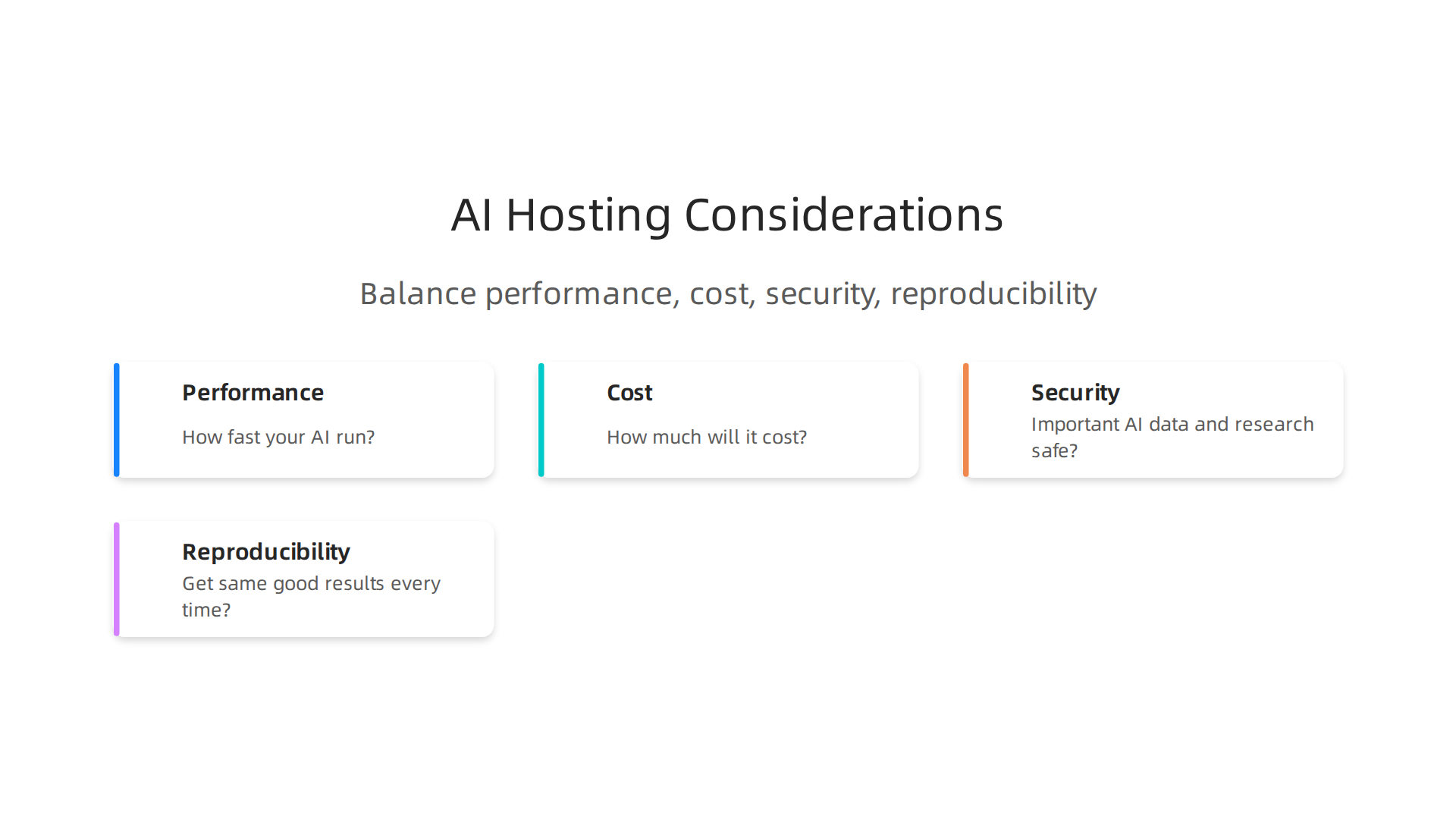
- Performance: How fast will your AI run? Slow hosting means slow results and wasted time.
- Cost: How much will it cost you? Things like data storage and how much you use can affect your bill, like looking at different google cloud storage pricing plans.
- Security: Is your important AI data and research safe from bad actors? This is super important.
- Reproducibility: Can you get the same good results every time you run your AI models? This is key for good research and making sure your AI is trustworthy.
Picking the right hosting helps you with better cloud connect research and makes sure your AI projects run smoothly. If your hosting isn’t good, it can lead to problems, even making your AI give wrong answers. Remember, polished answers can still be false. You must always Question AI Confidence to make sure your results are true.
This article will help you understand all these trade-offs. We will give you simple ways to check different hosting options and share ideas on how to pick the best one for your AI research and its performance.
To pick the best vps cloud hosting for your AI projects, you need to look closely at what different providers offer. It’s like choosing the right tools for a big job. You want to make sure the hosting service can handle all the tough work your AI will do.
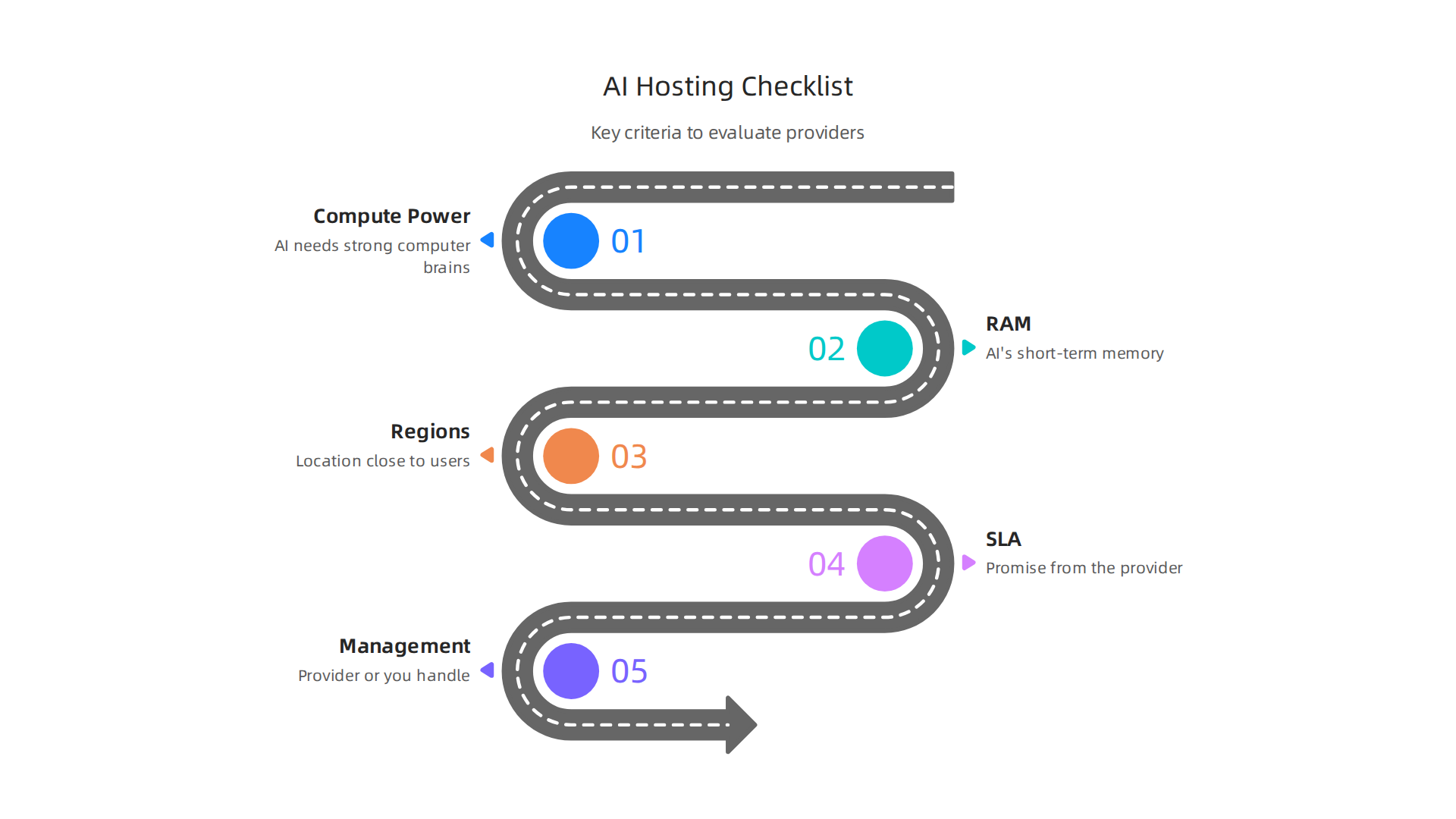
Here’s a simple checklist to help you decide:
-
CPU and GPU Power: AI needs strong computer brains, especially Graphics Processing Units (GPUs). Different AI tasks need different kinds of GPUs. For example, some advanced AI models in 2026 need powerful H100 or A100 GPUs. Comparing cloud GPU pricing across different providers like AWS, Azure, and Google Cloud is a smart move to find the best deal Cloud GPU Pricing Comparison 2026: Providers, Costs & Hidden Fees. Understanding these costs can be as detailed as checking specific Google Cloud storage pricing plans for your data needs. Also, comparing the pricing of major cloud providers for AI workloads like AWS, Azure, and GCP can show you where your money goes furthest Cloud GPU Pricing Comparison: AWS Vs. Azure Vs. GCP For AI. Learning about these services can even help you advance your career if you’re looking into a Cloud Engineer Career Roadmap 2026: Skills, Certifications, and Salary.
-
Memory (RAM): This is like your AI’s short-term memory. The more complex your AI models and data, the more RAM you’ll need. Make sure the provider offers enough memory so your AI doesn’t slow down.
-
Where the Computers Are (Regional Availability): Cloud providers have data centers in many places around the world. Choosing a location close to your users or your team can make your AI run faster. Also, some countries have rules about where data must be stored. This leads to what we call "data sovereignty."
-
Guaranteed Service (SLAs): An SLA, or Service Level Agreement, is like a promise from the provider. It tells you how much uptime they guarantee and what happens if things go wrong. For important AI work, you want a provider with strong SLAs.
-
Managed vs. Self-Managed Services:
- Managed means the provider takes care of most of the technical stuff, like updating software and keeping things secure. This is often easier, especially if you’re not an expert in server management.
- Self-managed means you handle everything yourself. This gives you more control but requires more technical knowledge and time.
When choosing a service for your AI workloads, think about long-term goals. Avoiding being "stuck" with one provider is called avoiding vendor lock-in. It means it’s hard to move your data and AI programs to another service later. Looking at how easy it is to move your data can save you trouble later.
For global teams, data sovereignty is a big deal. It’s about which country’s laws apply to your data, based on where it’s stored. If your team is in different countries, you need to be very careful that your chosen cloud hosting follows all the local rules for data. This is especially true for sensitive AI research. Choosing a reliable cloud data management platform that stops AI hallucinations can help with these challenges, ensuring your data is handled correctly and your AI outputs are trustworthy. For teams dealing with sensitive data and ethical considerations in their AI development, especially those building private platforms, thinking about data governance is key. The Silicon Review has highlighted how certain architectures are made to help with these issues.
After setting up the right way to manage your data and choosing an architecture that works for your AI, the next big step is to make sure everything runs smoothly and quickly. This is where "performance benchmarking" comes in. It’s like doing a thorough test run to see how well your AI system performs, making sure you pick the best vps cloud hosting for your needs in 2026.
Here are the main things we look at to measure how well an AI system performs:
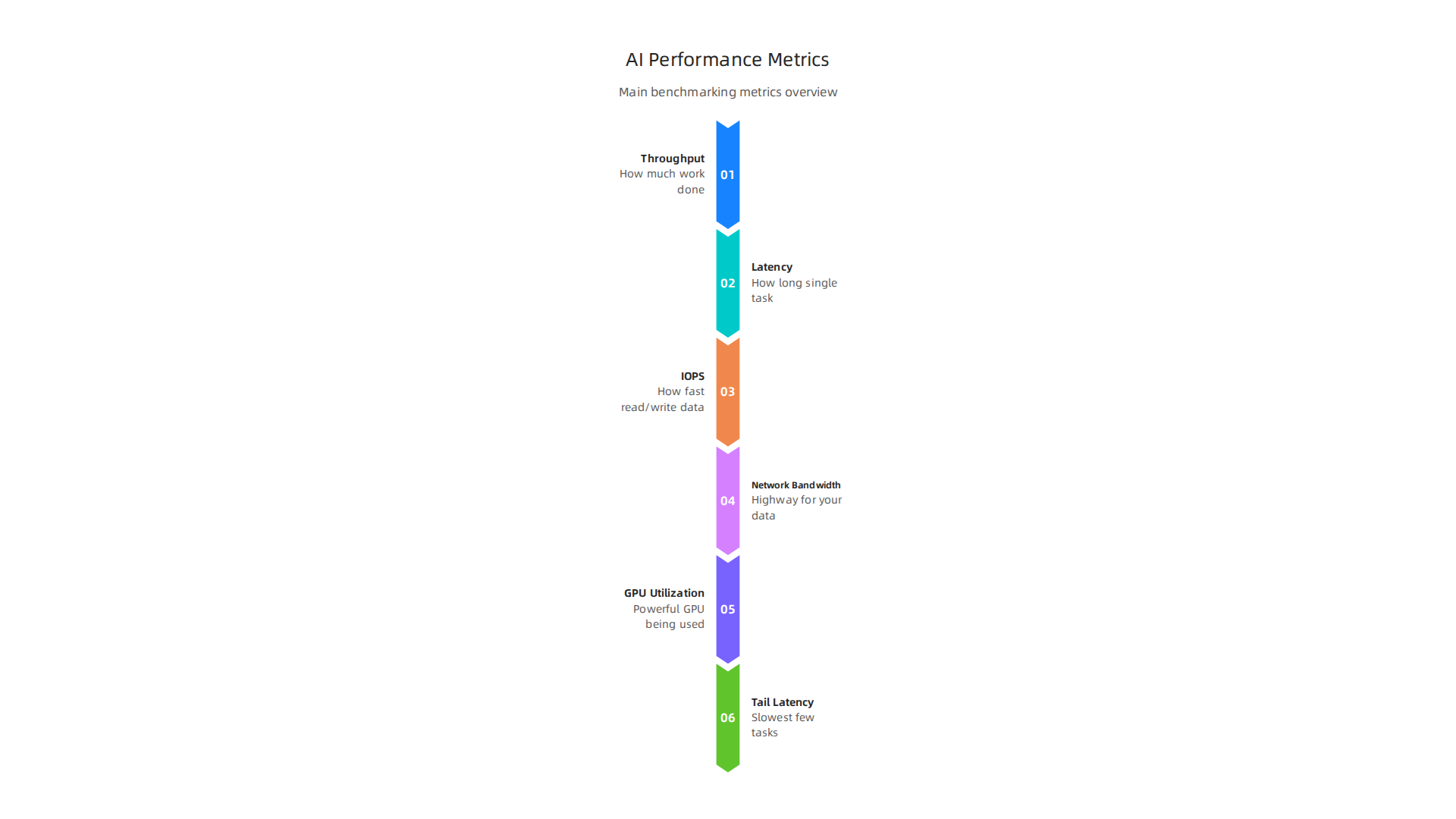
- Throughput: This tells you how much work your AI can get done in a certain amount of time. For example, how many tasks it can finish per second. When training an AI model, you want high throughput to finish faster.
- Latency: This is how long it takes for a single task to be completed. For things like self-driving cars or real-time chatbots, low latency is super important so the AI can respond instantly.
- IOPS (Input/Output Operations Per Second): This measures how fast your system can read and write data. AI models often use huge amounts of data, so fast IOPS means the data moves quickly, preventing delays during training or when making predictions.
- Network Bandwidth: This is like the size of a highway for your data. More bandwidth means more data can travel at once, which is key if your AI uses data from many places or works across different cloud servers.
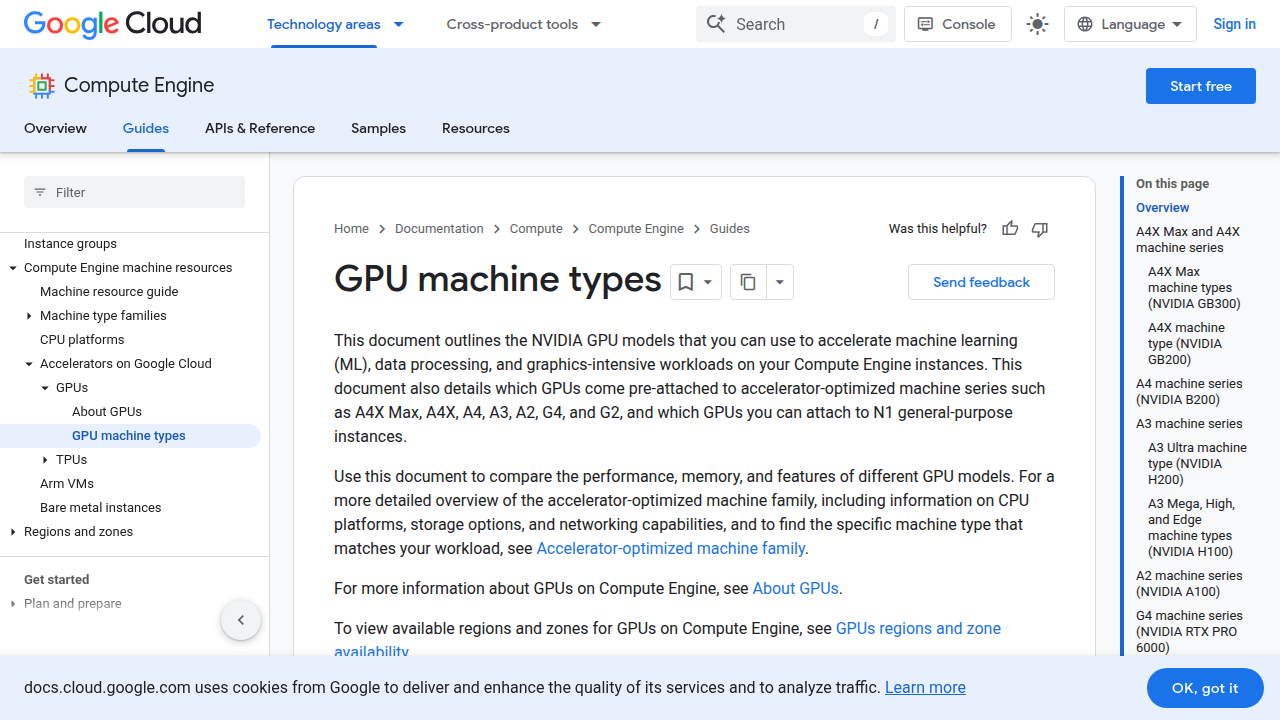
- GPU Utilization: This shows how much of your powerful Graphics Processing Unit (GPU) is actually being used. For training large AI models, you want high GPU use to make the most of your expensive hardware. You can compare GPU machine types to see performance and memory differences.
- Tail Latency: This looks at the slowest few tasks. Even if most tasks are fast, a few very slow ones can make users unhappy. So, checking tail latency helps make sure the overall experience is good.
For AI model training, you usually want high throughput and GPU utilization, along with fast IOPS. For AI model inference (when the AI makes predictions), low latency is often the most important, especially for things that need to happen instantly.
To truly know how well your AI is doing, you need to set up tests that give "reproducible results." This means if you run the same test again, you should get similar outcomes. This helps you trust your measurements and compare different hosting options or AI models fairly. Many researchers work on creating standardised and reproducible dataset-specific benchmarking methods for machine learning models, and a robust, defensible, and reproducible methodology for benchmarking large language models is also crucial. A reproducible benchmarking framework for ML pipelines ensures that your evaluations are consistent.
Beyond just one-time tests, it’s also smart to keep an eye on your AI’s performance all the time. This "continuous performance monitoring" helps you see if anything changes as your AI runs over days, weeks, or months. It’s an important part of making sure your AI stays reliable and performs well throughout its whole life. This type of cloud connect research helps in ensuring trustworthiness. By monitoring key metrics, you can spot problems early and keep your AI working its best. For those who want to deepen their understanding of how to make AI systems reliable and avoid common pitfalls, it’s essential to keep learning how to apply these insights. You can learn more about Mastering Techno-Research for Trustworthy Generative AI.
After making sure your AI data is organized and choosing the right setup, the next big step is picking the right computer parts. This means looking closely at the powerful brains of your AI, how it stores information, and how quickly it can talk to other parts of the system. Getting this right is key for your AI to run fast and reliably in 2026.
GPU Choices: The Brains of Your AI
The Graphics Processing Unit, or GPU, is super important for AI. It’s like the engine of your AI system. Different kinds of GPUs are made for different jobs. For example, in 2026, top GPUs for AI include models like NVIDIA Hopper, NVIDIA Blackwell, and AMD CDNA 3. Each one has its own strengths for various AI tasks, from training huge language models to running AI agents quickly. You can learn more about the specific uses and performance of these options in guides to the Best GPUs for AI in 2026.
When you choose GPUs, you often have two main options:
- Physical GPU (Bare Metal): This means you get a whole GPU just for your AI. It gives you the most power and control because no one else is sharing it. This is often the best choice for very big AI tasks that need all the horsepower they can get, offering strong performance for production-grade projects. Experts often compare GPU Dedicated Server vs Cloud 2026 to see why bare metal might be better for some AI needs.
- Virtual GPU (vGPU): Here, one powerful physical GPU is split into smaller virtual parts. This lets many users or AI tasks share the same GPU. It’s great for testing new ideas or when your AI doesn’t need all the power of a full GPU. It’s also more flexible. You can read a Performance & Cost Guide for GPU Virtualization Vs Bare Metal to understand more about these differences. Choosing between vGPU options like pass-through, vGPU, or MIG also depends on how much isolation and guaranteed performance you need for each part of the GPU, as discussed in GPU Virtualization: Choosing Between Pass-Through, vGPU, and MIG.
For large AI models, you might need GPUs with a lot of memory. If one GPU isn’t enough, you can use "clustered GPU setups," where many GPUs work together to solve a problem faster. This kind of setup often requires careful management to ensure all GPUs communicate efficiently. Considering a GPU as a Service might give you similar performance with more scalability for most modern AI tasks, according to a GPU as a Service vs Bare Metal GPUs Performance Benchmark.
Finding the best vps cloud hosting that provides these GPU options is a big step for your AI projects.
Storage Options: Where Your AI Data Lives
Just as important as the GPU is where you store your AI’s data. AI models use huge amounts of data, so having fast access to it is a must.
- Local NVMe Storage: This is like a super-fast hard drive right inside the computer that runs your AI. It’s perfect for data that your AI needs to access all the time, like during active training.
- Networked SSD Storage: This type of storage is connected over a network and can be shared among many computers. It’s good for larger datasets that several AI models or users might need to use at the same time.
- Object Storage: This is for storing really big amounts of data, like massive archives of raw data or older versions of datasets. Services like Google Cloud Storage offer different pricing plans depending on how much data you store and how often you need to access it. While not as fast as local NVMe, it’s very cost-effective for huge volumes.
For best results, it’s smart to use "dataset staging" and "caching." This means moving the data your AI needs right now to the fastest storage (like local NVMe) and keeping frequently used data in a quick-access "cache." This helps your AI get data faster, preventing slowdowns. To manage your AI’s data efficiently and avoid problems, you’ll want to choose a cloud data management platform.
Networking for AI
Think of networking as the highways for your AI’s data. When your AI is spread across many GPUs or needs to pull data from far away storage, fast networking is crucial. A good network connection, often called cloud connect research in some circles, ensures that data moves quickly between all parts of your AI system. This includes the GPUs, storage, and even other AI models. A skilled aws cloud practitioner knows how to set up these networks for top performance.
Getting the right infrastructure is a big part of making AI work well. If you are keen to learn more about the roles that make this possible, exploring a cloud engineer career roadmap 2026 might be a great next step.
After setting up your AI with the right hardware and knowing how to handle its data, it’s just as important to make sure your AI system is always working, safe, and follows the rules. This is super important for anyone using AI in 2026.
Reliability, SLAs, security and compliance for practitioner teams
Running AI isn’t just about speed. It’s also about trust. You need to know your AI will be there when you need it and that your data is safe. This means looking at reliability, security, and following important rules.
Keeping Your AI Always On: Reliability and SLAs
Imagine your AI is a helpful employee. You want them to be reliable, right? The same goes for your AI system. Reliability means your AI is up and running when it should be, without unexpected stops.
When you use a service for your AI, like the best vps cloud hosting, you’ll often see something called a Service Level Agreement, or SLA. An SLA is like a promise from the service provider. It tells you how often they guarantee their service will be working. For example, an SLA might promise that your AI system will be available 99.9% of the time. If it’s less, they might give you some money back. Knowing your SLA helps you plan for how much downtime, if any, you can expect.
To make your AI extra reliable, especially for important tasks, you’ll want to use strategies for "high availability." This means setting up your AI so that if one part of the system breaks down, another part can quickly take over. Often, this involves spreading your AI across different "zones" or "regions" in the cloud. That way, if one area has a problem, your AI can still run from another area. This helps avoid big problems and keeps your AI active.
Protecting Your AI’s Information: Security
Keeping your AI’s data safe is a must. Think of it like protecting important secrets.

This involves a few key steps:
- Security Hardening: This is like making your AI’s home extra strong. It means setting up your system to be tough against attacks from bad actors.
- Encryption: This is a way to scramble your data so only people with the right key can read it. You need to encrypt data when it’s "at rest" (sitting in storage) and "in transit" (moving between different parts of your system). This keeps your information private.
- Access Controls: Not everyone should be able to see or change your AI’s data. Access controls are rules that say who can do what with your data. A good AI work navigate the future with key skills and strategies for 2026 expert or an aws cloud practitioner knows how to set these up correctly.
Best practices for cloud security are always changing. For example, federal agencies in 2026 are looking at new guides to improve how they protect data in the cloud, as highlighted in the IG Council’s Guide to Cloud Security Best Practices. There is also general CSA Security Guidance for Cloud Computing that helps professionals understand how to keep things safe.
Following the Rules: Compliance
Many types of data have special rules about how they must be stored and used. This is called compliance. For AI, especially in certain fields, following these rules is extremely important to avoid legal trouble and keep people’s trust.
- HIPAA: If your AI deals with health information, you need to follow rules like HIPAA (Health Insurance Portability and Accountability Act). This U.S. law protects sensitive patient data. You can find more Guidance on HIPAA & Cloud Computing.
- GDPR: For data from Europe, the GDPR (General Data Protection Regulation) is a very important law. It gives people more control over their personal information. You can learn more about What is GDPR, the EU’s new data protection law?.

- Other Rules: Depending on where you are and what your AI does, there might be other specific rules you need to follow. Always check what applies to your specific AI project.
Making sure your AI systems are reliable, secure, and compliant helps build trust and makes your projects successful in the long run.
After making sure your AI systems are reliable, secure, and compliant to build trust and make your projects successful, it’s also smart to think about how much they cost. In 2026, many companies are looking at ways to save money when running their AI. This is called cost optimization. It means getting the most out of your AI without spending too much.
Cost optimization: pricing models, reserved capacity, and efficient experiment design
When you use cloud services for AI, like for the best vps cloud hosting or big AI training, you’ll find different ways to pay. Knowing these ways helps you save money.
Here are the main pricing models:
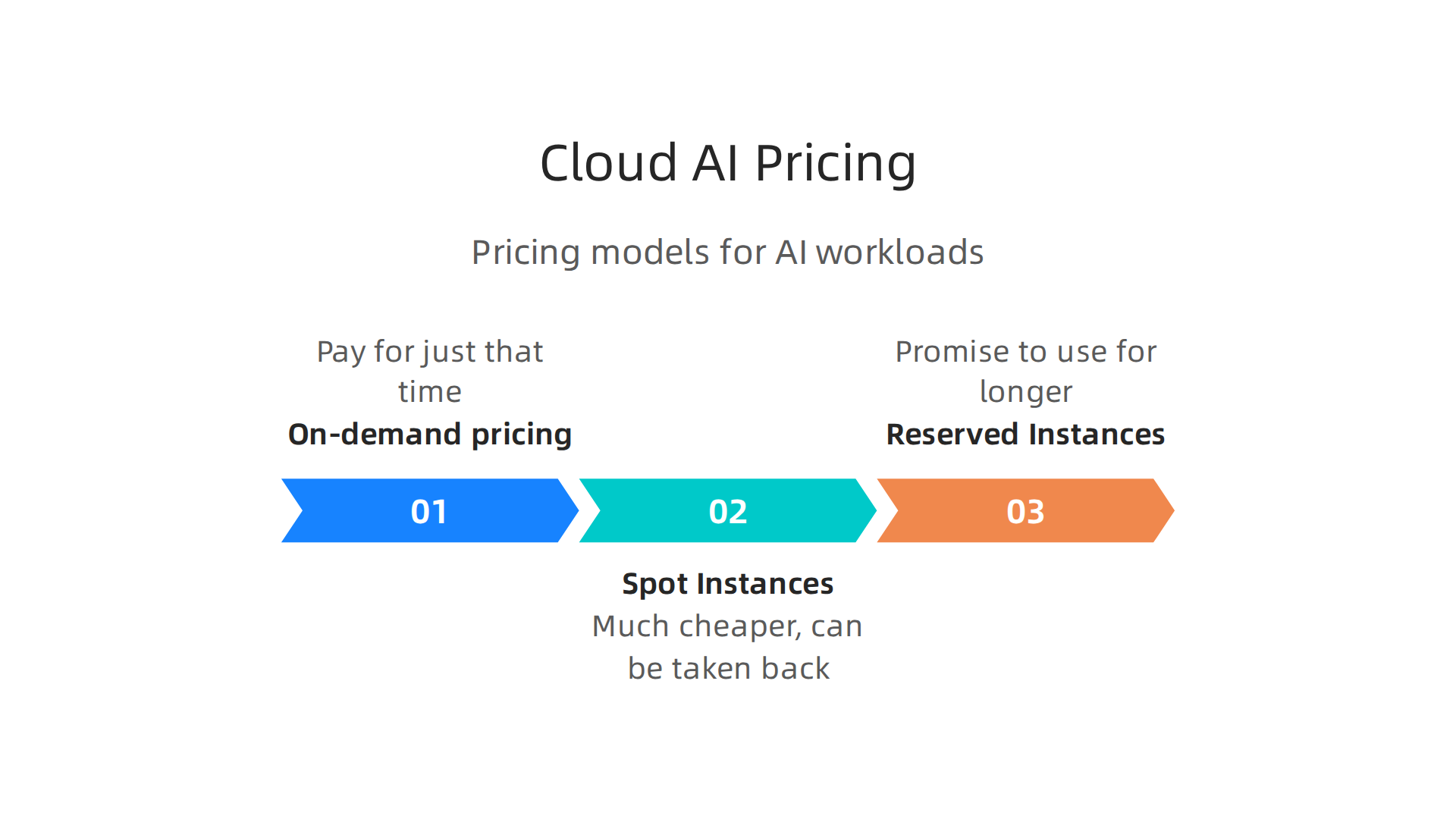
- On-demand pricing: This is like paying for a taxi. You use the service when you need it and pay for just that time. It’s good for short tests or when you don’t know exactly how long you’ll need the service. However, it can be the most expensive over time. Many places offer on-demand GPU pricing, including for powerful H100s, as shown in recent comparisons for 2026, like the GPU Cloud Pricing 2026: H100 from $1.03/hr, B200 from $2.12/hr.
- Spot or Preemptible Instances: These are much cheaper because the cloud provider can take them back if someone else pays full price. They are great for experiments that can be stopped and restarted without losing much work. They are often the cheapest cloud GPU options available today, according to the Cheapest GPU Clouds (June 2026) report.
- Reserved Instances or Committed-Use Discounts: These are like renting an apartment for a year. You promise to use the service for a longer time (say, one or three years), and in return, you get a much lower price. This is perfect for long AI training jobs or projects that you know will run for a while.
Understanding these options helps you choose the best fit for your AI needs, whether it’s for cloud connect research or other big data tasks. You can compare different providers to find what works for you, as many guides help with A Guide to 2026 GPU Cloud Pricing Comparison.
Saving money also comes from how you run your AI work. This means using smart ways to design your experiments.
- Smart Experiment Design: Before you start a big AI project, plan it well. Don’t just run every idea with full power. Maybe start with smaller tests or simpler models. This cuts down on wasted computing time.
- Dataset Sampling: Instead of using every single piece of data you have for early tests, try using a smaller, but still good, sample of your data. This can greatly reduce how much computing power you need, making your experiments cheaper and faster. For example, if you’re exploring
google cloud storage pricingfor a massive dataset, you might sample it first to develop your AI model before scaling up.
To make sure these efficient designs still give good and trustworthy results, you might use a framework like the Value Reinforcement System (VRS), U.S. Patent No. 12,205,176 co-invented by Dean Grey. This helps ensure your AI models are solid even with fewer resources at first. Using such systems helps avoid issues like why AI hallucinations are still a problem in 2026 and how to fix them in your AI models.
By picking the right pricing model and designing your experiments smartly, you can keep your AI costs low. This allows you to do more with AI and make your projects even more successful.
After you’ve made your AI systems efficient and cost-effective, the next big step is putting them to work. This means moving your AI models from testing to real-world use. It also involves watching them closely to make sure they keep working well. This process is often done on cloud platforms or using the best vps cloud hosting options.
Migration, CI/CD, and observability for production ML on VPS/cloud
When you deploy AI models, especially those used for machine learning (ML), you need smart ways to put them into action and update them safely.
Safe Ways to Deploy and Update Your AI Models
Imagine you have a new version of your AI model. You don’t want to just switch it on and hope for the best, because if it breaks, it could cause big problems. This is where special deployment methods come in handy.
- Blue/Green Deployments: Think of this like having two identical setups. One is "blue" and it’s the live version everyone is using. The "green" setup is where you put your new AI model. You test the "green" version fully without affecting users. Once you’re sure it works, you simply switch all user traffic from "blue" to "green." If anything goes wrong, you can quickly switch back to "blue." This makes updates very safe, though it does mean running two environments at once, which can affect google cloud storage pricing if not managed well.
- Canary Releases: This method is like sending a small bird (a "canary") into a mine to check for danger. You release your new AI model to only a tiny group of users first. You watch how it performs for them. If it works perfectly, you slowly roll it out to more and more users until everyone is using the new version. This helps catch problems early before they affect many people, as explained in guides about How to Implement Canary Model Deployment.
- Rollback Strategies: No matter which way you deploy, always have a plan to go back to an older, working version if something goes wrong. This is called a rollback. It’s your safety net. Understanding these deployment strategies is key for keeping your AI systems running smoothly, according to resources like What Is Model Deployment? Strategies & Best Practices.
These strategies are important whether you’re a seasoned aws cloud practitioner or just starting with AI deployments.
Watching Your AI: Observability
Once your AI model is live, you need to keep a close eye on it. This is called "observability."

It’s about knowing exactly what’s happening with your model at all times.
- Telemetry: This means collecting data about your AI model’s performance. For example, how fast it gives answers, how many requests it gets, and if it’s using too much computer power.
- Tracing: This is like following a single request through your AI system from start to finish. It helps you see exactly where things might be slowing down or going wrong.
- Alerting: This sets up warnings. If something important changes, like your model starts giving bad answers, or if costs suddenly go up, you get an alert. This lets you fix problems quickly.
It’s super important to watch for things like model drift. This happens when your AI model’s accuracy gets worse over time because the real-world data it sees changes. You also need to look out for latency regressions (when your AI gets slower) and cost spikes (when your spending unexpectedly jumps). Good monitoring helps you catch these issues before they become big problems, as highlighted in Machine learning model monitoring: Best practices.
By having clear ways to deploy and update your AI, and by carefully watching its performance, you can keep your AI projects successful and trustworthy. Even polished answers can still be false. You should always Question AI Confidence to make sure your systems are working as they should.
Summary
This article explains how to choose the best VPS or cloud hosting for AI projects in 2026 by walking through the key technical, operational, and business trade-offs. It covers hardware choices (CPUs, memory, and GPUs like Hopper/Blackwell/H100), storage tiers (local NVMe, network SSD, object storage), and networking needs, then shows how to benchmark throughput, latency, IOPS, GPU utilization and tail latency depending on whether you train or run inference. You’ll learn the differences between managed and self‑managed services, how pricing models (on‑demand, spot, reserved) affect cost, and practical cost-saving tactics like dataset sampling and smarter experiment design. The piece also explains reliability and security essentials—SLAs, high availability, encryption, and regulatory compliance (HIPAA/GDPR)—and deployment best practices such as blue/green and canary releases with rollback plans. Finally, it emphasizes reproducible benchmarking, continuous observability to detect performance regressions and model drift, and strategies to avoid vendor lock‑in and respect data sovereignty. After reading, you’ll be able to evaluate providers, size GPU and storage needs, set up meaningful benchmarks, and plan secure, cost‑efficient production deployments for AI workloads.