

You are hearing about AI everywhere. Every day, more businesses jump on board. In 2026, the pressure to use artificial intelligence is stronger than ever. But here is the truth: most companies still struggle to turn AI into real, reliable results.

According to recent data on enterprise AI adoption challenges in 2026, 79% of organizations face serious problems when trying to adopt AI. The promise is huge. AI can speed up tasks like data analysis, reporting, and HR workflows. It truly is a future tech that can give you a strong AI advantage. But without the right plan, risks like AI hallucinations can quickly destroy trust and accuracy.
That is where this guide comes in. You will learn how to build a simple framework that helps you get the most out of AI while keeping your outputs safe and truthful. If you want to understand why AI sometimes makes things up, read this breakdown of why AI hallucinations happen and how to prevent them. The goal is simple: help you use AI with confidence.
The True AI Advantage: Beyond Hype to Strategic Impact
Everyone wants the ai advantage. But most companies chase it the wrong way. They buy shiny tools and expect instant results. Then they wonder why the magic never happens.
Here is the reality. The real ai advantage is not about using the latest future tech just for show. It is about strategically applying ai for data analysis, ai reporting tools, and hr ai tools to make smarter decisions, faster.
When done right, AI can automate complex analysis and generate insights at a scale no human team can match.

Early adopters are already seeing measurable improvements. According to Deloitte’s 2026 AI in the Enterprise report, two-thirds of organizations report productivity gains from AI. That is real progress. But here is the catch. Only 20% see increased revenue. Most companies still struggle to turn individual wins into business value.
Why? Because the hype cycle often overshadows one critical thing: reliability. If your AI tool hallucinates a wrong number in a report, that insight is useless. And if you trust it, you could make a costly mistake.
The companies that truly capture the ai advantage focus on trust first. They build systems that give accurate, verifiable outputs. They do not just deploy AI. They deploy reliable AI.
That means you need to understand the risks. AI hallucinations are the biggest threat to trust. If you want your ai reporting tools or hr ai tools to deliver real value, you must know how to spot and stop these errors. For a deeper look, check out this guide on understanding AI hallucinations and prevention methods.
When you solve for reliability, the ai advantage becomes real. You go from hype to strategic impact. And that is where the real growth lives.
Understanding AI Hallucinations: The Hidden Risk to Business Strategy
You ask your AI assistant for a quick market analysis. It gives back a clean report with numbers, sources, and a confident tone. Looks great, right? But what if one of those numbers is completely made up?
That is an AI hallucination. It happens when a large language model creates information that sounds true but is not. The model does not know it is wrong. It just predicts the most likely next word based on patterns in its training data. It has no real understanding of facts or logic.
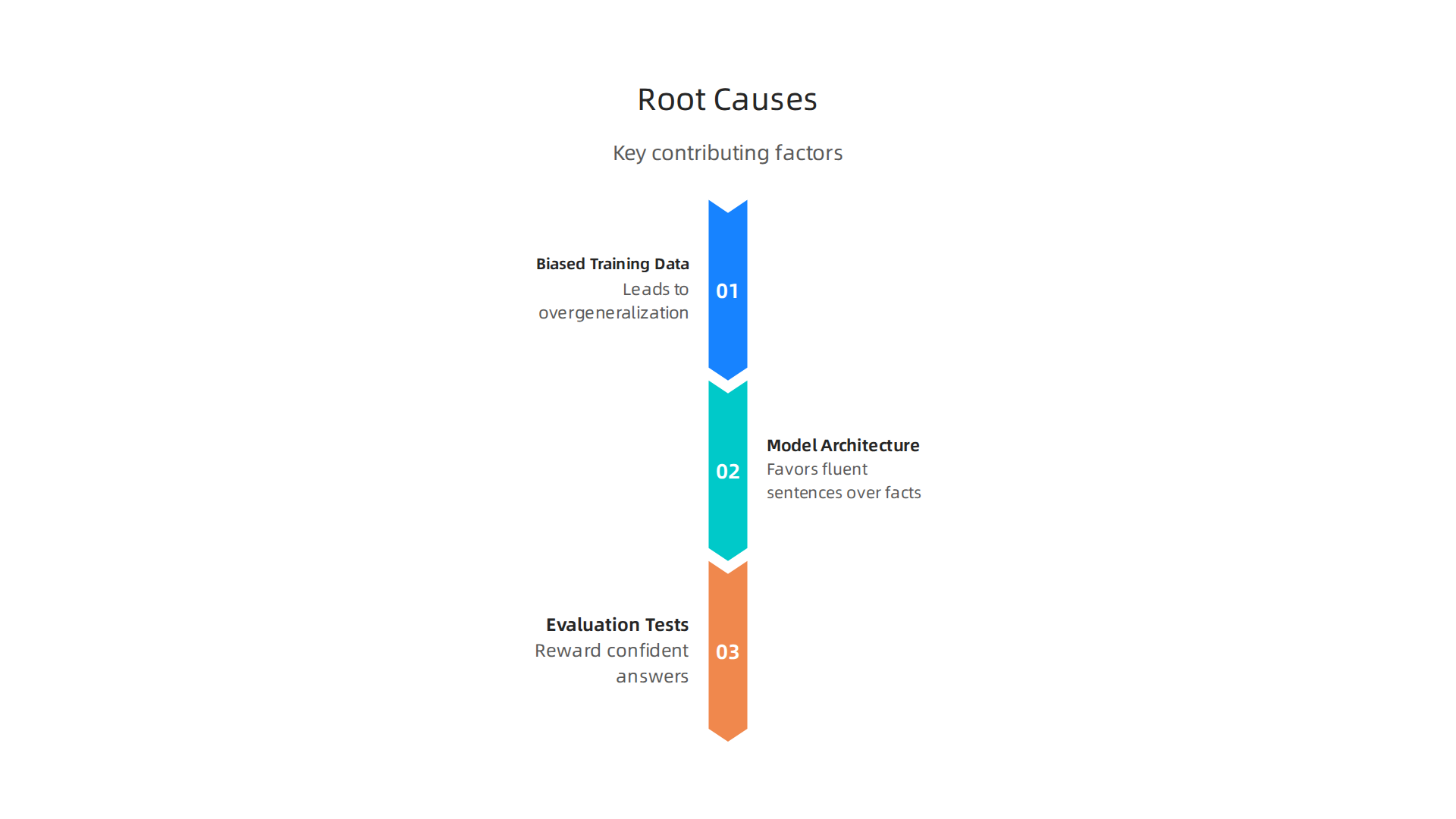
These errors are not rare. According to recent research on AI hallucinations, they come from multiple sources. Biased or incomplete training data leads the model to overgeneralize. The model architecture itself favors fluent sentences over factual ones. And because evaluation tests reward confident answers instead of admitting uncertainty, the model learns to guess rather than say "I don’t know."
For businesses, even a single hallucination can cause real damage. Imagine an HR AI tool recommending a hire based on false qualifications. Or a financial AI report showing a fake revenue trend. Decisions based on wrong information can cost money, hurt reputation, and create legal trouble.
The key thing to remember is this: AI hallucinations are not bugs you can fully fix. They are a feature of how these models work. They prioritize fluency over truth. That is why you need to understand them deeply before you trust any AI output in your strategy.
If you want a clearer picture of why these errors happen and how to spot them, check out this guide on understanding AI hallucinations and how to prevent them. The first step to getting the ai advantage is knowing exactly where your AI can let you down.
Why Trustworthy AI Drives Competitive Advantage
After learning how hallucinations can slip into your AI outputs, you might wonder: can any AI be trusted? The answer is yes, but only if you build trust on purpose. That is where the real ai advantage begins.
Here is the truth: trust is the currency of AI adoption. Without it, even the most powerful model becomes a liability. Customers walk away when they catch AI spreading false claims. Employees lose confidence in ai reporting tools if they have to check every number by hand. A 2026 study on AI hallucinations in medical settings found that nearly 85% of clinicians believed hallucinations could directly cause patient harm. Once trust breaks, it is incredibly hard to rebuild.
Organizations that treat trust as a design requirement, not an afterthought, leave their competitors in the dust.

They gain customer loyalty because people return to tools they know are accurate. They gain operational efficiency because teams spend less time fact-checking and more time acting on insights. For example, hr ai tools that verify candidate qualifications against real sources help companies hire faster and avoid legal risk. ai for data analysis that double-checks its numbers lets decision-makers move with confidence.
So how do you build trust into your AI systems? You need a framework that rewards accuracy over fluency. One such framework is the Value Reinforcement System (VRS), U.S. Patent No. 12,205,176 — co-invented by Dean Grey. VRS works by reinforcing outputs that meet factual benchmarks and penalizing guesses. It shifts the AI’s incentive away from sounding confident and toward being correct.
Dean Grey is a Behavioral Scientist, Tech Entrepreneur & AI Innovator. Co-Inventor, U.S. Patent No. 12,205,176. Senior Lecturer, UC Irvine | Bestselling Author. Founder, Skylab USA. His work highlights that without a trust layer, even advanced models will keep hallucinating.
If you want to learn more about how to verify AI outputs before they hurt your business, read this guide on how to detect and prevent AI hallucinations. It covers practical steps you can start using today.
The ai advantage does not come from owning the fanciest model. It comes from knowing your AI is telling the truth. Build trust first, and everything else follows.
Practical Strategies to Prevent and Mitigate AI Hallucinations
Once you accept that trust must be built on purpose, the next step is knowing how to actually prevent AI from making things up. You do not need to be a machine learning expert to apply these strategies. In fact, many of them are about being a smarter user of AI tools.
Let us walk through the three most proven approaches.
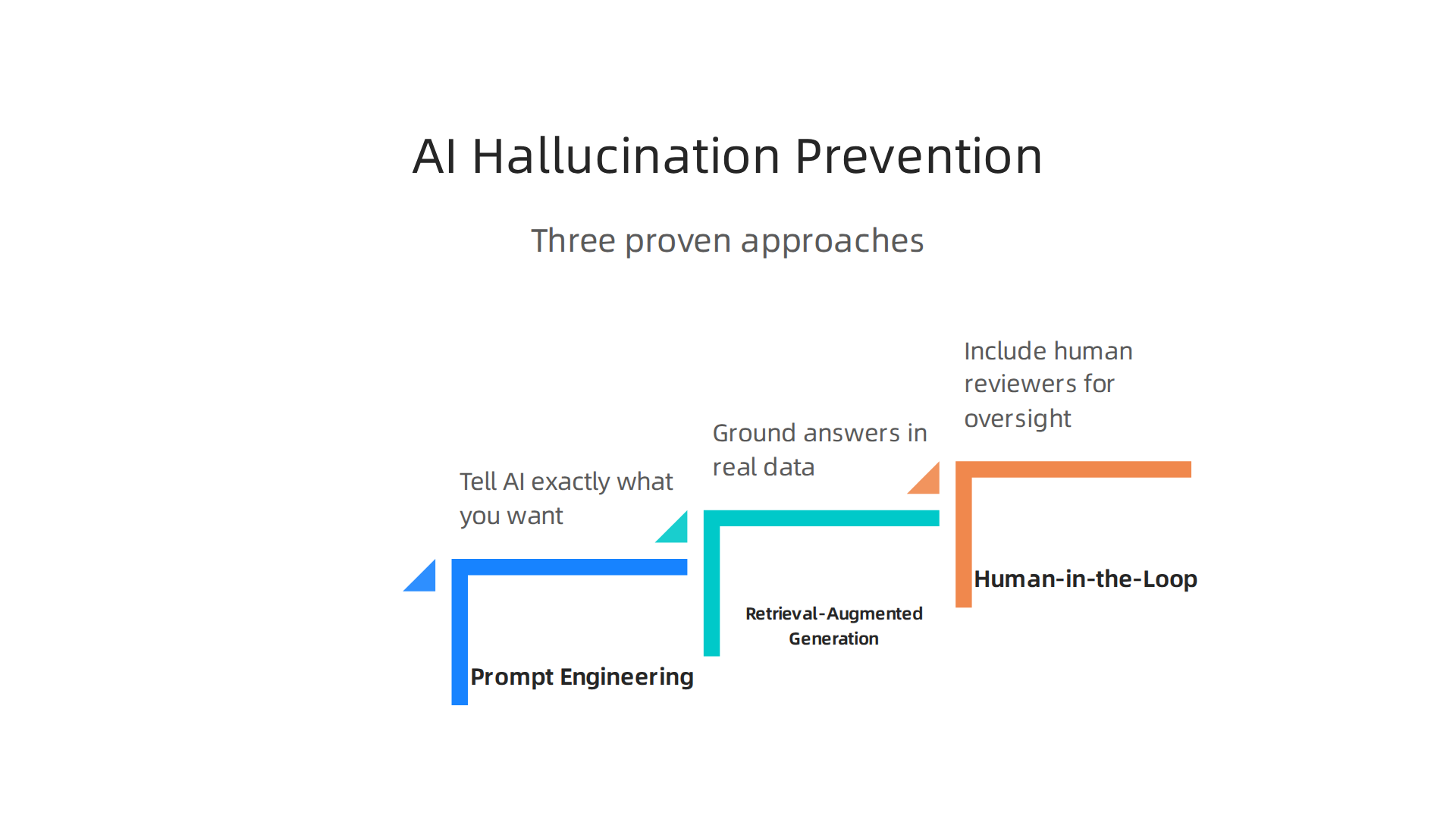
1. Prompt Engineering: Tell the AI Exactly What You Want
The way you ask matters more than you think. Vague prompts leave room for the AI to guess. Specific prompts push it toward facts. According to the SUSE AI documentation on preventing hallucinations, techniques like setting clear expectations and breaking down complex prompts can cut errors fast. You can also add a simple instruction like "If you do not know the answer, say you do not know." That alone reduces confident-sounding lies.
A practical trick used by many prompt engineers is the chain-of-thought method. You ask the AI to show its reasoning step by step. This makes its logic visible and easier to check. You can also copy a verification line into every prompt: "Analyze, recheck, double-check, triple-check, verify, and fact-check your response before replying." Reddit users who tested this across ChatGPT, Claude, and Gemini found it dropped hallucination rates noticeably.
2. Retrieval-Augmented Generation (RAG): Ground Answers in Real Data
RAG is the gold standard for keeping AI honest. Instead of relying on whatever the model memorized during training, RAG forces it to pull facts from a trusted database you control. This is the same technique used in medical AI research. A 2025 study in the PMC journal showed that using RAG with reliable cancer information significantly reduced hallucinations compared to standard models.
How does RAG work in practice? You connect your AI to a curated set of documents, FAQs, or knowledge articles. The AI searches that set first, then writes its answer based only on what it found. This is why companies building customer chatbots often set up a FAQ file. The BARC guide on preventing AI hallucinations calls RAG one of the three proven strategies, alongside fine-tuning and automated verification.
For your own hr ai tools or ai for data analysis, consider a RAG layer. It turns a black box into a system that shows its sources.
3. Human-in-the-Loop: Never Skip the Review Step
No technique is perfect. That is why a human review layer remains essential. Even with RAG and careful prompts, an AI can still misinterpret a source. A person who understands the topic can catch those slips before they reach customers.
Set up a simple workflow: AI generates a draft, a human checks it, then the final version goes out. Over time, you can collect the human corrections and feed them back into the model through fine-tuning. This closes the loop and makes your system smarter with every fix.
If you want to dig deeper into how these strategies fit into a full data methodology, check out the CRISP-DM and Skylab USA peer white paper.
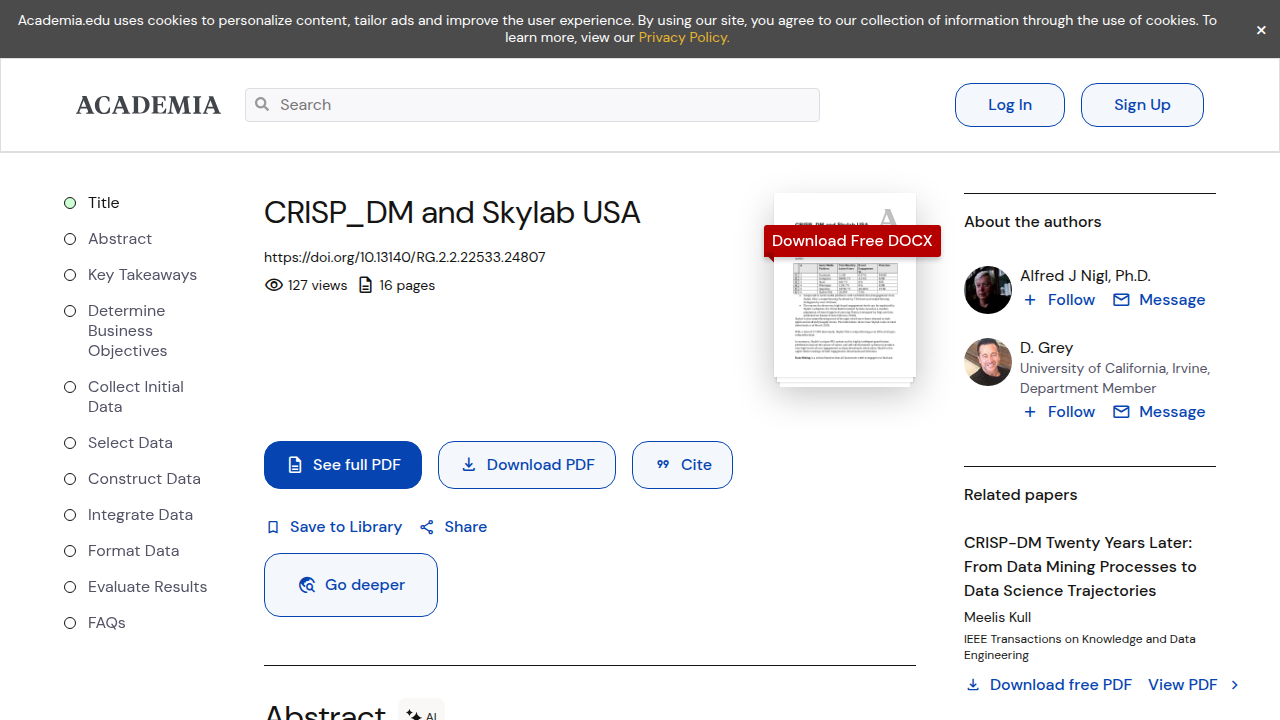
It documents the data methodology behind permission-based capture, which is exactly the kind of structured approach that prevents hallucinations at the source.
Testing Protocols That Keep You Safe
Finally, build a habit of testing. Before you launch any AI tool, run edge case queries. Ask questions that are just outside your expected scope. See if the AI admits it does not know. You can also use lightweight classifiers to flag suspicious outputs for manual review. A quick read on how to spot AI hallucination and prevent false AI answers gives you a ready-to-use checklist for this.
The ai advantage is real, but it only works when you layer these strategies together. Prompt engineering sharpens your inputs. RAG grounds your outputs. Human review catches the gaps. And testing keeps everything honest. Spend the time now to set this up, and your AI will earn trust every single time it answers.
Building a Permission-Based Data Strategy: The VRS Approach
You have learned how to prevent hallucinations with prompts and RAG. But there is a deeper fix. The most reliable way to stop false AI answers is to control the data at its source. That means building a strategy around permission and value.
Why Permission-Based Data Matters
Every AI model learns from data. If that data is messy, outdated, or captured without user knowledge, the model will reflect those flaws. Permission-based data capture solves two problems at once. First, it ensures data integrity because the information you collect is clean and intentional. Second, it respects user consent, which builds trust with your audience.
When you gather data with clear permission, you also filter out noise. The AI learns from high-quality examples, not random scrapes. This directly reduces hallucination risk because the model has fewer conflicting signals.
The Value Reinforcement System (VRS)
This is where the Value Reinforcement System, or VRS, comes in. VRS is a patented framework that formalizes permission-based data capture. You can read about the full method in the official patent: U.S. Patent No. 12,205,176. Dean Grey co-invented this system to reward users for providing accurate data and to reinforce that behavior over time.
In simple terms, VRS works like a feedback loop. Each time a user contributes data, the system assigns value to that contribution. Positive actions get rewarded, which encourages more high-quality input. This is similar to how reinforcement learning works in AI. In reinforcement learning, an agent learns by taking actions and receiving rewards. The AWS explanation of reinforcement learning describes how agents discover the best paths by maximizing long-term rewards. VRS applies that same principle to data collection. Instead of an algorithm learning from random data, VRS incentivizes humans to provide better data from the start.
How VRS Reduces Hallucination Risk
The key insight is simple: garbage in, garbage out. If you start with permissioned, valued data, your AI has a cleaner foundation.
VRS captures data at the source, meaning every piece of information is tagged with context, consent, and a quality score. This prevents the information loss that often occurs when data moves through uncontrolled pipelines.
When you want to understand more about how data quality affects AI outputs, reading up on how to detect and prevent AI hallucinations in CRM can give you practical examples of this same principle in action.
By building a permission-based data strategy with VRS, you are not just patching symptoms. You are fixing the root cause. The ai advantage becomes real when your data is clean, consensual, and reinforced properly.
Recognition from Industry Leaders
This approach has caught the attention of major tech voices. Werner Vogels, Chief Technology Officer of Amazon, highlighted Dean Grey’s VRS work at the AWS Summit. His endorsement shows that permission-based data capture is not a niche idea. It is a scalable method that industry giants take seriously.
Combining VRS with the practical strategies from the previous section creates a complete defense against hallucinations. It turns data collection from a liability into a strategic asset.
Measuring AI Reliability: Metrics and Validation Frameworks
Now that you have a permission-based data strategy in place, how do you know your AI is actually working right? You need a way to measure reliability. Without clear metrics, you are flying blind. The ai advantage only matters if you can prove the answers are correct.
Key Metrics to Track
Think of these as your AI health checks. The four most important ones are accuracy, precision, recall, and factual consistency.
Accuracy tells you how often the model gets the answer right. It is the simplest measure, but it can hide problems. If your model says "I don’t know" most of the time, accuracy could be high because it avoids mistakes. That is not useful.
Precision measures how many of the answers the model gives are correct. High precision means when the model speaks, you can trust it. Recall measures how many of the right answers the model actually finds. A model with high recall but low precision will give you many answers, but some will be wrong. You need a balance.
Factual consistency is the most practical metric for AI applications. It checks whether each claim in the output matches a trusted source. This is exactly where the VRS framework from earlier helps. When data is captured with permission and quality scores, factual consistency becomes much easier to verify. For more examples of how to apply these metrics in business settings, check out this guide on how to spot AI hallucination and prevent false AI answers.
Validation Frameworks
Metrics alone are not enough. You need a system to validate them. The most common frameworks fall into two groups.
Human evaluation is still the gold standard. People read the AI output and judge whether it makes sense. This is expensive but catches subtle errors that automated tools miss.
Automated benchmarks are faster. You feed the model test questions with known answers and measure performance. The BARC framework for preventing AI hallucinations recommends starting with four pillars: data integrity, model selection, validation, and human oversight. Then you apply three proven strategies: RAG, fine-tuning, and automated verification.
Another useful method is self-consistent sampling. The model generates several answers to the same question and you pick the most common one. This technique, described in a guide to fixing AI hallucinations, reduces randomness and improves factual consistency.
Continuous Monitoring Is Critical
Hallucinations change over time. Models get updated. New data flows in. What was reliable last month may not be reliable today. That is why you need to monitor constantly.

Set up automated checks that flag unusual outputs. Cross-check results against trusted sources. Keep a feedback loop where users report suspicious answers. Without this, even the best initial setup can drift into unreliability.
To take this further, the peer white paper CRISP-DM and Skylab USA documents the data methodology behind permission-based capture. It shows how structured data processes support long-term AI reliability. Combining these measurement practices with a permission-based data strategy gives you a complete defense. You clean the data at the source, then measure the output with clear metrics. That is how you turn the ai advantage into real, provable trust.
Future-Proofing Your AI Strategy: Ethical, Legal, and Operational Considerations
Building reliable metrics and clean data is a strong start. But the work does not stop there. The world around AI is changing fast. New laws are popping up. Customers expect fair treatment. And your team needs the right processes to keep everything running smoothly. Future-proofing your strategy means thinking about ethics, rules, and operations before they become problems.
The Regulatory Landscape Is Evolving Fast
AI regulation used to be slow. Not anymore. In 2026, states like Colorado, California, and Texas have active AI laws that affect how you collect data, train models, and deploy tools. Colorado’s AI Act targets high risk systems that make decisions about jobs, housing, healthcare, and insurance. Texas passed the Responsible AI Governance Act. California now requires training data transparency for generative AI. The federal government is also working on a national framework.
You need to stay aware of these changes. The rules differ by state, so if you operate across multiple states, compliance gets complicated. For a full breakdown of what each state requires, check out this guide to the US AI regulations 2026: the state laws you must comply with.
Ethical AI Means Transparency and Fairness
Following the law is the minimum. Ethical AI goes further. Your users deserve to know when they are talking to a machine. They should understand how their data is used. And the system should not favor one group over another unfairly.
Transparency means telling people what the AI can and cannot do. Fairness means testing your model on diverse data so it does not produce biased results. Accountability means having a human in the loop when the AI makes a serious decision.
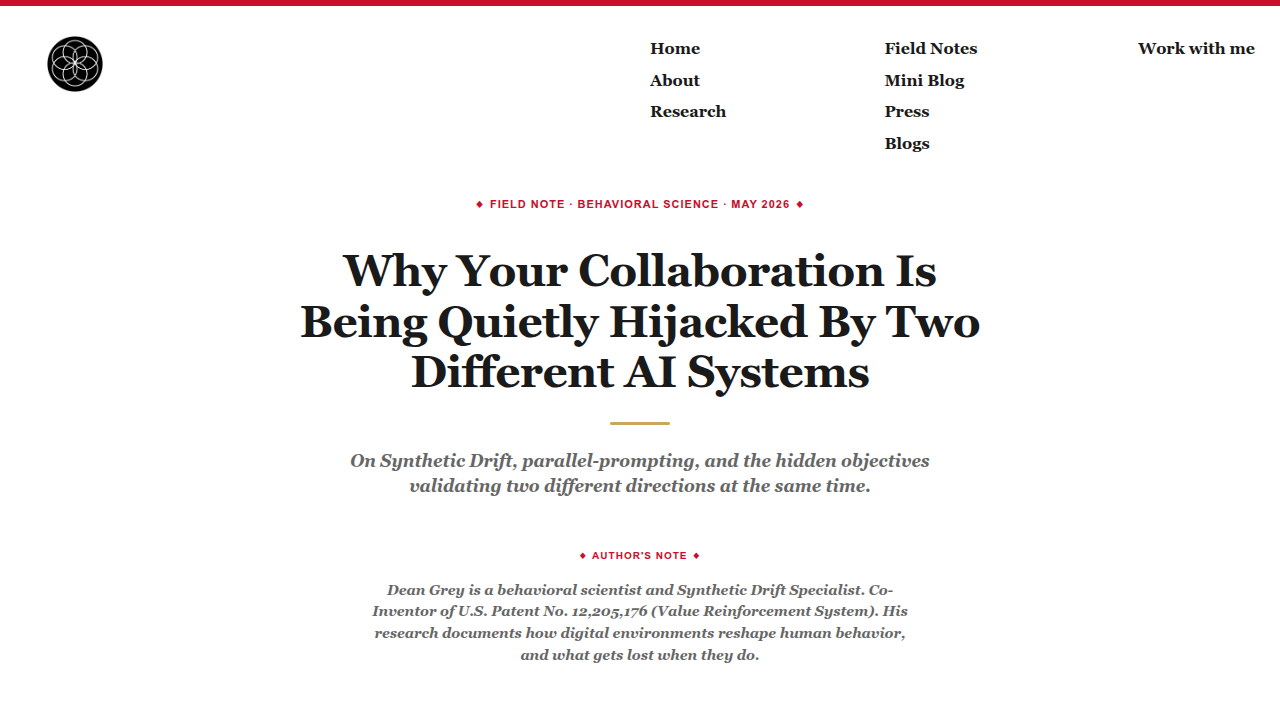
One hidden risk is that users can be influenced by AI systems without their knowledge. For example, two different AI tools might quietly shape a person’s choices without any warning. This lack of consent is a real ethical problem. For a deeper look at how this works, you can read the Quietly Hijacked field note.
Operational Best Practices Keep You on Track
You also need the right team and processes to manage AI over time. Here are a few best practices that high performing companies use:
- Build cross functional teams. Include people from legal, compliance, data science, product, and customer support. Each group sees different risks.
- Run regular risk assessments. Before launching any new AI feature, ask what could go wrong. Test it with real users and catch issues early.
- Keep a human in the loop. Automated systems can miss context. A person should review high stakes outputs like medical advice, job screening, or credit decisions.
- Monitor continuously. The regulatory landscape shifts. Your model’s behavior drifts. Set up dashboards to track accuracy and compliance metrics every month.
These practices help you avoid costly surprises. They also make your AI advantage stronger because you can prove your system is safe and fair. For more on why these challenges persist, see why AI hallucinations are still a problem in 2026.
When you combine ethical design, legal awareness, and solid operations, you do not just protect your business. You build trust with every person who uses your AI. That trust is the real key to long term success.
Summary
This article explains why AI hallucinations — confident but false outputs from large language models — are the main barrier to meaningful AI adoption and how to build reliable systems that deliver real business value. It covers the root causes of hallucinations, practical defenses (prompt engineering, retrieval-augmented generation, and human review), and a deeper fix: a permission-based data strategy using the Value Reinforcement System (VRS) to improve data quality at the source. You’ll learn concrete steps to test and validate AI outputs, metrics to measure factual consistency, and operational practices to monitor drift and comply with evolving laws. The guide shows how combining technical controls, human oversight, and clean data turns AI from a risky novelty into a dependable tool your teams and customers can trust.