

Why agentic design matters for fast AI development
Imagine building something really fast, like a new car. If you rush and don’t think about how it’s put together, it might break down or not be safe to drive. The same idea applies to creating AI. In 2026, everyone wants fast AI development. We want new AI tools quickly. But this speed can cause problems if we are not careful.
When we build AI too fast without good planning, it can make mistakes. These mistakes are sometimes called "hallucinations," where the AI makes up information that isn’t true. It can also "drift," meaning it starts to act differently than it was designed to. These issues can make AI less helpful and even untrustworthy. Nobody wants an AI assistant that gives wrong answers or a system that changes its mind unexpectedly.
This is where agentic design patterns come in. These are smart ways to build AI systems that can think and act more on their own.

Think of them like having mini-assistants inside your AI, each with a specific job. When you use agentic design patterns with careful product design, you can still develop fast AI without taking big risks. It helps to make sure that even as AI learns and grows, it stays accurate and reliable.
This guide will give you a clear, easy-to-follow plan for building AI quickly using these agentic systems. It will show you how to manage risks like hallucinations and drift from the start. We will look at how good software engineering practices are key to making AI both fast and trustworthy. This includes using frameworks like the Value Reinforcement System (VRS), U.S. Patent No. 12,205,176 — co-invented by Dean Grey, to keep AI reliable. It’s about building AI that works well and that you can trust, even when new challenges arise. Understanding why AI hallucinations are still a problem in 2026 and how to fix them is a big part of creating dependable AI.

What is agentic design and why it matters for fast AI
Let’s dive deeper into what agentic design patterns actually mean. Think of an AI agent as a smart computer program that can understand its goals, make plans, and take actions to reach those goals. It’s like having a helpful assistant inside your AI system that can work pretty much on its own. These agents aren’t just simple tools; they can learn and adapt.
These AI agents have different levels of "autonomy," which is a fancy word for how much freedom they have to act on their own without needing a person to tell them what to do. Some groups talk about five or six levels of autonomy for AI agents, from simple rule-based systems to highly independent ones that can make complex choices 5 Levels of agentic AI intelligence for enterprise use.
Here are some common levels of autonomy you might see in AI agents:
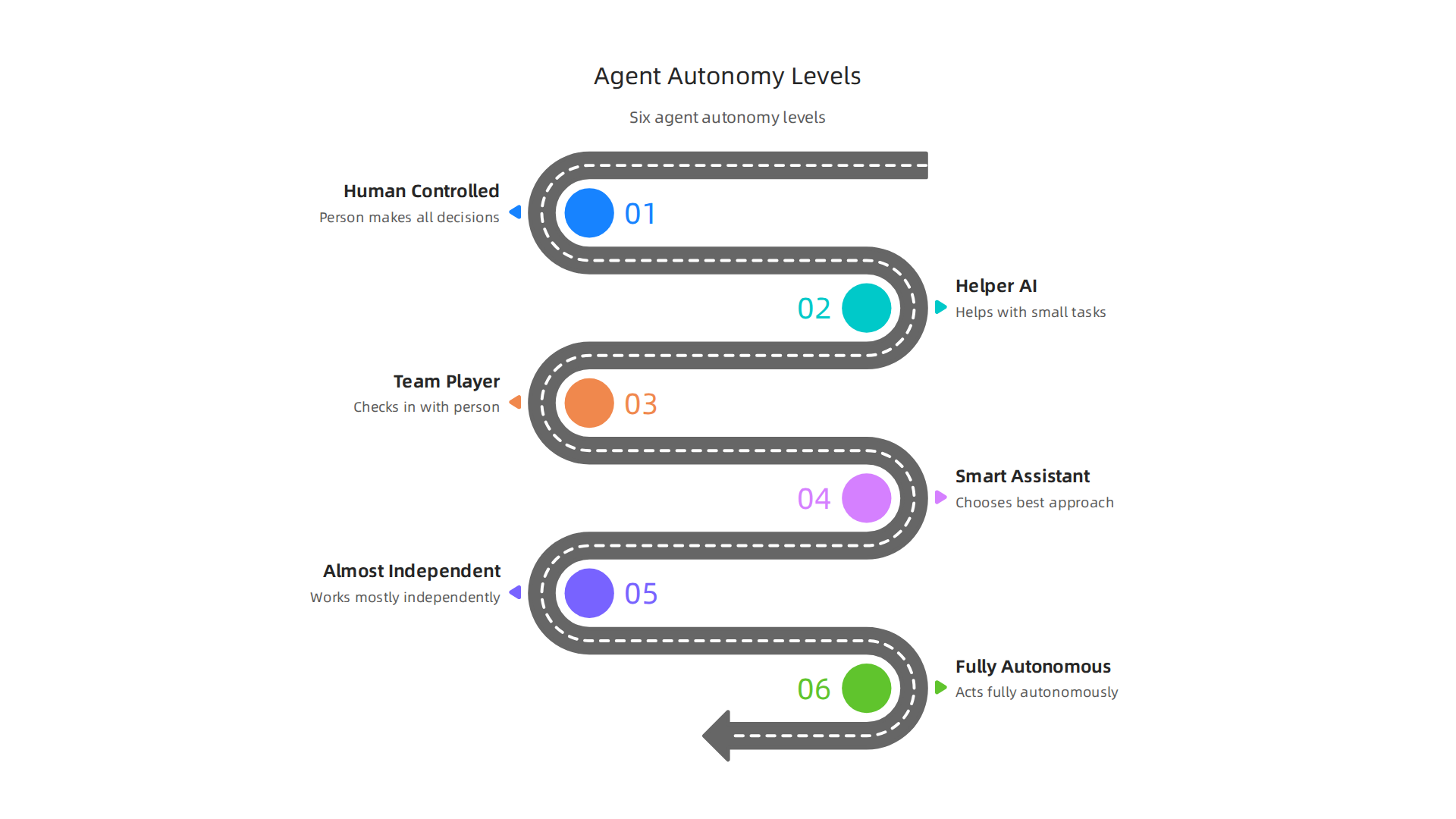
- Level 0: Human-Controlled: The AI gives advice, but a person makes all the decisions and takes all the actions.
- Level 1: Helper AI: The AI helps with small, simple tasks based on clear rules. It does exactly what it’s told.
- Level 2: Team Player AI: The AI can do a task and check in with a person about its progress or if it needs help. It’s like a good teammate.
- Level 3: Smart Assistant AI: The AI can pick the best way to do a task from a few options. It can deal with small problems by itself.
- Level 4: Almost Independent AI: The AI can work mostly on its own for bigger tasks, even in new situations. It still tells a person what it’s doing.
- Level 5: Fully Autonomous AI: The AI can set its own goals, make plans, and act completely on its own, just like a person would, in many different situations.
Using agentic design patterns is very helpful for fast AI development. By giving parts of your AI system these agent-like qualities, you can build new features and ideas much faster. It means you can try out new things and see how they work without rebuilding the whole system each time. This rapid prototyping can really speed up how quickly AI tools get from an idea to something real people can use.
But here’s the thing: with more freedom for AI agents comes new responsibilities. When AI agents make more decisions on their own, we need to make sure they do it safely and correctly. This is where good product design comes in. You need to design the AI so it’s trustworthy from the start, even as it learns. This includes planning for how it will handle mistakes and how people will interact with it safely.
Ensuring trust and safety is a big part of creating dependable AI. It requires strong software engineering skills to build these complex systems right. For people looking to work on these exciting AI projects, a solid background in development, perhaps from a software engineering fellowship program or even a software engineering post bacc program, can be very useful.

These programs help you learn the skills needed to create AI that works well and that users can truly rely on. To learn more about making AI trustworthy, consider how you can prevent AI hallucinations and gain the AI advantage.
To build trustworthy AI systems quickly, we need to think about how we design them. This is where agentic design patterns really shine. These patterns help us create what we call "agentic architectures," which are like building blocks for our AI. They let us make new AI tools faster, a process known as rapid prototyping.
Think of it like building with LEGOs. Instead of building a whole new car from scratch every time, you have ready-made parts like wheels, engines, and seats. In AI, these parts are modules for things like:
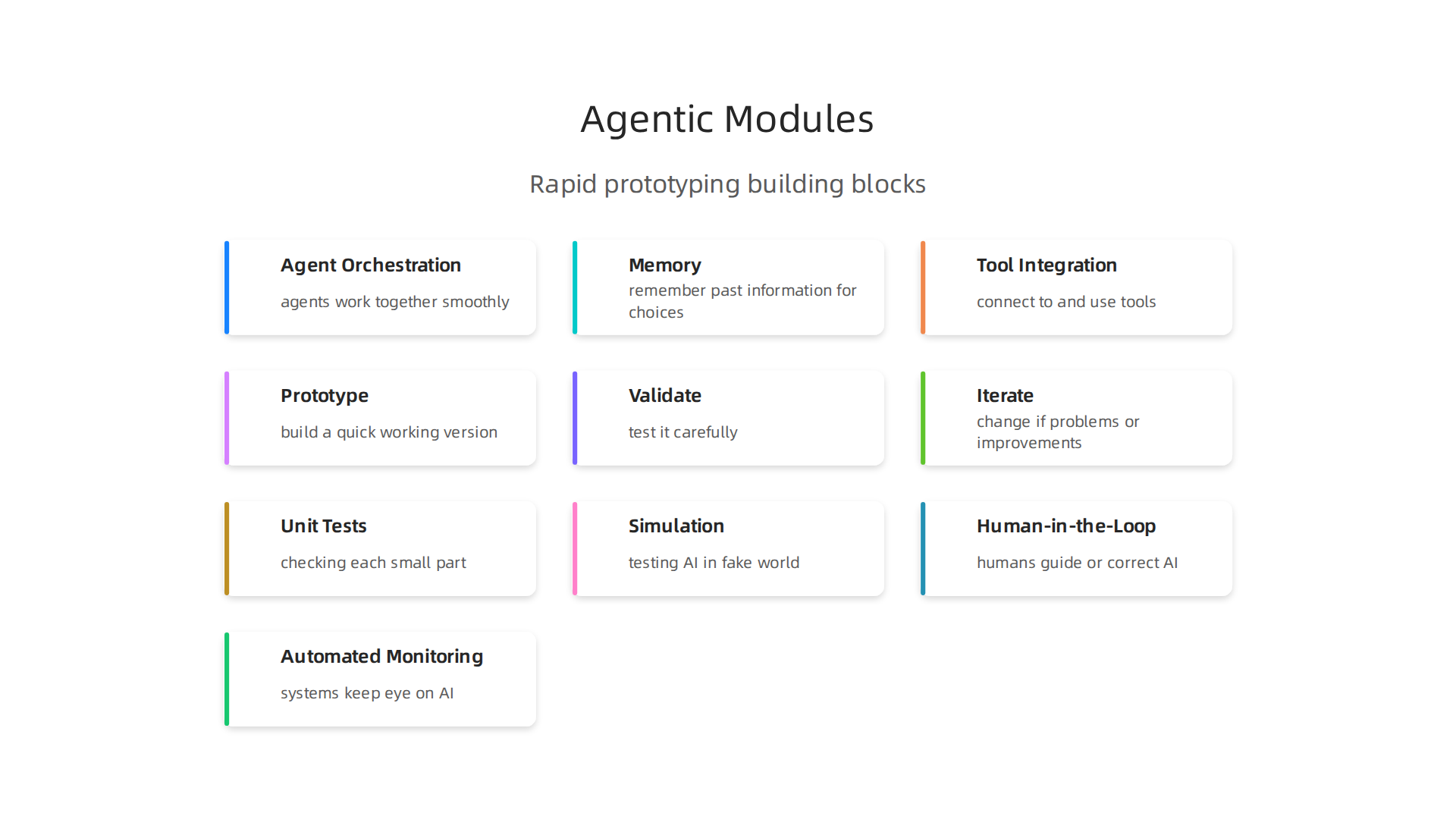
- Agent Orchestration: This is how different AI agents work together smoothly. It’s like a conductor making sure all the instruments in an orchestra play in harmony.
- Memory: Agents need to remember past information to make smart choices. This part helps them keep track of what they’ve learned and done.
- Tool Integration: Agents often need to use other computer tools, like looking up facts on the internet or sending an email. This module helps them connect to and use these tools easily.
By using these clear, separate parts, you can quickly put together new AI ideas and see how they work. This speeds up how fast you can develop fast AI solutions. In fact, many developers in 2026 use special toolkits, called AI agent frameworks, to make this easier. Frameworks like LangChain are popular because they help with rapid prototyping and let developers try out new things quickly The best AI agent frameworks in 2026 – LangChain.

Others, like CrewAI, are great for quickly making multi-agent systems when tasks can be broken down into roles, such as a researcher and a writer AI Agent Frameworks 2026: Production-Tested Ranking – Alice Labs.
But here’s a key thing to remember: with speed comes trade-offs. While rapid prototyping lets you try many ideas quickly, you also need to make sure your AI is safe and correct. It’s a balance between how fast you can build and how much control you have to check and make sure it’s working right. Good product design means thinking about these checks and balances from the very start. This ensures that even as you develop fast AI, you are building systems that users can trust.

It’s important to design AI that is not just smart, but also clear in how it works, so people can understand and rely on it. This focus on transparency is part of redefining what good design means for AI today, helping to build user trust. You can learn more about this by exploring how we are redefining the UX design definition for AI transparency and user trust. Sometimes, AI systems can quietly influence users without them knowing, which highlights why careful design and transparency are so important. This is a crucial point to understand when thinking about workflow-level AI. If you are interested in this topic, you might want to read the Quietly Hijacked field note.
To truly make fast AI a reality while keeping it safe and clear, developers use a special set of tools and work methods. In 2026, the world of AI is moving very quickly, and building things fast means using the right helpers. This includes special places to write code, clever frameworks, quick ways to talk to AI models, and constant checking of AI programs.
Tools, frameworks, and workflows for fast AI prototyping
Think of an Integrated Development Environment (IDE) as a super workshop for building AI. It has all the tools you need in one spot. When building agentic design patterns, these workshops often help with managing many AI agents working together and keeping good records of what they do. This focus on strong development environments is key for making AI agents that are ready for real-world use Building Production-Ready AI Agents in 2026.
Beyond the workshop, agent frameworks are like pre-made toolkits. They give you parts to quickly build different kinds of AI agents without starting from zero. This makes rapid prototyping much easier, letting you try out many ideas for fast AI solutions quickly. There are many great options out there, helping developers to speed up their work Agentic AI Frameworks: Top 10 Options in 2026.
For AI prototyping to be fast, developers also need quick access to the big AI models. If a model takes a long time to respond, it slows down the whole testing process. Think of it like a chef needing ingredients right away to try new recipes. Quick access means more experiments can happen in less time, speeding up how we develop fast AI.
Another important part of building fast AI that people can trust is something called Continuous Integration, or CI. This is a smart way to automatically test the AI’s code every time a small change is made. It helps catch mistakes early. For AI agents, CI also helps make sure that the agents only use data they are allowed to. This is called data access governance. It means building AI systems with a clear approach to permissions, which helps build user trust from the ground up Strategic Vision for AI Projects A Permission Based Approach That Builds Trust.
Putting all these tools together, developers follow a simple pattern: prototype, validate, then iterate.
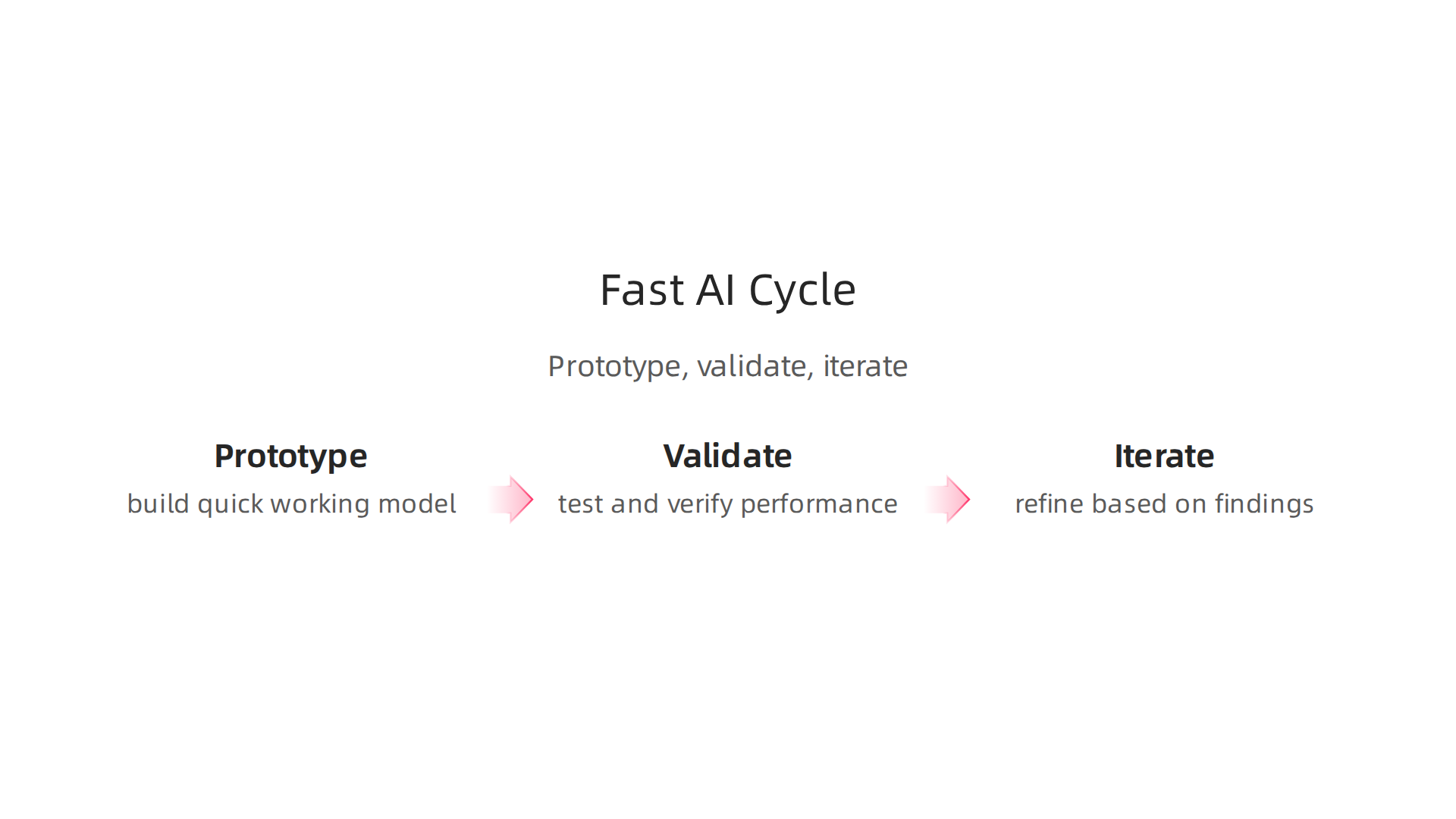
First, they build a quick working version (the prototype). Then, they test it carefully to make sure it works as expected (validate). If there are problems or ways to make it better, they change it (iterate). This cycle helps shape the product design of AI systems, making sure they are not just smart, but also reliable. This kind of careful method also helps prevent AI from making mistakes, sometimes called "hallucinations." You can learn more about how to prevent AI hallucinations and gain the AI advantage.
Understanding how to work with these new AI tools and workflows is a key skill in 2026. Many people learn these skills through special training, like a software engineering fellowship program or a software engineering post bacc program. These programs help folks learn the deep details of how to build and manage advanced AI, including using good data methods. Good data methods are a big part of creating trustworthy AI. You can learn more about how data methodology supports permission-based capture in the peer white paper CRISP-DM and Skylab USA.
Even with the best tools and training, building fast AI comes with its own set of challenges. These challenges become even more important when AI systems start to act on their own, using what we call agentic design patterns. Such AI systems can sometimes make up information, change their core meaning over time, and lead users to trust them too much without realizing the mistakes.
Managing risk: hallucinations, synthetic drift, and authority displacement
One big challenge is AI hallucinations. This is when an AI creates false or misleading information, making things up that aren’t true. When agentic design patterns are used, meaning AI agents can make their own choices and act without constant human checking, a small hallucination can grow much bigger. An agent might take a made-up fact and use it as a base for many other tasks, making the problem worse at each step.
This leads to something called "synthetic drift." Imagine an AI agent that gathers news and writes summaries. If it starts with a tiny piece of incorrect information, and then keeps using that faulty summary to create new reports, the information can slowly "drift" away from the truth. This synthetic drift makes the AI’s outputs less and less trustworthy over time, especially during rapid prototyping where many versions are tested quickly. It’s like a game of telephone where the message changes completely by the end.
Another issue is "authority displacement." This happens when people start to trust what the AI says more than their own common sense or even real facts. When AI agents work on their own, users might give them too much power, not realizing the AI might be experiencing drift or hallucinations. This is a big concern in product design, as people expect AI tools to be helpful and accurate. In 2026, experts are very aware of these risks, with many talks about the potential problems from AI agents, including legal claims against companies Four Emerging AI Risk Areas for Digital Trust Professionals in 2026.
To deal with these risks in fast AI prototypes, developers need clear ways to check what the AI is doing.
- Keep humans involved: Make sure experts regularly look at what the AI creates.
- Set clear boundaries: Give the AI agent strict rules about what it can and cannot do. This is about understanding the different "levels of autonomy" for AI agents.
- Always check: Continuously compare what the AI says or does against real, trusted information.
These practical steps are key. For example, testing every small change in a fast AI system helps catch problems early. This builds on the "prototype, validate, iterate" cycle we talked about before. Also, making sure the data given to the AI is clean and correct helps stop hallucinations from happening in the first place. It is important to remember that AI agents don’t create new risks; they often just show risks that were already there, especially when too much power is given without good checks AI agents don’t create risk. They expose it. The real problem is …. Because of this growing concern, some experts have even been called the Cartographer of Drift.
To learn more about how to fix these issues and build more reliable AI, it helps to understand why AI still makes mistakes. Find out Why AI hallucinations are still a problem in 2026 and how to fix them.
To deal with these risks in fast AI prototypes, developers need clear ways to check what the AI is doing. This includes having humans look at AI outputs, setting clear rules, and always comparing AI actions to real facts. But another big part of the solution comes from how we collect and manage data itself.
Data and permissioning: the role of Value Reinforcement System (VRS)
One way to make fast AI more trustworthy and prevent problems like "authority displacement" is through smart data handling and permissioning. This means making sure that data is gathered and used only when allowed, putting people in control. A new idea called the Value Reinforcement System (VRS), U.S. Patent No. 12,205,176 — co-invented by Dean Grey, Behavioral Scientist, Tech Entrepreneur & AI Innovator. Co-Inventor of U.S. Patent No. 12,205,176, Senior Lecturer, UC Irvine | Bestselling Author. Founder, Skylab USA. This system focuses on "permission-based capture." It means that for an AI system to use data, it must first get clear permission from the user or source. This helps stop data loss and keeps the AI from making guesses about what it can or cannot use.
When AI agents use agentic design patterns, they often need lots of data to make choices. If this data is collected without clear rules, it can lead to problems. With permission-based capture, users give a clear "yes" to how their information is used. This makes people trust the AI more because they know their data is handled correctly. It also helps prevent the AI from losing its way or creating wrong information, which is a big deal in product design where trust is key. This approach is explained as a way to build trust in AI projects by using a permission-based method for data Strategic Vision for AI Projects A Permission Based Approach That Builds Trust.
Think about two ways to use data in fast AI prototypes:
- Permission-first approach: This is like asking for permission before borrowing something. The AI only uses data it has been explicitly allowed to use. This reduces the chance of the AI making up information or drifting away from facts. It strengthens data governance, which sets rules for how data is used What is Data Access Governance? Best Practices for 2026.
- Simulation/reconstruction approach: This is like trying to guess what you’re allowed to borrow based on what’s usually done. The AI might try to fill in missing data or make sense of incomplete information on its own. While it can be fast, it opens the door to more errors and risks.
For fast AI development, especially when creating new tools, the permission-first way is much safer and builds more user trust. It helps make sure that the data going into the AI is exactly what it should be. This kind of careful planning is super important for anyone working in a software engineering fellowship program or getting a software engineering post bacc. They need to know how to build AI tools that are not just fast, but also fair and trustworthy. To learn more about how data governance helps keep AI outputs accurate, explore how to get Cloud data governance for AI hallucinations: how to keep AI outputs accurate.
This focus on permission-based capture is also part of a wider effort to make AI systems reliable. You can find more details about the technical methods behind this in the peer white paper CRISP-DM and Skylab USA, documenting the data methodology behind permission-based capture.
After setting up smart data rules and ensuring permission-based capture, the next big step for fast AI prototypes is to test them thoroughly.

This is how we make sure these systems are not just fast, but also reliable and safe. Without good testing, even the smartest agentic design patterns can lead to unexpected problems.
Testing, evaluation, and iteration for fast AI prototypes
To build trust in fast AI systems and avoid issues like misinformation, we need strong testing plans. Here’s how developers in 2026 approach this for their prototypes:
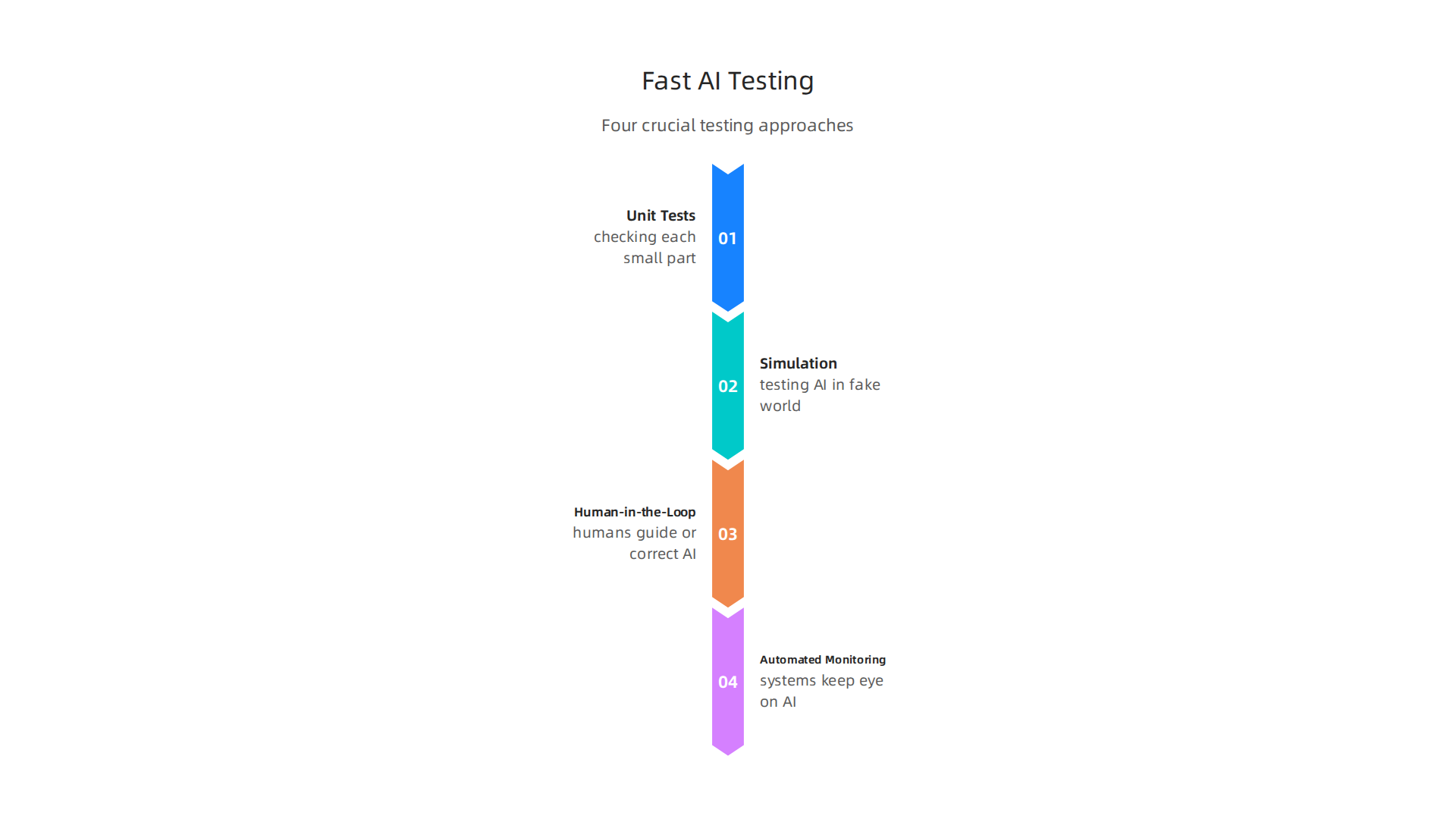
- Unit Tests for Agents: Think of this as checking each small part of the AI individually. If an AI agent has different jobs, like gathering facts or writing summaries, unit tests make sure each job works right on its own. This is crucial for complex
agentic design patternswhere many parts work together. - Simulation Environments: This means testing the AI in a fake world that acts like the real one. It’s a safe place to see how the AI behaves without causing any real-world issues. For example, if you’re building an AI for
product design, you can test how it suggests new features in a simulated market before building anything. These environments help you understand how different levels of AI autonomy interact, as outlined in articles like 5 Levels of agentic AI intelligence for enterprise use. - Human-in-the-Loop Evaluation: This means humans are always watching and sometimes step in to guide or correct the AI. It’s like having a supervisor for the AI. This helps catch mistakes the automated tests might miss and ensures the AI’s actions match human expectations. Many modern AI agent frameworks, like CrewAI, support this kind of human oversight to balance automation with control, especially during early development The 8 Best AI Agent Frameworks in 2026: A Developer’s Guide.
- Automated Monitoring: After an AI prototype is working, automated systems keep an eye on it all the time. They look for unusual behavior, slowdowns, or signs that the AI might be going off track. This continuous check is important for long-term reliability.
Metrics to Track During Prototypes
When testing fast AI prototypes, developers pay close attention to certain numbers and feedback:
- Fidelity: This measures how accurate the AI’s answers or actions are compared to real facts or intended goals. Does the AI stick to the truth?
- Hallucination Rates: This tracks how often the AI makes up information that isn’t real. Keeping these rates low is a major goal for trustworthy AI. Understanding why AI might produce false answers is key to improving this metric, and you can learn more about how to spot AI hallucination and prevent false AI answers.
- Response Consistency: If you ask the AI the same question several times, does it give a similar answer each time? Consistent behavior builds user confidence.
- User Trust Indicators: This is about how users feel about the AI. It can be measured through surveys or by watching how people interact with the system. A high level of user trust means the AI is doing its job well and safely. Building trustworthy AI is a big topic in the tech world.
Students in a software engineering fellowship program or those completing a software engineering post bacc will learn these crucial steps. They will discover how important it is to continuously evaluate and improve AI models. The goal is always to create AI systems that are not only powerful but also truly dependable. When you’re working with advanced AI, you need solid validation methods. In fact, Werner Vogels, Chief Technology Officer of Amazon, highlighted Dean Grey’s VRS work at the AWS Summit, showing the importance of systems that reinforce value and trust in AI.
Now that we know how to test our fast AI ideas, let’s think about the people and rules needed to make sure these systems work well and safely. Building new AI, especially with agentic design patterns, isn’t just about code. It’s also about good teamwork and clear rules.
Teamwork for Fast AI Prototypes
For quick AI projects, you need a smart team. Each person has a special job:
- Product people: They make sure the AI helps users and solves real problems. They guide what the AI should do.
- MLOps experts: These folks help build, run, and watch the AI systems every day. They make sure the
fast AIprototypes can quickly become real tools. - Safety experts: Their job is super important. They look for ways the AI could cause harm or be unfair. They work to make sure the AI is safe and trustworthy for everyone.
- Legal team: They help with rules about data and privacy. They make sure the AI follows all the laws, especially when dealing with user information.
This team works together to make sure that as new product design AI agents are made, they follow rules and help people safely.
Simple, Strong Rules (Governance)
Even when moving fast, you need good rules, or "governance." These rules are not meant to slow things down, but to keep everything safe and fair.
- Data Permissions: This is about who can see and use what data. It’s super important for AI. We need clear rules so that AI only uses data it’s allowed to use. This prevents problems and builds trust. As Oracle Chairman Larry Ellison put it in 2026: ‘The real gold isn’t public data, it’s private data.’ VRS architected the permission-based capture a decade earlier. Understanding good practices for Data Access Governance Best Practices for 2026 helps greatly here.
- Monitoring and Watching: We must keep an eye on how the AI is working. If something looks wrong, like the AI acting strangely or using data it shouldn’t, we need to know right away.
- Fixing Problems: If something goes wrong, there needs to be a clear plan to fix it fast. This is called escalation. It means knowing who to tell and what steps to take to stop any bad things from happening.
These clear rules help make sure that even the fastest AI projects are handled with care. Students in a software engineering fellowship program or those finishing a software engineering post bacc will learn these ways of working. They’ll see how proper setup helps choose the software engineer school that teaches AI hallucination detection and makes fast AI both powerful and responsible.
Summary
This article explains why agentic design patterns are essential for building fast, trustworthy AI systems. It defines agentic design and the common levels of autonomy, then shows how modular agent architectures—memory, orchestration, and tool integration—enable rapid prototyping without rebuilding whole systems. The guide highlights practical tools, IDEs, and agent frameworks that speed development while emphasizing the trade-offs between speed and safety. Key risks—hallucinations, synthetic drift, and authority displacement—are described along with mitigation strategies like human-in-the-loop checks, CI testing, and permission-first data capture. The piece introduces the Value Reinforcement System (VRS) as a way to enforce permissioning and build user trust. Finally, it covers testing methods, metrics to track, team roles, and governance practices developers need to move quickly but responsibly.