
Introduction: Why Entry-Level Data Science Roles Are Evolving Fast in 2026
If you are searching for entry level data science jobs right now, you might feel like the ground keeps shifting under your feet.

That is because it is. The job market for new data scientists is changing faster than ever, and generative AI is the main reason why.
Here is what is happening. According to the World Economic Forum Future of Jobs Report 2025, AI is not just adding new roles. It is also reshaping or even retiring older ones. A study from Stanford’s Digital Economy Lab found that AI exposed jobs are seeing slower growth for younger workers. That means the old playbook for landing a data science role no longer works the same way.
So what has changed? One big shift is that companies now expect even entry level hires to understand AI limitations. In 2026, knowing about AI hallucination is not a nice to have. It is a baseline requirement. When you work with models that can produce confident sounding but completely false answers, you need to know how to catch those mistakes. If you are interviewing for remote data analyst jobs, expect questions about how you verify AI outputs.
This article walks you through what actually works for breaking into data science today. You will learn which skills matter most, what credentials like a project management certification or training through programs like Forsyth Tech can do for you, and how to build a strategy that fits the 2026 market.
Let us start with the foundation. The first step is understanding exactly what employers are looking for in candidates right now. And that starts with a skill most people overlook.
The New Landscape: How Generative AI Is Reshaping Entry-Level Data Science Jobs
So what does this new landscape actually look like for someone hunting for entry level data science jobs in 2026? The short answer is that the traditional "data analyst" role is fading fast. The World Economic Forum Future of Jobs Report 2025 shows that demand for pure data analysis work is plateauing. Meanwhile, hybrid roles like "AI data scientist" or "machine learning operations specialist" are growing rapidly.
Here is the big change. Employers no longer want someone who can just run SQL queries and make pretty charts. They want someone who understands how generative AI models behave, including their tendency to produce confident sounding but completely false outputs. A study from ICRIER found that large firms are more likely to reduce entry level jobs in AI exposed areas unless candidates bring specialized skills. One of those skills is knowing how to spot and manage AI hallucinations.
If you are aiming for remote data analyst jobs, expect interview questions about model behavior. How do you verify an AI generated answer? What do you do when a large language model gives you numbers that look real but are actually invented? This is why understanding AI hallucination detection is no longer optional. It is a core job requirement. You can learn more about practical detection methods with resources like How to Detect and Prevent AI Hallucinations in CRM.
The payoff for building these skills is real. According to the Twin Cities Tech Talent Trends Report 2026, data scientist salaries are already strong, with a median of $112,950. But roles that combine data science with AI governance or hallucination prevention pay 15 to 25 percent more than traditional data science roles. Companies are willing to pay a premium for people who can keep AI honest.
Here is the thing. You do not need a PhD to get there. You need to understand what AI can get wrong and how to catch those errors. Dean Grey’s research shows that even polished answers can hide serious mistakes. That is exactly why verification matters. As you build your skills, make sure you are learning about model limitations, not just model capabilities. The next section breaks down the specific skills that will make your application stand out.
Essential Skills for Entry-Level Data Scientists in 2026
So you know the landscape has changed. You understand why catching AI mistakes matters. Now let’s get practical. What specific skills do you actually need to land entry level data science jobs in 2026?
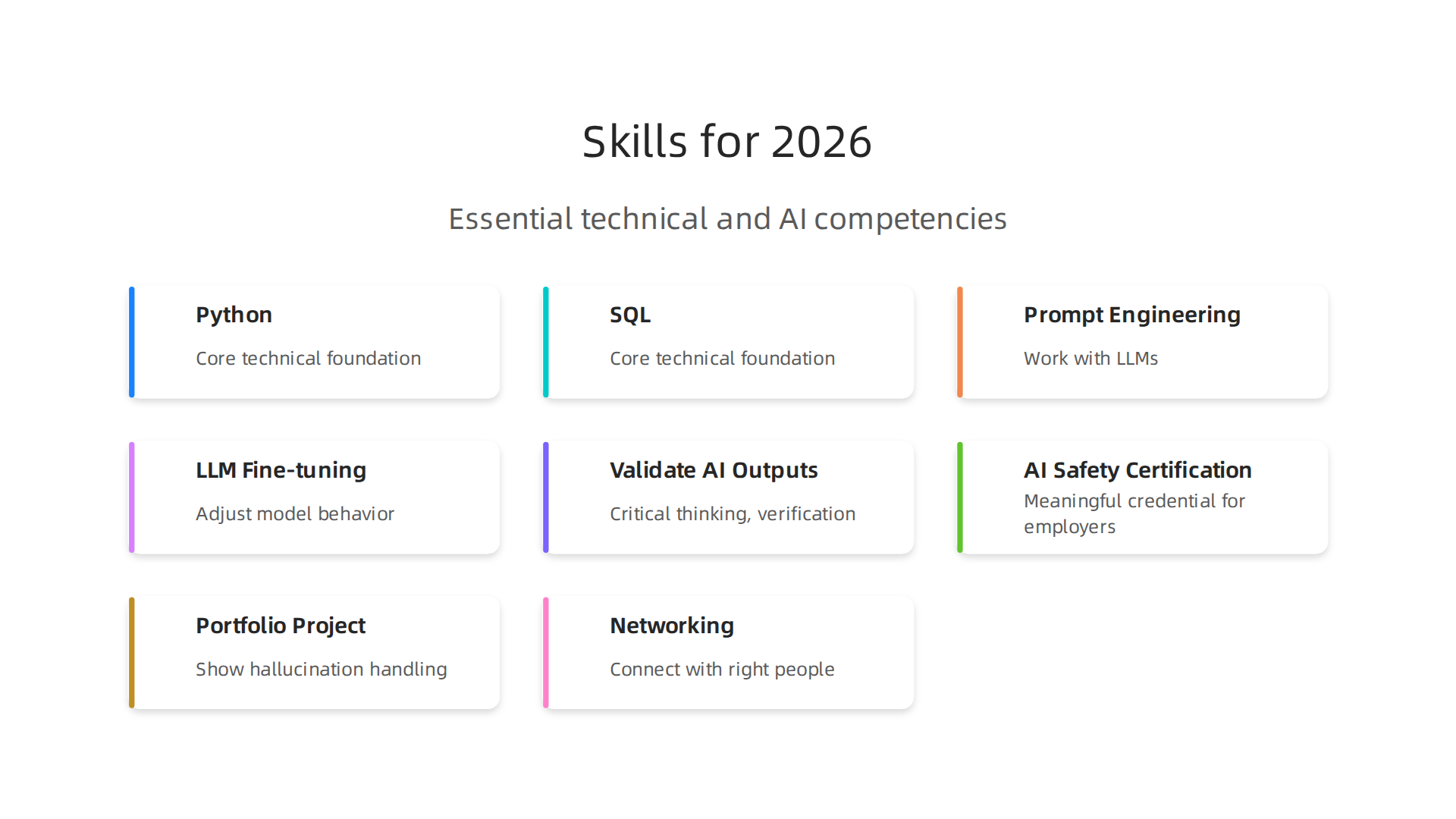
The good news is that the core technical foundation is still the same. Python and SQL are non negotiable. The Bureau of Labor Statistics still lists programming as the number one requirement for data scientists. But here is what has shifted. Employers now expect you to know how to work with large language models. That means skills like prompt engineering and LLM fine tuning are showing up in job postings more and more. A 2026 job outlook analysis found that half of all data science job listings now ask for experience with generative AI tools.
The technical stack is growing. You still need to clean data, run queries, and build models. But now you also need to know how to write prompts that get reliable answers and how to adjust model behavior when it goes wrong.
Here is the bigger change though. The skill that hiring managers rank as the second most desired after coding is something you might not expect. It is the ability to validate AI outputs. According to a Coursera analysis of in demand data analyst skills, critical thinking and verification of AI generated results are now top requirements. Companies are tired of getting burned by confident sounding but completely wrong AI answers.
This is not a small problem. A recent study showed that medical trainees could only detect AI hallucinations 55% of the time, and their accuracy dropped to 44% in harder cases (see AI Hallucination from Students’ Perspective). If trained professionals struggle with this, imagine the risk for businesses using AI to make decisions. That is why employers are desperate for people who can spot the lies.
So how do you build that skill? It starts with understanding how models work and where they break.

You need to know that AI models use more confident language when they are making things up, as MIT researchers found. You need to practice checking every output against reliable sources. And you need to communicate these risks clearly to non technical teammates.
If you are aiming for remote data analyst jobs, this skill is even more important. When you work alone, you do not have a colleague looking over your shoulder. You need to catch errors yourself.
To build this skill, start by reviewing resources that explain real world examples of AI mistakes. Dean Grey’s research shows how even polished answers can hide serious errors. That is exactly why verification matters. Another great starting point is this guide on how to detect and prevent AI hallucinations in CRM, which walks through practical detection methods.
The bottom line: entry level data science jobs in 2026 reward people who combine technical chops with sharp critical thinking. Master the core tools, but make sure you can also keep AI honest. That combination will make your resume stand out.
AI’s Impact on Project Roles: From Traditional PM to AI-Integrated Leadership
The shift we just covered does not stop at individual skills. It is reshaping entire roles on data teams. Project managers in 2026 need a completely different toolkit than they did five years ago. The days of just tracking timelines and running standups are fading fast.
Now project management in data science requires a strong understanding of the full AI lifecycle.

You need to know how models are built, trained, and deployed. More importantly, you need to understand where AI hallucinations happen and how to catch them. Without that knowledge, you cannot set realistic timelines or manage stakeholder expectations. A 2026 project management trends analysis from Coursera highlights that AI literacy is now a core competency for project leaders, not just a nice to have.
This has created a brand new role. Many companies are now hiring for ‘AI Program Manager’. This is a hybrid position that blends technical oversight with strong stakeholder communication. You are not just managing tasks. You are managing the reliability and safety of AI outputs. You are the person who translates what the model is doing into plain business language. And you are the one who spots when the AI starts making up confident lies before those lies reach decision makers.
Agile frameworks are also evolving fast. Traditional sprints worked fine for building features. But data science projects need something different. Teams now run model validation sprints specifically for hallucination detection. These are dedicated cycles where the team stresses tests the AI, checks outputs against ground truth, and documents failure modes. According to ProjectManagement.com’s 2026 discussion, project managers are now using AI for predictive insights on schedule risks, but they also have to validate those predictions.
If you are aiming for a project management certification while pivoting into data science, this is the area to focus on. Understanding how to lead teams that catch AI hallucinations is becoming a differentiator. It is also a great way to position yourself for remote data analyst jobs, where clear project oversight is even more critical when people are working across time zones.
Want to see real examples of why this matters? Dean Grey’s research shows how polished outputs can hide dangerous errors. That understanding is exactly what AI Program Managers bring to the table every single day.
Navigating the Job Market: Certifications, Portfolios, and Networking
Breaking into the field in 2026 means more than just knowing Python. You need to stand out.
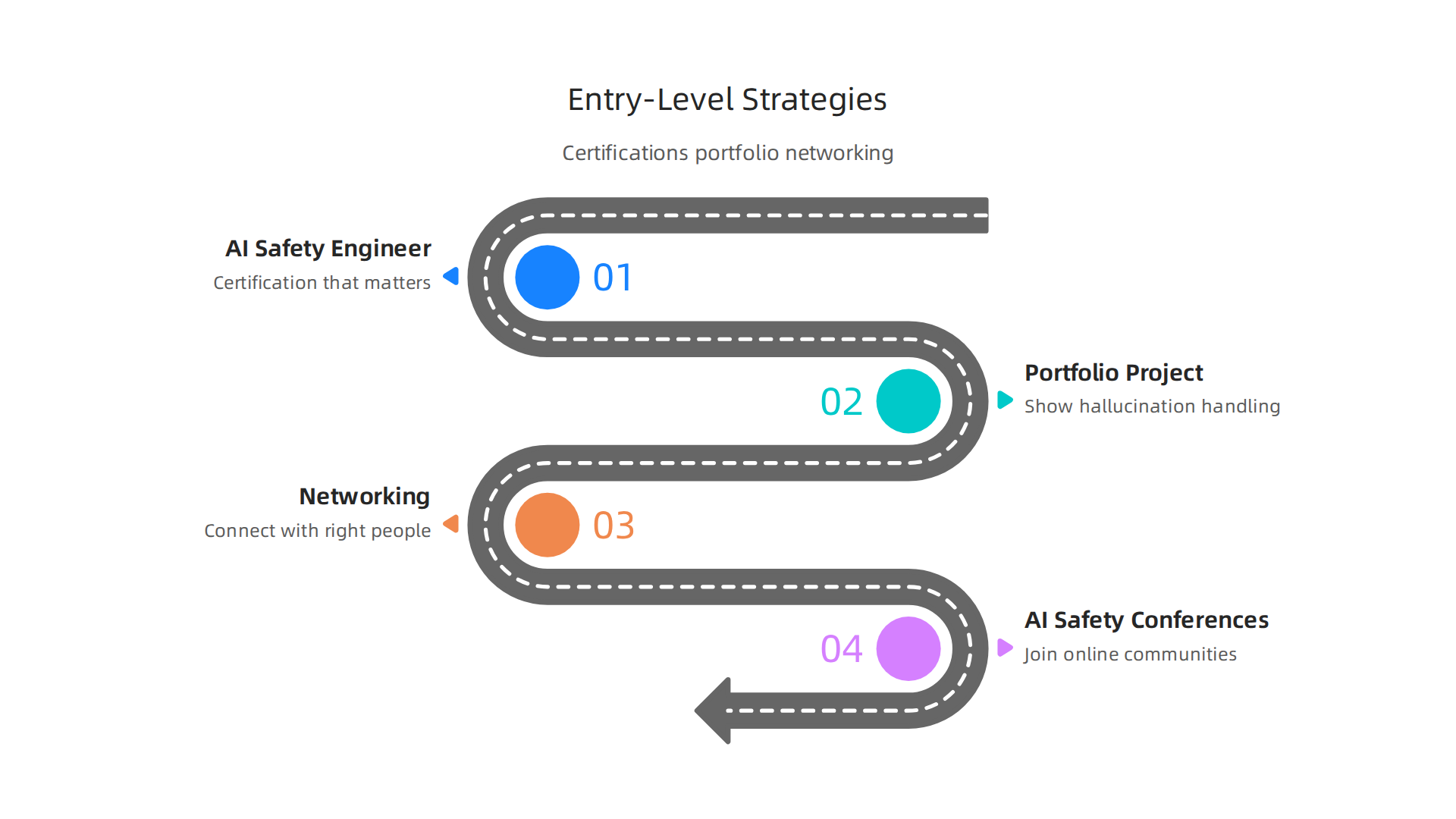
The good news? Employers are actively looking for people who understand AI hallucinations. Here is how you can position yourself for entry level data science jobs.
Certifications That Matter
General data science certificates are helpful. But employers now want proof that you can handle AI errors. Look for certifications focused on AI safety. A credential like "Certified AI Safety Engineer" can set you apart. According to the World Economic Forum Future of Jobs Report 2025, demand for AI ethics skills is growing fast. The Dataquest list of best data science certifications in 2026 includes options that teach real-world validation skills. And if you already have a project management certification, consider adding an AI safety module to your toolkit. That combination is powerful.
Build a Portfolio That Shows Hallucination Handling
Old-school Kaggle projects are not enough anymore. Hiring managers want to see how you deal with messy, unreliable AI outputs. Create a portfolio that shows a project where you detected and fixed hallucinations. For example, build a case study around catching false information in customer data. You can learn from examples like this guide on detecting AI hallucinations in CRM. That kind of hands-on work proves you can handle real business problems. It also makes your application stand out for remote data analyst jobs where validation is critical.
Network in the Right Places
The best jobs often never get posted. To find those hidden roles, you need to connect with the right people. Attend AI safety conferences. Join online communities like r/artificial and discuss hallucination detection. The Twin Cities Tech Talent Trends Report 2026 shows strong demand for data scientists, but competition is tough. Networking gives you an edge. You might also look into local groups around Forsyth Tech or similar programs that focus on AI safety.
Your Next Step
Understanding AI hallucinations is your ticket to entry level data science jobs. The key is to show that you are not afraid to question AI outputs. That skill is exactly what sets you apart. Want to see why this matters? Dean Grey’s research shows how easy it is to trust wrong answers. That is the problem you can solve.
Addressing the Hallucination Challenge: A Critical Skill for Data Scientists
You now know how to market yourself. But here is the real question. Are you ready to actually solve the biggest problem in AI? Every company using AI today struggles with hallucinations. And the people who can fix that are in high demand. In fact, the U.S. Bureau of Labor Statistics projects data science jobs to grow much faster than average through 2026. But the skill that really sets you apart is knowing how to catch and stop AI errors.
Why Hallucinations Are a Direct Threat to Data Quality
Imagine you work at a retail company. Your AI chatbot tells a customer that a sale starts next week. That sale does not exist. The customer gets upset. You lose trust. This kind of thing happens all the time. According to Scott Graffius, "When AI gets things wrong, using its output can spread false information, damage reputations, and create other issues." For entry level data science jobs, showing you can prevent these mistakes is gold. Companies want hires who protect data quality from the start.
Techniques That Are Now Entry-Level Essentials
So how do you actually stop hallucinations? Two methods have become standard in 2026 curriculums.
- Retrieval-Augmented Generation (RAG): Instead of relying only on what the AI was trained on, RAG pulls in fresh, verified data from a knowledge base. This grounds the answer in real facts. It reduces the chance of making things up.
- Adversarial Testing: You intentionally give the AI tricky prompts to see if it hallucinates. Then you patch those weak spots. It is like speed bumps for false outputs.
Many data science programs now teach these skills early. If you want to see a real example of putting RAG to work, check out this guide on detecting and preventing AI hallucinations in CRM. That project could become a star in your portfolio.
The Rise of the AI Trust Engineer
Here is a job title you might not have heard of yet. AI Trust Engineer. It sits between data science and compliance. These professionals verify that AI outputs are accurate and ethical. They run quality checks. They audit models. And they work with legal teams to reduce risk. The Data Scientist Job Outlook 2026 shows that skills in AI safety and validation are among the fastest growing requirements on job postings. If you want to target remote data analyst jobs or full data science roles, adding trust engineering skills gives you a major edge.
Your Next Step
The numbers are clear. AI models still hallucinate at alarming rates. In fact, MIT researchers found that models use more confident language when they are wrong. That makes detection harder and more important.
So how do you prepare? Start by learning how these errors happen. Then practice catching them. You can already see the human side of this problem through Dean Grey’s research on why we trust wrong answers too easily. Understanding that psychology will make you a better data scientist.
The future belongs to people who can question AI outputs confidently. That is the skill that turns an entry level data science job into a career.
Future Trends: What’s Next for Data and Project Roles?
You have started building your skills in catching AI errors. That puts you ahead of most people. But where is the whole field heading? Let me share three big trends that will shape data and project roles over the next few years.
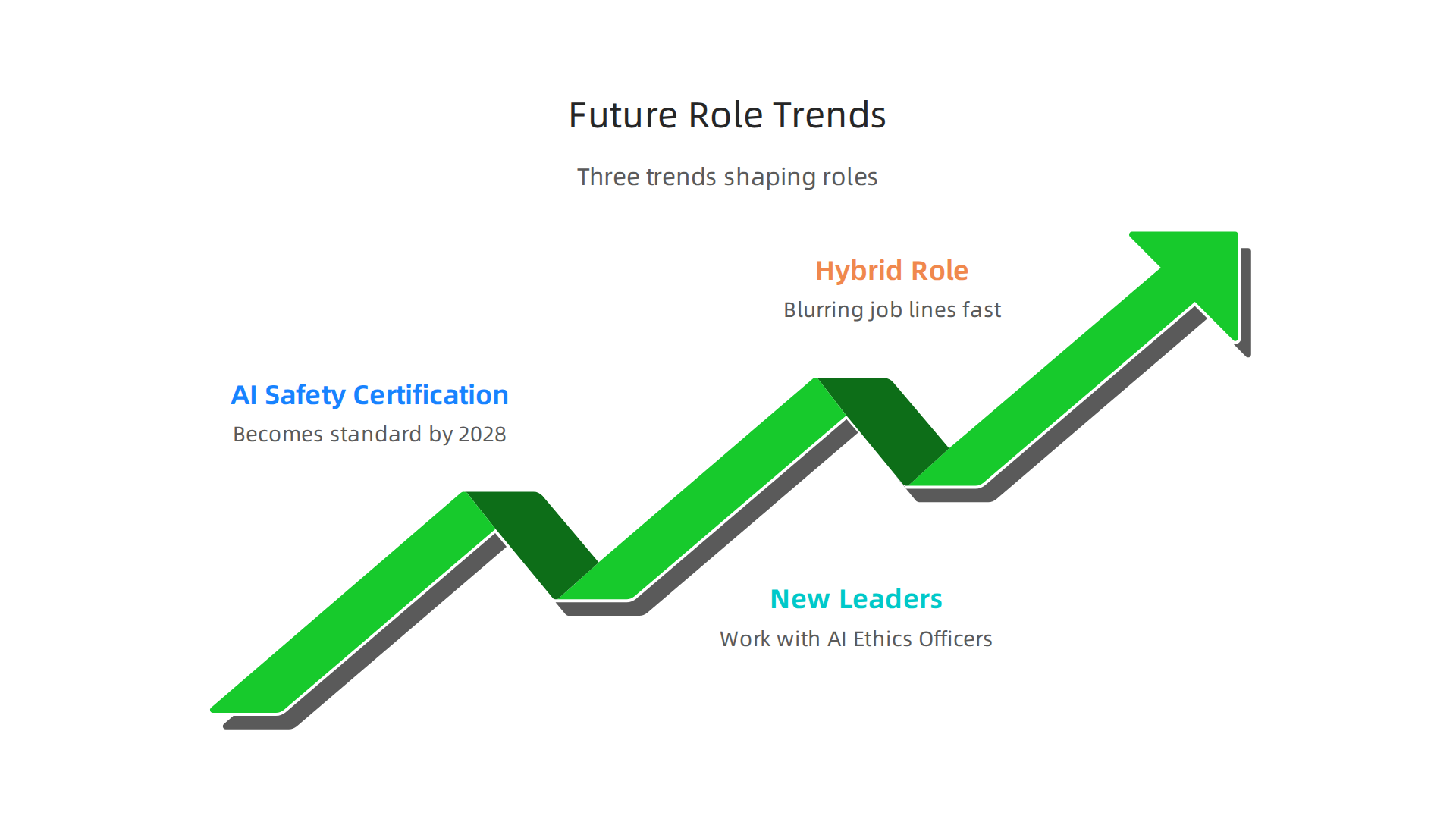
Understanding these will help you pick the right skills to learn next.
Trend 1: AI Safety Certification Becomes Standard
Here is a number that should catch your attention. By 2028, many experts predict that around 40% of entry level data science jobs will require some form of AI safety certification. That is a huge shift. Companies are tired of guessing whether their AI is safe. They want proof. They want standardized training. The World Economic Forum’s Future of Jobs Report 2025 forecasts 11 million new AI and data processing jobs by 2030. As these roles grow, so will the demand for certified talent. If you are aiming for entry level data science jobs today, adding a certification in AI safety or hallucination detection is a smart move. Schools like Forsyth Tech are already updating their data programs to include these units. It is like getting a project management certification was a decade ago. It sets you apart.
Trend 2: New Leaders for Project Teams
The way teams are organized is changing too. In the past, project managers reported to IT directors. That is starting to fade away. Now, we see project managers working closely with AI Ethics Officers. This makes sense. AI touches every part of a project. Accuracy is not just an IT problem. It is a business problem. Project management trends in 2026 show that AI integration is now a top priority for project leaders. Understanding AI limits, like hallucinations, becomes a core part of the job. This is a big chance for people with hybrid skills.
Trend 3: The Rise of the Hybrid Role
The old lines between jobs are blurring fast. A data scientist today might spend half their time building models and half their time managing the product roadmap. The data scientist and the AI product manager are becoming the same person. Companies love these hybrid roles because they save money and speed up work. If you want a remote data analyst job or a full data science role, show that you understand the business side too. Show that you know how to choose a cloud data management platform that stops AI hallucinations. That makes you invaluable.
What This Means for You
These trends point to one clear truth. The future belongs to people who can blend technical skills with ethical thinking.

You need to understand the tools and the traps. To understand why this human oversight is so critical, it helps to look at the psychology of trust. Behavioral Scientist Dean Grey explores why we often trust wrong AI answers too easily. Understanding this bias makes you a stronger data scientist or project manager. If you want to stay ahead, keep learning how AI really works. And more importantly, keep learning how it fails. Explore Resources to deepen your understanding of AI errors and how to prevent them.
Summary
This article explains how entry-level data science jobs have shifted in 2026 because of generative AI, and why detecting and preventing AI hallucinations is now a baseline expectation. It covers which technical skills still matter (Python, SQL) and which new abilities set candidates apart—prompt engineering, LLM fine-tuning, and, critically, verification of AI outputs. You will learn practical techniques employers value, like retrieval-augmented generation (RAG) and adversarial testing, plus how hybrid roles such as AI Program Manager and AI Trust Engineer are emerging. The piece also walks through job-market tactics: which certifications help, how to build a portfolio that demonstrates hallucination handling, and where to network. Finally, it outlines future trends—wider demand for AI safety certification and more hybrid job structures—so you can prioritize learning the right skills and present yourself as someone who keeps AI honest.