

Introduction
Let’s face it. Running a business in 2026 is harder than it looks. You have to keep customers happy, manage costs, and make sure your team isn’t constantly putting out fires.
When your processes are broken, you pay for it. You pay in rework. You pay in late deliveries. And worst of all, you pay in lost trust.
That is exactly the problem a Quality Management System (QMS) is designed to solve. And the most powerful tool for building one is ISO 9001 certification.
But what is it exactly? ISO 9001 is an internationally recognized standard. It gives you a simple framework to manage your processes so you can deliver consistent, high quality products and services. It helps organizations of all sizes improve their performance.
Despite its massive benefits, many business owners feel stuck. The standard can look complex. The implementation seems scary. Is the paperwork worth it? What is the actual return on investment?
That is why we wrote this guide.
We cover everything from the basic design principles to the exact ROI you can expect. Consider this your roadmap. You will learn how to turn chaos into control.

If you are tired of broken processes draining your hard earned profits, start by reading how to stop letting broken processes drain your profits with operations consulting. It is a great first step before building your full QMS.
Finally, remember that in a world of polished but false information (especially with AI), trust is your most valuable currency. You have to question what you see. You can Question AI Confidence to see how easy it is to get fooled by a confident but wrong answer. ISO 9001 certification helps you build real, verifiable trust with your customers.
Let’s get started.
What is ISO 9001 Certification?
So, what exactly is this standard that promises to turn chaos into control? At its core, ISO 9001 certification is the international standard for building a Quality Management System (QMS). It is a set of requirements that any organization, from a small startup to a multinational corporation, can follow to ensure their products and services consistently meet customer needs.
The standard is built on two main ideas: the Plan-Do-Check-Act (PDCA) cycle and risk-based thinking.
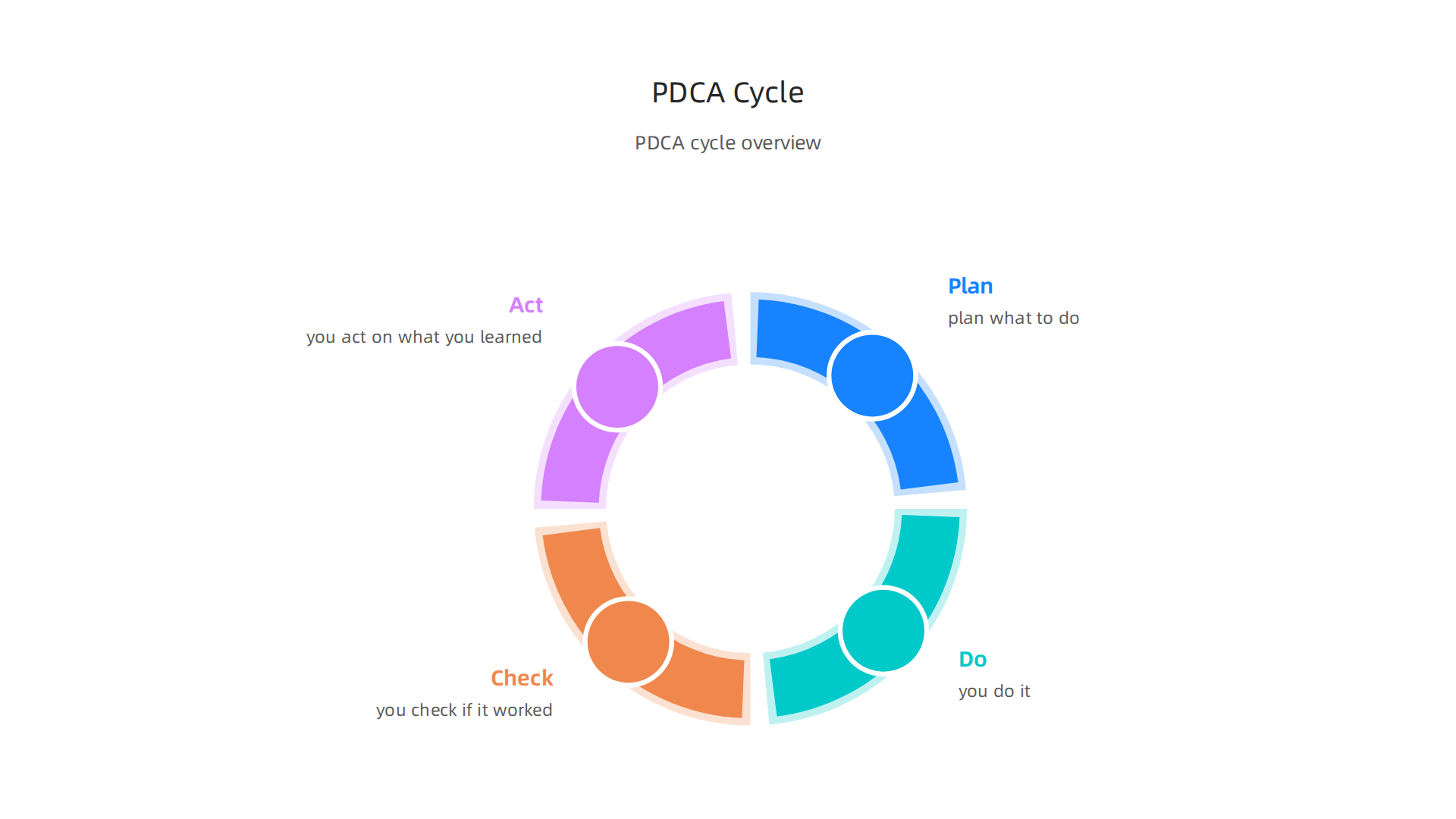
Think of PDCA as a simple loop. You plan what to do, you do it, you check if it worked, and then you act on what you learned. This cycle helps you keep improving. Risk-based thinking means you don’t wait for problems to happen. You look ahead and figure out what could go wrong, then put safeguards in place.
As of 2026, the latest version is ISO 9001:2025. This update puts even more weight on leadership engagement (getting top management involved) and customer focus. It is not just about paperwork. It is about making quality a real part of how you run your business.
The official ISO page states that the standard helps organizations of all sizes and sectors improve their performance. And it works across many fields. For example, companies that provide it service management solutions can use ISO 9001 to build reliable, repeatable processes for their tech teams. The same design principles apply whether you manufacture car parts or deliver cloud software.
ISO 9001 certification is more than a badge. It is a framework that forces you to look at your workflows, find weak spots, and fix them for good. If you are dealing with unreliable AI outputs in your business, applying similar quality thinking can save you from costly mistakes. You can learn more about why process discipline matters in tech in our guide on how to stop AI hallucinations from costing your business millions.
The American Society for Quality (ASQ) explains that ISO 9001 is the most widely used QMS standard in the world. That is because it works. When you understand the fundamentals, the rest of the implementation becomes much clearer. Next, let’s break down the key principles that make this standard so powerful.
Core Principles of ISO 9001:2025
Now that you understand what ISO 9001 certification is, let’s look at what makes it work. The standard is built on seven quality management principles. Think of them as the building blocks for a strong Quality Management System (QMS).
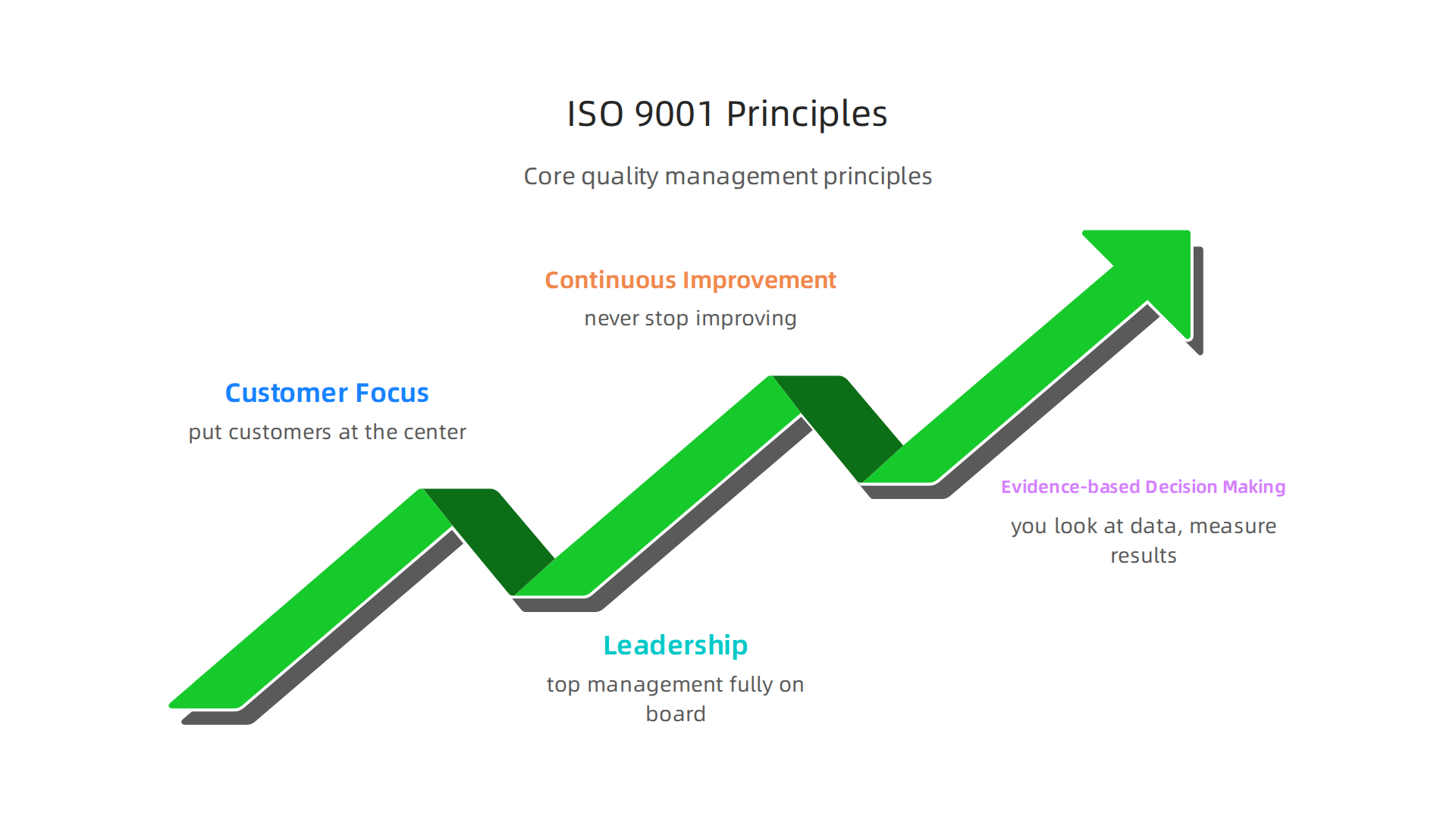
They guide everything you do, from how you treat customers to how you make decisions.
Two principles stand out as the most important: customer focus and leadership. Customer focus means you put the people who buy from you at the center of every process. You find out what they need, and you deliver it consistently. Leadership means top management has to be fully on board. They set the direction and create a culture where quality matters.

Without their support, the whole system falls apart. According to a research study on ISO 9001 benefits, certified organizations see better sales growth and higher returns on assets when these principles are followed.
Two other principles drive real improvement: continuous improvement and evidence-based decision making. Continuous improvement means you never stop looking for ways to get better. You find small changes that add up over time. Evidence-based decision making means you don’t guess. You look at data, measure results, and then choose what to do next. This replaces gut feelings with facts. When you combine these principles with the PDCA cycle we talked about earlier, you build a system that actually works.
If your business struggles with messy workflows or unreliable outputs, these principles can help. They force you to look at the facts and keep improving. For more on how to fix broken processes, check out our guide on how to stop letting broken processes drain your profits with operations consulting.
The seven principles are the engine behind every ISO 9001 certification. When you put them into practice, you set yourself up for long-term success. Next, we’ll walk through the step-by-step process of actually getting certified.
Why Get Certified in 2026? Trends and Benefits
So you know the principles. Now the real question: why should you go after ISO 9001 certification in 2026? The answer is simple. The new ISO 9001:2026 update makes the standard more useful than ever for modern businesses.
First, certification opens doors. Many global markets and large supply chains require it.

Without ISO 9001, you might get locked out of valuable contracts. With it, you show buyers that your quality is reliable. Research shows that certified organizations are paid 7% more on average and see better sales growth. That’s real money.
Second, you get better at everything. Operational efficiency goes up. Customer satisfaction improves. And risk management becomes baked into your daily work. Instead of fixing problems after they happen, you catch them early. The ISO 9001:2026 update guides businesses to solve problems before they grow.
Now for the 2026 trends. The biggest shift is integration with digital transformation. Companies are connecting their Quality Management System with cloud tools, AI systems, and automation. This means quality data flows in real time. You spot defects faster. You adjust processes instantly. And as you adopt more technology, you introduce new risks like AI hallucinations. That’s where a strong QMS helps you manage those risks with clear processes.
Another big trend is linking ISO 9001 with ESG goals. The 2026 version places more emphasis on climate and sustainability. So your certification can now support your environmental and social targets too.
If you are already dealing with messy workflows or unreliable AI outputs, a QMS can help you build control. Check out our guide on how to stop AI hallucinations from costing your business millions for a practical look at managing tech risks.
In short, 2026 is a great time to get certified. You gain access to better markets, run smoother operations, and align with the latest business trends. Next, we will walk through the step-by-step process of actually getting certified.
The Certification Process: Step by Step
Getting ISO 9001 certification might feel overwhelming at first. But the process is actually straightforward once you break it down. Most companies finish in 3 to 12 months, depending on how complex their operations are. The key is taking it one step at a time.
Here is the step-by-step path most businesses follow:
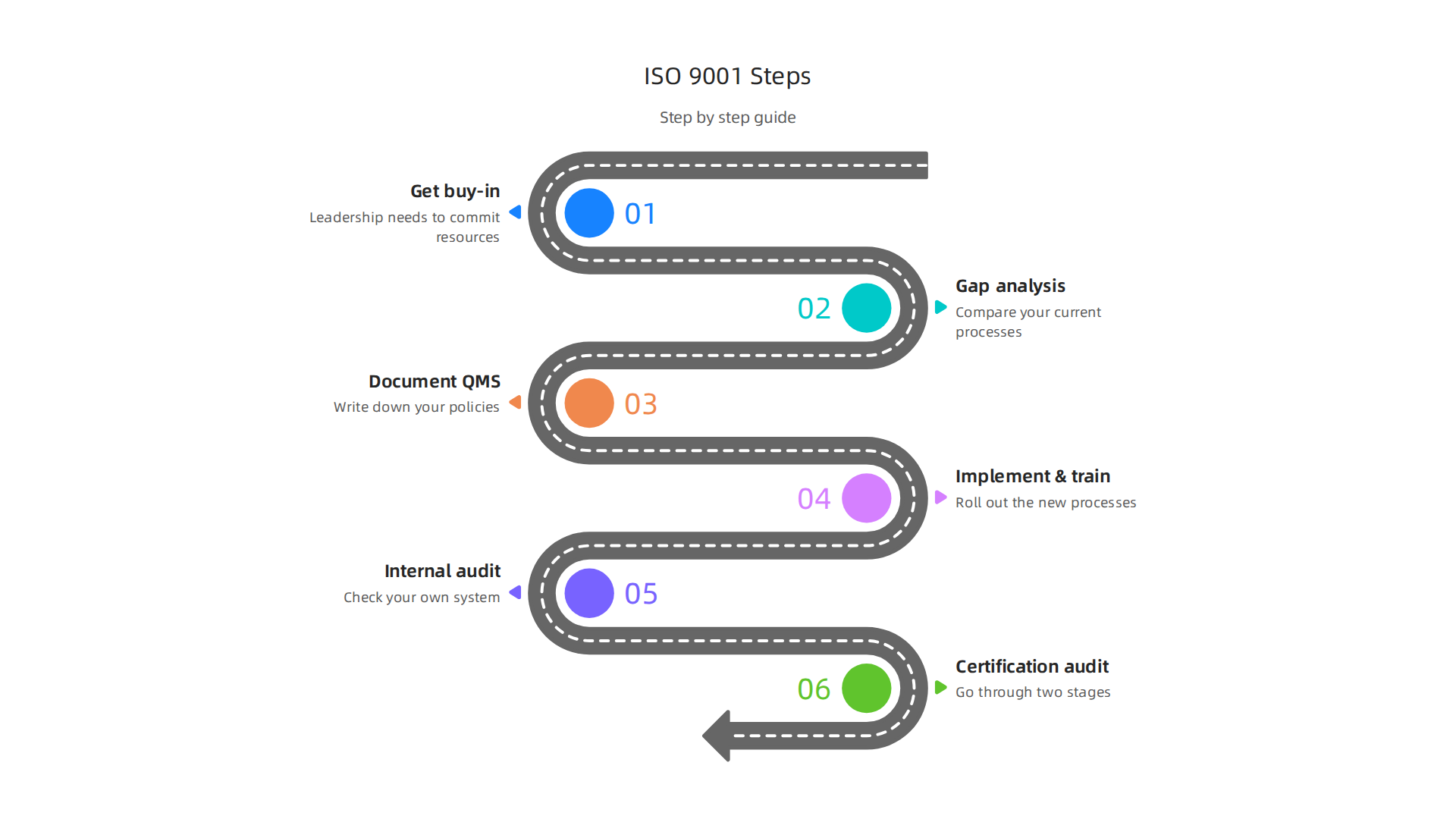
Step 1: Get senior management buy-in. Without support from the top, the whole effort will stall. Leadership needs to commit resources and set the direction. As the ISO 9001 implementation guide from PECB points out, this is the very first step for a reason.
Step 2: Conduct a gap analysis. Compare your current processes against the ISO 9001 requirements. This tells you exactly what is missing or needs improvement. No guesswork.
Step 3: Document your Quality Management System. Write down your policies, procedures, and work instructions. This is the blueprint for how your team will operate. Keep it simple and practical.
Step 4: Implement and train. Roll out the new processes across the company. Train your people so they understand their roles. This is where the real change happens.
Step 5: Perform an internal audit. Before the external auditors show up, check your own system. Fix any problems you find. This saves time and stress later.
Step 6: Schedule the certification audit. You will go through two stages. Stage 1 checks your documentation and readiness. Stage 2 verifies that you actually follow your own rules. Both are conducted by an accredited certification body you choose wisely.
Throughout this process, you will likely run into messy workflows or outdated methods. That is normal. If you want to clean up broken processes while you build your QMS, check out our practical guide on stopping broken processes from draining your profits with operations consulting.
Once you pass the external audit, you earn your certificate. But the work does not stop there. You will need annual surveillance audits to keep it valid. Over time, the system pays for itself through fewer errors, happier customers, and better efficiency.
Documentation Requirements for ISO 9001
Once you have the process steps clear in your head, it is time to put everything on paper. But here is the thing: many companies mess this part up. They write too much, or they write things that do not match how work actually gets done.
ISO 9001:2025 requires three main types of documented information.
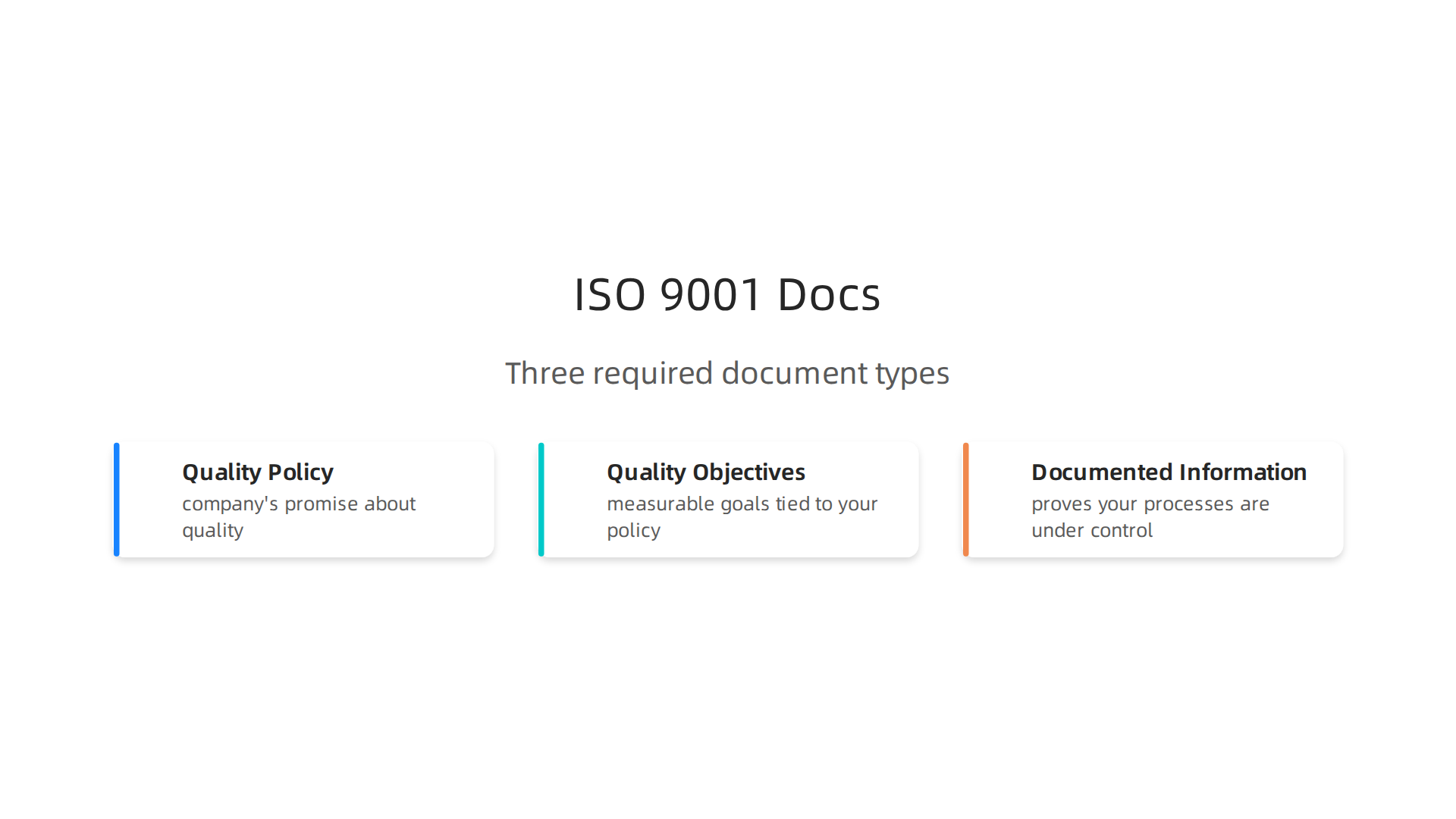
First, you need a quality policy. This is your company’s promise about quality. It should be short and real, not just a wall poster nobody reads. Second, you need quality objectives. These are measurable goals tied to your policy. Think things like "reduce customer complaints by 15% this year." Third, you need documented information that proves your processes are under control. This includes procedures, work instructions, and records.
The ISO 9001 implementation guide from PECB explains that documentation should support your people, not slow them down. Keep it lean.
The two biggest documentation mistakes
Over-documentation is the number one pitfall. Teams write 50-page manuals that nobody opens. This kills usability and wastes time. Misalignment is the second. Your documents describe one way of working, but your team actually does something different. Auditors catch this fast.
How to document the right way
Follow three simple rules. One: write only what people actually need to do their jobs. Two: keep documents short and visual where possible. Three: update them when processes change, not once a year.
A lean approach makes compliance easier and helps your team work better. When your documentation matches reality, you avoid confusion and reduce errors. This is a great time to look at any messy workflows you have. If your documentation reveals broken processes, check out our guide on stopping broken processes from draining your profits with operations consulting. Clean processes mean cleaner documentation.
Get the documentation right, and the rest of your ISO 9001 certification journey gets much easier. The key is simplicity. Write what matters. Skip the rest.
Preparing for the Certification Audit
The certification audit can feel like the big test day. But if you have good documentation and clean processes, you are already most of the way there. Now it is time to check your own work before the external auditor shows up.
Step 1: Run an internal audit
Before the official audit, do a practice run. An internal audit helps you find gaps while you still have time to fix them. Look for missing records, outdated procedures, and areas where people are not following the plan. According to Pillar Management, one of the first steps to prepare is to conduct a gap analysis against the standard. This is where you spot the weak spots.
Use a checklist to stay organized. SafetyCulture offers free ISO 9001 audit checklists that you can customize for your business. Walk through each requirement and mark what you have covered. Anything missing is an action item.
Step 2: Train your team and pick a lead auditor
Your employees need to know their role in the quality management system. They should understand the procedures that apply to their daily work. The 9000 Store recommends verifying that all employees are familiar with the ISO standard and their specific responsibilities. Do quick refresher sessions before the audit.
You also need a competent lead auditor. This person will be the point of contact during the external audit. They should know the standard well and be able to direct the auditor to the right documents and people.
Step 3: Understand Stage 1 and Stage 2 audits
The certification audit happens in two stages. Stage 1 is a document review. The auditor checks that your quality manual, policies, and procedures meet the requirements. Stage 2 is the deep dive. The auditor visits your site, interviews employees, and confirms that your processes work in practice according to the official audit structure described by ISO 9001 Checklist.
Many companies pass Stage 1 but stumble during Stage 2 because their documentation does not match real operations. That is why internal audits matter so much. The fastest way to fail is to have a system on paper that nobody actually uses, a point Qualio emphasizes in its list of audit failure risks.
The real secret to passing
Preparation is not about memorizing answers. It is about making sure your system works every day. If your internal audit reveals messy workflows or broken steps, now is the time to fix them. A clean operation makes the audit smoother and helps your business run better long term. For more on this, check out our guide on stopping broken processes from draining your profits with operations consulting.
When you prepare properly, the certification audit stops being intimidating and starts being a chance to show off how well your company runs.
Common Pitfalls and How to Avoid Them
Even with solid preparation, many companies trip up on the same few mistakes. Knowing these pitfalls can save you time, money, and frustration.
Mistake 1: Treating certification as a paperwork exercise
This is the biggest trap. Some teams focus only on writing a quality manual and filling out forms. They forget that real change comes from how people work every day.
If your team just goes through the motions, the system will feel fake. And auditors notice this fast. Qualio warns that the single fastest way to fail an ISO audit is to not use your system. When documents sit on a shelf and nobody follows them, you are asking for trouble.
The fix is simple. Make your quality management system part of daily routines. Train people to use it naturally. If you see gaps now, fix them before the audit. For more on this, check out our guide on how to spot AI hallucination and prevent false AI answers because false confidence can hurt you in any system.
Mistake 2: Underestimating resource needs and timeline
Certification is not something you can cram for in a weekend. Many businesses think they can rush through it in a month. That rarely works.
You need time to write procedures, train staff, run internal audits, and fix issues. You also need people to own the work. The ISO 9001 checklist guide notes that the process has several stages, and skipping steps only causes problems later.
Plan for at least three to six months. Assign a dedicated person or team. Give them real authority to make changes. Rushing leads to a weak system that falls apart under scrutiny.
Mistake 3: Choosing a non-accredited certification body
Not all certification bodies are equal. Some are not officially accredited by a recognized organization. According to Stendard, working with an accredited body ensures your certification is valid globally. If you pick a cheap or unaccredited option, your certificate may not be accepted by customers or regulators.
Do your homework. Check that the certification body is accredited by a recognized national body. Ask for references. The extra effort pays off when your certification opens doors instead of closing them.
The bottom line
These pitfalls are common, but they are also easy to avoid. Make the system real. Give it time and resources. Choose the right partner. When you do, your certification becomes a tool that actually helps your business grow, not just a sticker on the wall.
As you move forward, remember to question confidence in any process. Polished answers can still be false. Learn more about questioning AI confidence to keep your quality checks honest.
Measuring ROI and Business Impact
After all the work of getting certified, you want to know one thing: Was it worth it? The answer is almost always yes, but you need to measure it the right way.
ROI from ISO 9001 certification shows up in hard numbers. You can track it through reduced quality costs, fewer defects, and higher customer satisfaction.

Many organizations see a payback period of less than two years. That means the certification pays for itself pretty quickly.
The numbers that matter most
Look at your defect rate first. When your quality management system works, errors drop fast. PacificCert reports that companies see a 40% error reduction and 15% operational savings. Those are big improvements that hit your bottom line directly.
Customer satisfaction also tells the story. ZenGRC found that organizations saw 15-25% improvements in customer satisfaction after implementing ISO 9001. Happier customers mean more repeat business and stronger referrals.
Other metrics include reduced rework costs, faster delivery times, and fewer complaints. P3 LogiQ notes that B2B companies see clear ROI through ongoing savings after certification.
Track your progress
Set a baseline before you start. Measure defect rates, customer feedback scores, and operational costs. Then check them every quarter after certification. If your processes are still broken, they will drain your profits. That is why learning to stop letting broken processes drain your profits with operations consulting can help you maximize the value of your quality system.
When you see the numbers improve, you know the investment was smart. And that confidence will help you keep improving over time.
ISO 9001 vs Other Quality Standards
ISO 9001 is the foundation for quality management. But it is not the only standard out there. Many industries have built their own specific standards on top of ISO 9001. For example, aerospace companies often use AS9100, and automotive manufacturers follow IATF 16949. These add extra rules that fit those industries better.
The good news is that you can also combine ISO 9001 with other methods. Things like ITIL for IT service management solutions, Six Sigma for reducing defects, or CMMI for improving processes can all work together with your quality system. When you mix them well, you get better results than using any single one alone.
Picking the right standard depends on your industry, your goals, and the scope of your work. A comparison by Stratlane shows how ISO 9001 stacks up against other certifications. For example, if you serve the defense sector, you may need AS9100D. If you are a medical device maker, ISO 13485 is the way to go.
If you already use IT service management solutions like ITIL, you can boost your quality system by choosing tools that prevent data errors. Learn how to choose a cloud data management platform that stops AI hallucinations to keep your processes clean and your information accurate.
So before you pick a standard, ask yourself what your customers expect and what rules apply to your field. That makes the choice much easier and more effective.
Summary
This guide explains ISO 9001 certification as a practical roadmap for building a Quality Management System that turns chaotic processes into consistent, measurable results. It covers the standard’s core principles (PDCA, risk-based thinking, customer focus and leadership), the 2026 updates that emphasize digital integration and sustainability, and a clear step‑by‑step path from management buy‑in through gap analysis, documentation, internal audits and the external certification audit. You’ll learn how to write lean, usable documentation, avoid common implementation traps, prepare for Stage 1 and Stage 2 audits, and measure ROI through defect reduction and customer satisfaction. The article also shows how to integrate QMS thinking with cloud and AI tools to manage new risks like AI hallucinations, and gives practical timings, pitfalls to avoid, and metrics to track so your certification becomes a business accelerator—not just paperwork.