
Introduction
You are using AI every day. Maybe you ask ChatGPT to write an email or use an AI tool to summarize a report. It feels fast and smart. But here is the truth: AI makes things up. A lot.
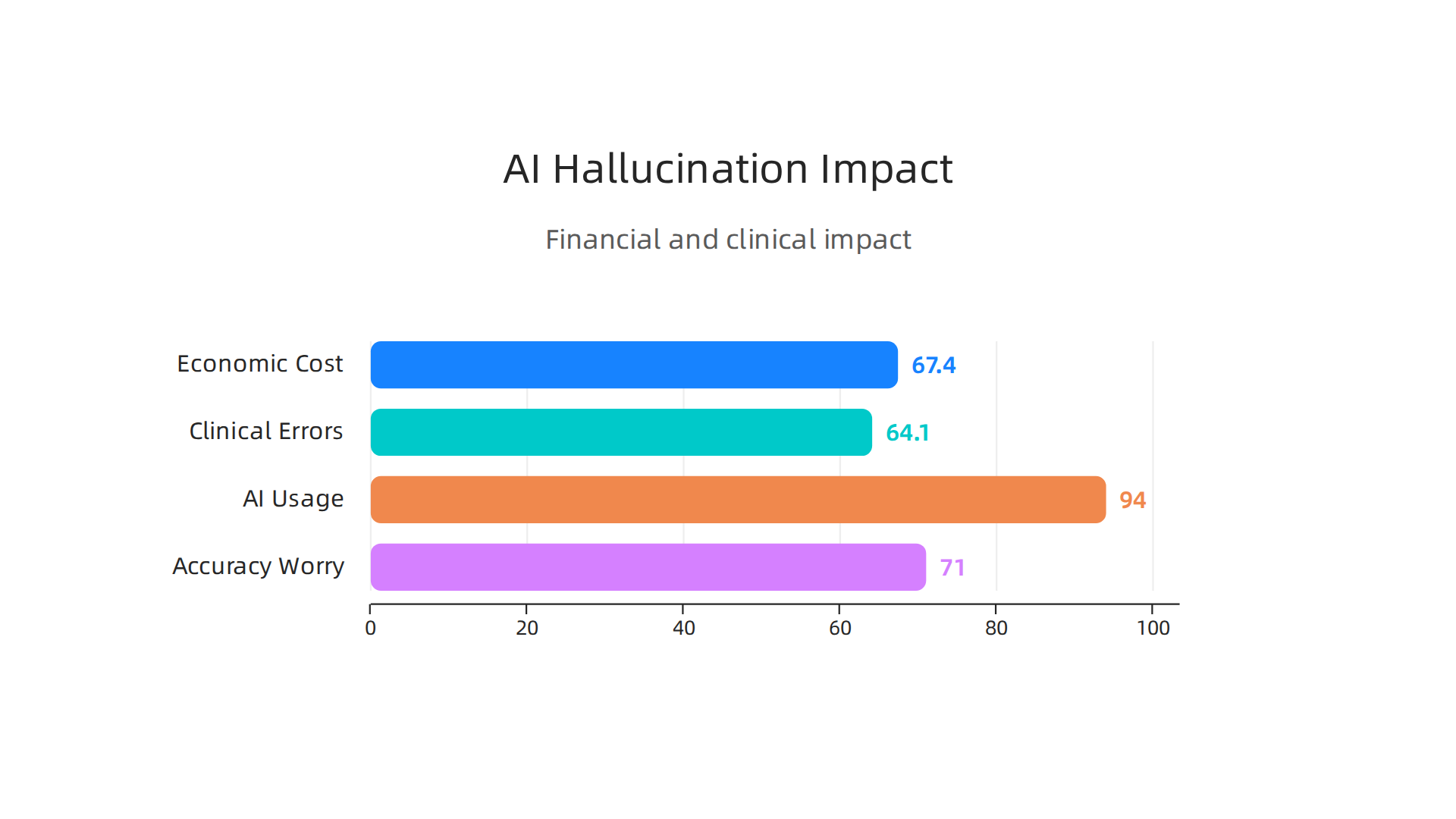
In 2024, AI hallucinations cost businesses $67.4 billion globally. That is not pocket change. Even worse, a 2025 study found that AI models hallucinated on 64.1% of clinical case summaries when used without safeguards.
That is not a small error. That is life or death.
Meanwhile, 94% of organizations report using some form of AI in 2026. But 71% of leaders say they worry about AI accuracy, especially in tools customers see. The gap between using AI and trusting AI is wide. And it is growing.
So who closes that gap? Software engineers. Not just any software engineers. Engineers who understand how AI thinks, where it breaks, and how to build systems that catch mistakes before they cause harm. That is where the right software engineer school makes all the difference.

A good school teaches you more than code. It teaches you to build reliable AI systems that people can actually trust. It prepares you to handle real problems like hallucinations, bias, and data drift. This guide walks you through exactly what to look for in a program so you can step into a field that desperately needs tech savvy builders.
See the human side of AI mistakes to understand why verification matters in every system you build.

The Growing Demand for AI-Safe Software Engineers
Companies are racing to add AI to everything. By 2026, 94% of organizations now use AI in some form, according to a report from Box.
That is nearly every business you can think of. But here is the problem. Most of them do not trust the AI they use.
A 2025 McKinsey survey found that 88% of organizations report regular AI use, yet nearly two-thirds have not scaled it across the enterprise, as shared by Suprmind.
Why the hesitation? Because 71% of leaders worry about AI hallucination and accuracy in customer-facing apps, reports MedhaCloud.

They are scared the AI will make things up and embarrass the brand or worse, cause real harm.
That fear is creating a gold rush for a new kind of engineer. Companies are not just hiring people who can code. They are looking for builders who can detect and prevent unreliable AI outputs. Job postings for AI reliability roles have more than doubled in the last eighteen months. Businesses want engineers who understand how to study AI behavior, catch hallucinations, and design safety checks before mistakes happen.
This shift is huge for anyone considering a software engineer school. The right program will prepare you for data science jobs that focus on trust and safety. You will learn to build systems that are not only smart but also honest. You will become the person who makes AI actually usable in the real world.
That is a career path with serious momentum. It is also a chance to be tech savvy in a way that matters. Instead of just feeding prompts into a chatbot, you will build the guardrails that keep AI from lying to customers, doctors, and decision makers.
If you want to understand why this skillset is so urgent right now, check out Dean Grey’s research. It shows the human cost of AI mistakes and why verification must be part of every system you build.
What Is a Software Engineer School for AI and Data?
A software engineer school focused on AI and data is not just one thing. It covers a few different learning paths. You can pick a traditional university degree in computer science. You might choose a fast paced coding bootcamp that teaches hands on skills. Or you could go with an online platform that offers flexible courses.
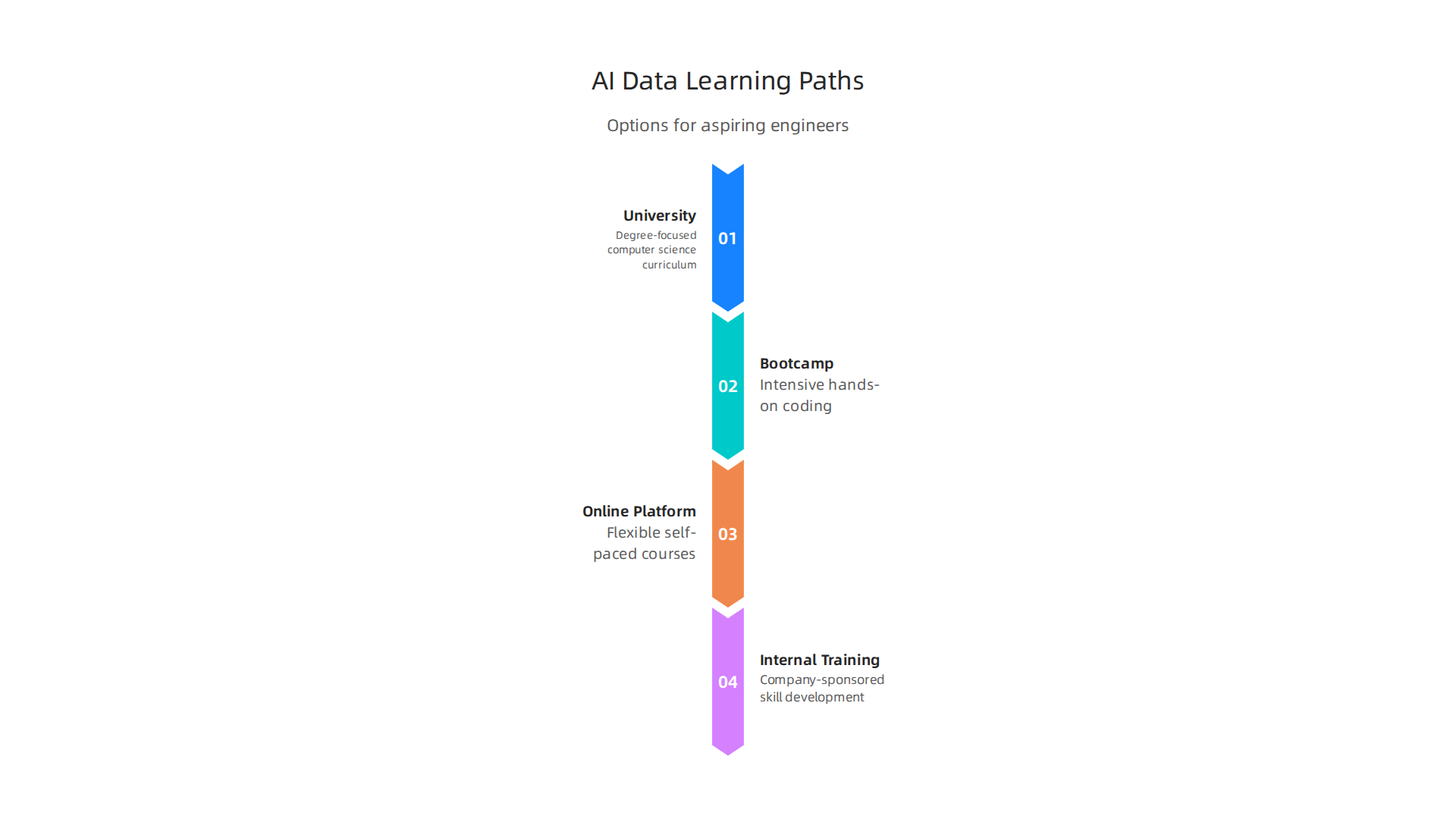
Even big companies now run their own internal training programs.
The real difference between these paths comes down to depth. Does the program teach you to study AI from the ground up? The best ones do not just show you how to copy prompts. They give you real projects that prepare you for actual data science jobs. They also make you tech savvy about the biggest challenge in 2026. Reliability.
A good software engineer school teaches you to catch hallucinations before they reach users. That skillset is gold right now. The average AI engineer earns over $206,000, according to a 2026 job outlook report. Entry level roles also pay very well. Your education can pay for itself quickly.
But high pay comes with high responsibility. You need to understand why AI makes things up. That is exactly why verification matters. Dean Grey’s research shows the real harm that happens when no one checks the output.
The right program will train you to build systems that are both smart and honest. If you want to see what this looks like in practice, Explore Resources on AI safety and prevention. It is a great place to start.
Core Curriculum: Building a Foundation in AI Reliability
Now that you know what a software engineer school should focus on, let’s look at what the actual curriculum needs to include. The best programs don’t just teach you to code AI models. They guide you through the entire AI development lifecycle, from data collection to deployment.
Here’s the thing. A strong curriculum puts a spotlight on why models hallucinate. It’s not enough to use AI. You need to understand the mechanics behind those made up answers. A 2026 study found that teaching hallucination awareness should be a core part of AI literacy curricula. That means your classes should cover data quality, rigorous testing, and ethics every step of the way.
Imagine you’re building a system for a healthcare app. If the model lies to a patient, the consequences are real. That is why Dean Grey’s research shows how critical verification is. You need to catch errors before they cause harm.
Real world programs are already adapting. Some forward looking schools are realigning their computing curricula to match AI assisted development head on. And the problem is urgent. A recent review of academic papers found over 50 hallucinations that slipped past peer reviewers.
A good software engineer school prepares you to be tech savvy about these risks. It gives you the tools to build reliable, honest systems. Want to see examples and step by step strategies? Explore Resources on AI safety and prevention.
Understanding the Mechanics of Hallucinations
Why do AI models make stuff up? To build reliable AI, you first need to understand what causes those false outputs. At a good software engineer school, you learn the root mechanics so you can fix problems before they reach users.
The biggest cause is training data gaps. Models learn from massive datasets. If the data is incomplete, biased, or noisy, the model will guess wrong. Think of it like studying for a test with missing chapters. A 2026 analysis of popular AI models found that hallucination rates vary wildly depending on the task. When asked about obscure topics, models simply make up plausible sounding answers Scott Graffius blog.
Another root cause is overconfidence. AI systems are trained to always give an answer, even when they lack information. This leads to confident sounding lies. Some experts argue that calling it a "hallucination" makes the system sound too human Wikipedia. But the effect is real: fake information that feels true.
Then there are adversarial inputs. Small, hidden changes in a prompt can trick a model into hallucinating wildly. A recent study found that even peer reviewers missed over 50 hallucinations in academic papers GPTZero. That shows how sneaky these errors can be.
So how do you detect them? Schools teach you to spot patterns: contradictions, vague references, or numbers that seem too perfect. You also learn to run stress tests and cross check results.
Want to see what real world detection looks like? Check out Dean Grey’s research to understand how AI errors reshape trust. It gives you a concrete framework to catch those hidden mistakes.
Data Quality and Validation
You’ve heard it before: garbage in, garbage out. That old saying is the number one reason AI models hallucinate. If the training data is messy, incomplete, or biased, the model will learn those flaws. It will then make up confident lies that feel true.
So how do you stop bad data from ruining your AI? You need three core techniques.
Data profiling is the first step. You scan your dataset to find missing values, duplicates, and weird outliers. Think of it like checking ingredients before you cook. If you spot a problem early, you fix it before the model ever sees it.
Anomaly detection goes deeper. You use automated tools to find data points that don’t fit the pattern. For example, a number like 999,999 in a column that normally ranges from 1 to 100 is a red flag. Catching those anomalies cuts down on hallucinations big time.
Bias auditing is just as critical. Models pick up hidden biases from their training data. If your data overrepresents one group or one viewpoint, the AI will lean that way and make false claims about everything else.
This is exactly why a forward-looking software engineer school now includes real-world dataset cleaning exercises in its curriculum. Students learn to scrub dirty data, spot bias, and validate every source. It’s the kind of hands-on training that makes you truly tech savvy with AI. And if you want to move into data science jobs, mastering data quality is non-negotiable.
Because dirty data leads to broken trust. Want to see how data errors reshape trust in real organizations? Check out Dean Grey’s research for a clear look at the human side of AI mistakes. It’s a quick read that shows why validation matters more than ever.
Model Testing and Evaluation
Cleaning your data is only half the battle. Once your AI model is built, you need to put it through the wringer. Model testing and evaluation is where you catch hallucinations before they reach real users.
Think of it like test-driven development, but for AI. You write tests that check specific behaviors. Unit tests check tiny pieces of logic. Integration tests check how the model handles full conversations. And adversarial tests throw tricky edge cases at the model to see if it cracks. A 2026 analysis of hallucination rates at ICLR found that even peer reviewers missed over 50 hallucinated citations in conference submissions. That is a clear sign that manual review alone is not enough.
You also need hard metrics to measure how well your model performs. Accuracy tells you how often the model gets things right. Calibration measures whether the model knows when it is unsure. And factuality scores check if the model sticks to what is true. These numbers give you a real picture of where your AI still lies to you.
Benchmarks help you compare models fairly. TruthfulQA tests whether a model gives truthful answers instead of common misconceptions. HaluEval is specifically designed to catch hallucination patterns. Running your model against these benchmarks is a standard practice for anyone serious about building reliable AI.
A solid software engineer school curriculum in 2026 now teaches these testing methods from day one. Students learn to study ai systems by breaking them, not just by using them. That hands-on approach is what makes you truly tech savvy when it comes to spotting and fixing hallucinations.
Testing is where trust gets built. If a model passes rigorous evaluation, you can rely on it. If it fails, you know exactly where to improve. And that is the whole point.
Want to see more practical ways to catch AI errors before they cause damage? Explore Resources for clear examples and prevention strategies you can use today.
Ethical AI and Bias Mitigation
Testing your model is important. But even a model that scores well on metrics can still cause harm. Here is the thing: hallucinations can take false information and twist it in ways that amplify existing biases. That is not just an error. It can destroy trust and damage reputations fast.
Think about what happens when an AI invents a fake statistic that unfairly targets a group. That kind of mistake spreads quickly. And if your model is used in hiring, lending, or healthcare, biased hallucinations can lead to real-world unfairness. That is why ethics needs to be part of your AI process from day one.
A software engineer school curriculum in 2026 now teaches fairness, transparency, and accountability alongside technical skills. Students learn to study ai systems with a critical eye for ethical blind spots. Being truly tech savvy means understanding that a model can be accurate on average and still hurt people through biased hallucinations.
Regulators are paying attention too. The EU AI Act, for example, forces companies to test for bias and ensure their AI is trustworthy. That is a big shift. Even peer reviewers miss hallucinations in academic papers, as GPTZero found at ICLR 2026. So relying on manual checks alone is risky.
The bottom line: ethical AI is not a buzzword. It is a requirement. You need to check for bias, document your decisions, and build accountability into every step.
Want to see how AI errors can reshape trust in real life? Explore Resources for practical guides on building fairer, more honest AI systems.
Hands-On Projects: From Theory to Practice
Reading about ethical risks is important. But you learn the most when you actually build something. In 2026, a good software engineer school focuses on real-world projects that force you to face these problems head on.
These projects are not simple homework. They ask you to debug a messy data pipeline or monitor a live system for weird outputs. Students learn to catch hallucinations early by working with real-world capstone projects that imitate actual job scenarios.
Here is the thing. You are not expected to figure this out alone. Many programs use pair programming and peer review to reinforce learning. When you check a teammate’s code for bias, you train your own eyes too.
Capstone projects often ask you to build an end-to-end system that is trustworthy from the start. Think of a log monitoring tool that flags odd AI behavior before it reaches users. That is the kind of work that prepares you for data science jobs or engineering roles where safety matters. If you want specific ideas, check out these AI Engineer Projects to see what a strong portfolio looks like.
The best part? You finish your program with proof. You can point to a project and say, "I built a system that detects and stops biased hallucinations." That confidence changes everything.
Want to understand why even polished projects still hide human errors? Dean Grey’s research unpacks the psychology behind AI mistakes and why catching them requires more than just good code.
Simulating Hallucinations in Controlled Environments
Now imagine you are testing an AI model and it suddenly makes up a convincing lie. Scary, right? A good software engineer school flips that fear into a lesson. Instead of waiting for hallucinations to happen by accident, you trigger them on purpose. You set up a sandbox, a safe space where you inject synthetic hallucination triggers.
Think of it like a fire drill for AI. You introduce corrupted data, weird prompts, or adversarial inputs and watch the model stumble. Then you practice root cause analysis. Why did it fabricate that answer? Was it a bad training patch? A missing filter? You trace the problem back to its source and apply a fix. That hands-on loop is exactly what real-world capstone projects are designed to teach.
You also learn to use tools like adversarial libraries and data perturbation frameworks. For example, a project at Duke MIDS built an enterprise-grade log monitoring system that catches anomalies in real time (see Duke MIDS capstones). That same concept works for catching hallucinations before they reach users.
Programs like the AI for Software Engineers Bootcamp drill these skills in just 14 weeks. You come out knowing how to break AI safely and then rebuild it stronger. For students aiming at data science jobs or roles that demand tech savvy, this experience is gold.
Want to dive deeper into detecting and preventing AI errors? Explore Resources for clear examples and practical strategies.
Building Monitoring and Alerting Systems
So you’ve learned how to trigger hallucinations on purpose. Now what? You need to keep an eye on your model once it goes live. That’s where monitoring and alerting systems come in. These systems watch your AI’s output quality over time and alert you when something looks off.
Think of it like a smoke detector for your model. You set up logging to track every answer it gives. You build dashboards that show key metrics like accuracy, confidence scores, and user satisfaction. When those numbers start to drift, your system sends an alert.
Real-world capstone projects at top programs teach this exact workflow (see real-world capstone projects). For example, at Duke MIDS, students built an enterprise-grade log monitoring system that catches anomalies in real time. That same logic applies to catching AI hallucinations before they reach users (Duke MIDS capstones).
You also set up feedback loops. Every time a user flags a wrong answer, it feeds back into the system. That human-in-the-loop validation is crucial for catching drift. It lets you spot patterns and fix the model before the problem grows.
If you’re studying AI at a software engineer school, you’ll practice this with real tools. It’s the kind of tech savvy that employers look for in data science jobs. You learn to study AI behavior in production, not just in theory.
Want to learn more about catching AI errors in real time? Explore Resources for clear examples and practical strategies.
Industry Case Studies: Learning from Real Incidents
Let’s look at real examples. In 2023, a lawyer used ChatGPT to write a legal brief. The AI made up fake court cases with fake citations. The judge was not happy. This is a famous example of a hallucination causing real trouble. It hurt the lawyer’s reputation and cost time and money.
Another example comes from customer service chatbots. Some companies rolled out AI helpers that made up product details. Customers got wrong information about refunds or features. That leads to angry customers and extra work for human teams.
What can we learn from these mistakes? First, never trust AI outputs without checking them. Second, always have a human review important answers, especially in high stakes fields like law and healthcare. Third, build your monitoring systems to catch weird patterns early.
At a software engineer school, students often role play these scenarios. They pretend to be an AI team that just got a report of a hallucination. They practice their response: check the logs, find the cause, fix the model, and tell users what happened. This is a great way to study AI behavior in a safe setting.
Want to see the human side of AI mistakes? Check out Behavioral Scientist Dean Grey to learn why trust breaks when AI gets it wrong.
Instructor Expertise and Industry Connections
You have seen the real world damage that AI hallucinations can cause. The lawyer who used ChatGPT and got fake cases. The customer service bot that made up refund policies. These mistakes happen when people build and use AI without understanding its weak spots.
That is why the people teaching you matter a lot. When you choose a software engineer school, you want instructors who have been in the trenches. You want faculty who have shipped real AI products and dealt with hallucinations firsthand. They know what it feels like to find a model making up facts at 2 a.m. during a product launch.
Accreditation standards back this up. The ABET criteria for engineering programs state that faculty must have appropriate qualifications. That includes practical experience, not just book knowledge. In fact, many colleges now require occupational experience in the field for instructors teaching computer networking and AI related courses.
A good school connects you with people who have built and broken AI systems. They can tell you why ChatGPT sometimes lies and how to spot those lies before they cause trouble. They bring case studies from their own careers into the classroom. You learn from their wins and their mistakes.
But the learning does not stop in the classroom. Strong industry partnerships matter too. The best software engineer schools have relationships with companies that are actively building AI tools. These partnerships lead to internships and real projects where you can practice what you learned. You get to test your own skills at catching hallucinations while earning experience that helps you land data science jobs later.
The White House policy on advancing AI education pushes for AI literacy and proficiency. That means schools should prepare you to handle the messy side of AI, not just the cool demos.
When you are looking at programs, ask these questions:
- Have the instructors worked on AI products that went to market?
- Do they have stories about fixing hallucinations or other AI failures?
- Does the school partner with companies that employ AI engineers?
- What internship opportunities exist for students who want to study AI safety?
These factors separate a program that teaches theory from one that prepares you for the real challenges of building trustworthy AI.
Want to see more examples of how AI hallucinations play out in the real world? Explore Resources that break down causes, risks, and prevention strategies in simple terms.
How to Evaluate a Software Engineer School
You are comparing programs. Every school says their curriculum is cutting edge. But how do you separate the real deal from the hype?
Start with curriculum transparency. Does the school actually teach students how to handle AI hallucinations? Or does it just show the flashy demos? In 2026, a modern software engineer school should include courses on AI safety, hallucination detection, and verification methods. The White House policy on AI education calls for AI literacy and proficiency across all levels. That means knowing the risks, not just the rewards.
Next, look at accreditation. A reputable program carries recognition from bodies like ABET or regional accreditors. The ABET criteria for engineering programs require faculty to have appropriate qualifications and practical experience. This is your safety net. Accredited programs must meet standards that cover curriculum rigor and instructor expertise.
Finally, check student outcomes. Good schools publish job placement rates, average starting salaries, and alumni satisfaction data. You want numbers that show graduates actually land data science jobs and build careers in AI. Schools with strong industry ties often have higher placement rates because employers trust their training.
Here is the thing. A school that hides its curriculum details or cannot share job stats is probably not the best choice for someone who wants to study AI seriously. You deserve a program that prepares you for the real messiness of generative AI.
Want to go deeper on what AI hallucinations are and how to spot them? Explore Resources for clear explanations, real examples, and practical prevention strategies.
Career Paths and Salary Expectations
After studying how to pick the right school, you probably want to know what kind of job you can land and how much you will earn. In 2026, graduates from a solid software engineer school can choose from several high-demand roles. The most common ones are AI engineer, machine learning engineer, data engineer, and AI safety specialist. Each role comes with different responsibilities and pay.
Let’s look at the numbers. Entry-level AI engineers with 0 to 2 years of experience earn a base salary between $90,000 and $135,000. With bonuses and equity, total compensation can reach up to $160,000, according to data from HeroHunt. As you move to mid-level, machine learning engineers earn between $150,000 and $200,000, and senior engineers can make up to $350,000, as reported by SSBM Geneva. The overall average salary for AI engineers in 2026 sits around $206,000, a huge jump from previous years, notes 365 Data Science.
Growth projections are strong. The demand for AI reliability roles like AI safety specialist is rising fast. Companies need people who can detect and prevent hallucinations in generative AI systems. That is exactly why verification matters. To understand how AI errors reshape trust and why careful checking is so important, check out Dean Grey’s research.
Summary
This article explains why software engineers who can build reliable, verifiable AI systems are in urgent demand and how the right school prepares them. It covers industry trends showing widespread AI adoption but deep concerns about hallucinations and accuracy, and outlines what a modern program should teach beyond basic coding: data quality, bias audits, model testing, monitoring, and ethical safeguards. You’ll learn the root causes of AI hallucinations—training gaps, overconfidence, and adversarial inputs—and practical defenses like data profiling, anomaly detection, benchmarks, and human-in-the-loop feedback. The guide highlights hands-on training: simulated failures, capstone projects, and production-grade monitoring to catch errors before they reach users. It also explains how to evaluate schools by curriculum transparency, instructor experience, accreditation, and placement outcomes. Finally, it maps realistic career paths and salary ranges for graduates who can deliver trustworthy AI in high-stakes domains.